LED Lighting Terminology Explained: Smarter Upgrades
Choosing the right lighting for a busy commercial property in the United Kingdom can feel complex, especially with so many technical terms and product options available. Getting familiar with luminous efficacy, lumens, colour temperature and other essential LED concepts is crucial for making decisions that improve energy savings and cut running costs. This guide demystifies key terminology and selection criteria, helping facility managers confidently plan energy-efficient upgrades that deliver real value for their business.
Table of Contents
- What LED Lighting Really Means
- Essential Terms In Commercial LED Lighting
- Energy Ratings, Lifespan, And Light Quality Metrics
- Types Of LED Lights For Business Environments
- Common Misunderstandings And Choosing Wisely
Key Takeaways
| Point | Details |
|---|---|
| LED Technology | LEDs convert electricity into light with high efficiency, reducing energy waste compared to traditional bulbs. |
| Key Metrics | Important metrics to consider include lumens per watt, colour temperature, and colour rendering index for optimal selection. |
| Lifespan and Cost Efficiency | LEDs have a longer lifespan (25,000 to 50,000 hours) which reduces maintenance costs, offering significant long-term savings. |
| Fixture Selection | Choosing the right type of LED fixture based on the specific business environment is crucial for enhancing functionality and energy efficiency. |
What LED Lighting Really Means
LED lighting represents a revolutionary approach to illumination, fundamentally transforming how we understand electrical energy conversion. At its core, LED (Light Emitting Diode) technology produces light through semiconductor materials converting electricity into luminous output with unprecedented efficiency. Unlike traditional incandescent bulbs that waste significant energy as heat, LEDs generate light through an entirely different mechanism.
The scientific principle behind LED lighting involves electroluminescence, where electrical current passes through a microchip, causing tiny semiconductor components to illuminate. White light in LED systems isn’t naturally produced but achieved through sophisticated techniques like phosphor conversion or precise colour mixing. This allows manufacturers to create lighting solutions with remarkable control over colour temperature, brightness, and energy consumption.
Commercial LED lighting offers substantial advantages beyond traditional technologies. These include dramatically lower energy consumption, significantly extended operational lifespans, reduced maintenance requirements, and superior environmental sustainability. Modern LED systems can achieve luminous efficacy several times higher than conventional lighting, translating directly into measurable cost savings for businesses across multiple sectors.
Pro tip: When selecting LED lighting, prioritise lumens per watt as your primary efficiency metric rather than focusing solely on upfront costs.
Essential Terms in Commercial LED Lighting
Understanding commercial LED lighting requires mastering several critical technical terms that directly impact performance and cost-effectiveness. Lighting performance metrics encompass a range of specialised measurements that facility managers must comprehend to make intelligent purchasing decisions. These technical parameters allow precise evaluation of LED lighting solutions beyond simple visual appearance.
Key terminology includes lumens, which measure total light output, and watts, representing energy consumption. The critical metric of luminous efficacy describes how efficiently electrical energy is converted into visible light, typically expressed as lumens per watt. Another crucial concept is colour temperature, measured in kelvins, which indicates the visual warmth or coolness of the light – ranging from warm yellowish tones (2700-3000K) to cool bluish white (5000-6500K) that simulate natural daylight conditions.
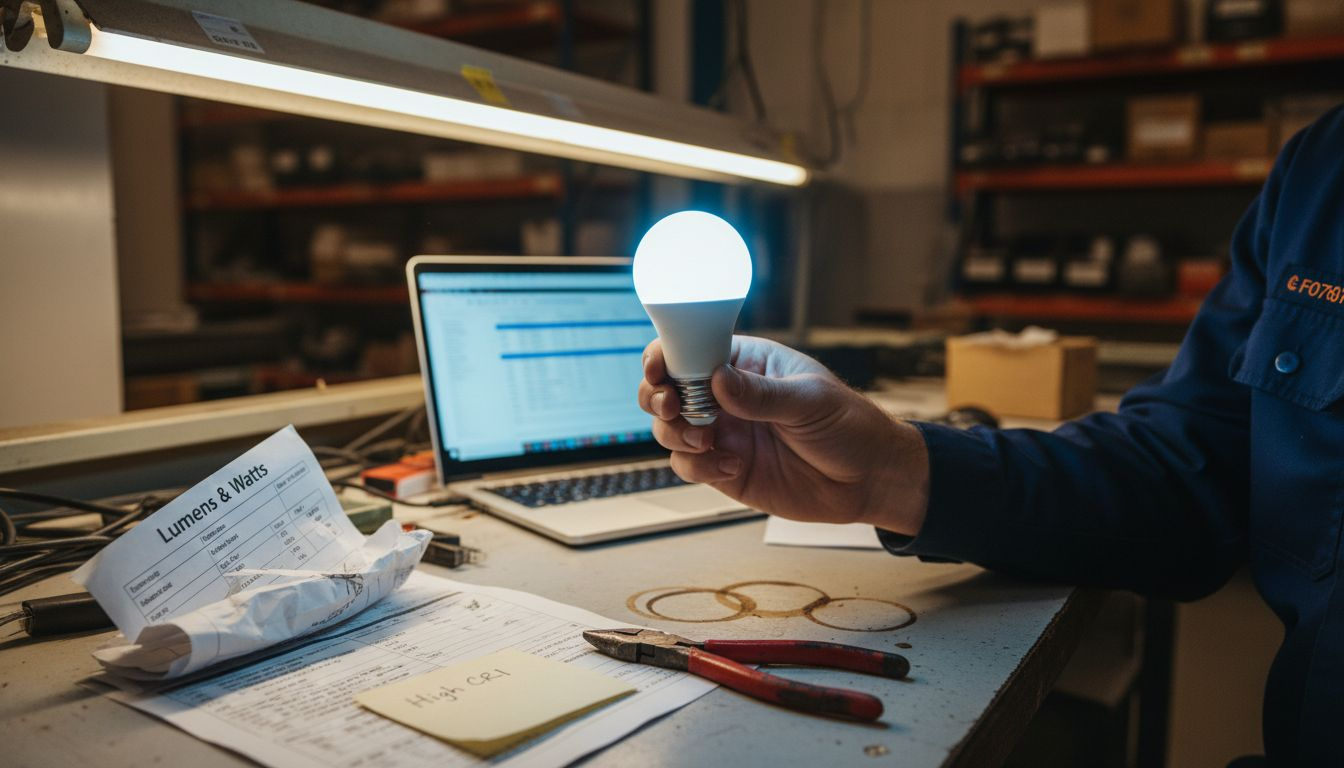
The colour rendering index (CRI) represents another sophisticated measurement, indicating how accurately a light source reveals object colours compared to natural sunlight. Commercial spaces require high CRI values to ensure accurate colour perception, with professional-grade LED lighting typically achieving CRI ratings between 80-95. This becomes particularly important in environments like retail spaces, art galleries, and professional design studios where colour accuracy is paramount.
Pro tip: When comparing LED lighting options, always prioritise lumens per watt and colour rendering index over raw wattage to ensure optimal energy efficiency and visual performance.
To help clarify technical lighting terms, the following table provides a quick reference for key metrics in commercial LED lighting:
| Term | What It Measures | Typical Range in Commercial LEDs | Business Impact |
|---|---|---|---|
| Lumens | Total visible light output | 1000–50,000 (per fixture) | Determines brightness level |
| Watts | Electrical energy consumed | 10–300 (per fixture) | Affects running costs |
| Luminous Efficacy | Efficiency (lumens per watt) | 80–150 lumens/watt | Higher values mean more savings |
| Colour Temperature | Warmth/coolness of light (kelvin) | 2700–6500K | Impacts ambience and focus |
| CRI | Colour accuracy versus sunlight | 80–95 | Essential for retail/office use |
Energy Ratings, Lifespan, and Light Quality Metrics
Commercial LED lighting represents a sophisticated technological solution where energy efficiency metrics play a pivotal role in determining overall performance and cost-effectiveness. Unlike traditional lighting technologies, LED systems offer unprecedented levels of energy conservation, typically consuming 75-90% less electrical power while delivering superior illumination quality. These advanced lighting solutions transform how businesses approach energy management and operational expenses.
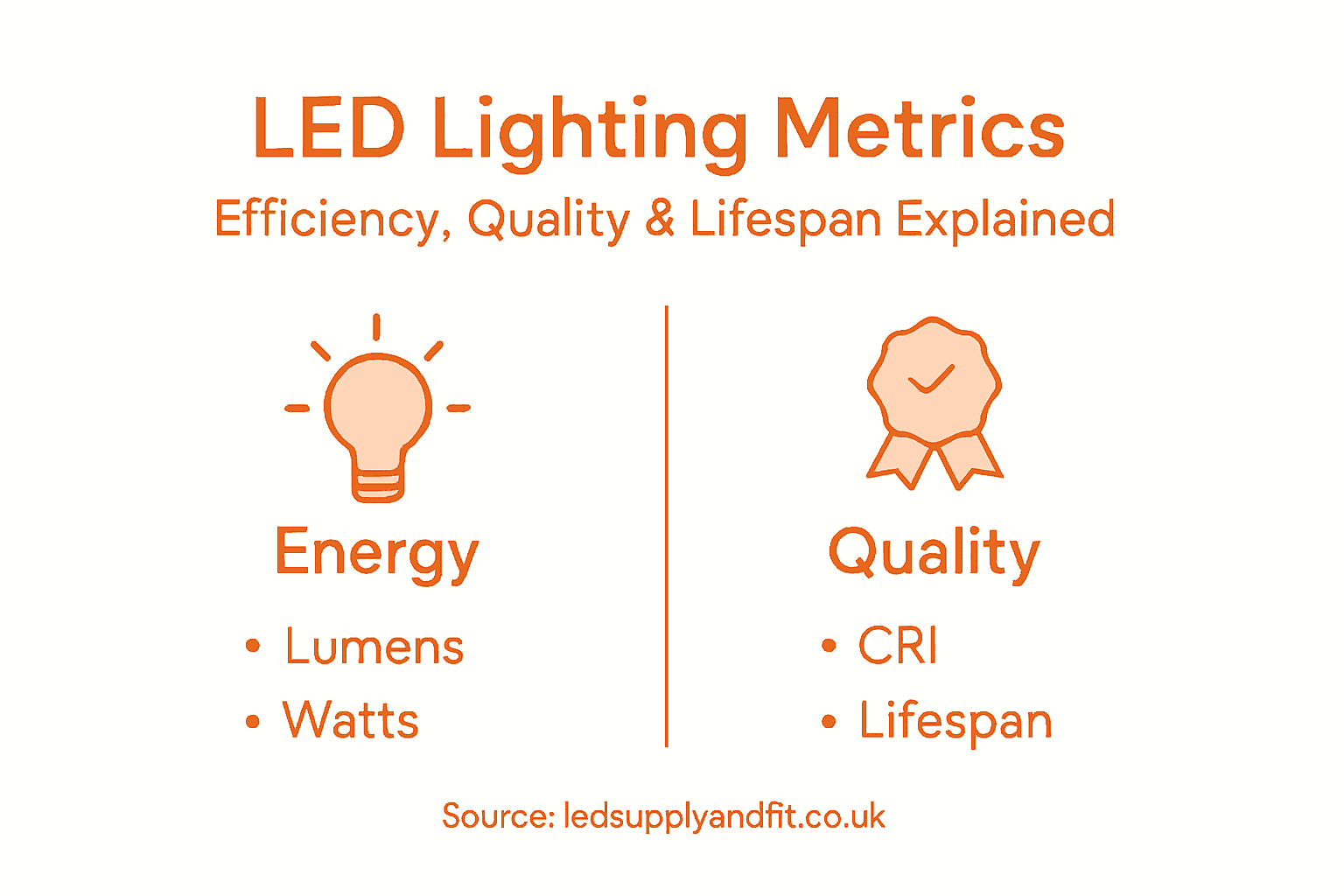
The lifespan of LED lighting is another critical consideration for facility managers, with professional-grade systems routinely operating between 25,000 to 50,000 hours. This extraordinary durability translates into significantly reduced maintenance costs and replacement frequencies compared to conventional lighting technologies. Luminous efficacy, measured as lumens per watt, provides a precise measurement of how efficiently electrical energy is converted into visible light, allowing businesses to make data-driven lighting procurement decisions.
Light quality metrics extend beyond simple brightness measurements, encompassing nuanced parameters like colour temperature and colour rendering index (CRI). Colour temperature, measured in kelvins, determines the visual warmth or coolness of the light, ranging from warm yellowish tones (2700-3000K) to cool daylight-like whites (5000-6500K). The CRI rating indicates how accurately the light source reveals object colours relative to natural sunlight, with professional environments typically requiring ratings between 80-95 to ensure optimal visual clarity and colour perception.
Pro tip: Compare LED lighting options by examining their lumens per watt ratio and CRI rating to ensure you’re selecting the most energy-efficient and visually accurate lighting solution for your specific commercial environment.
Types of LED Lights for Business Environments
Business environments demand sophisticated LED lighting solutions that go far beyond traditional illumination technologies. Modern commercial spaces require versatile lighting systems capable of addressing diverse operational needs, ranging from precision task lighting to expansive area illumination. The strategic selection of LED light types can dramatically transform workplace functionality, energy efficiency, and visual comfort.
Indoor LED fixtures represent a critical category for professional settings, with multiple specialised designs tailored to specific environments. Troffers provide uniform overhead lighting in office spaces, while linear fixtures deliver consistent illumination in warehouses and industrial settings. Recessed downlights offer focused, directional lighting ideal for retail displays, museums, and presentation areas. Each fixture type brings unique advantages, enabling facility managers to create precisely engineered lighting landscapes that enhance productivity and visual performance.
Outdoor and specialised LED lighting solutions extend commercial applications even further. Low bay and high bay fixtures serve industrial and manufacturing environments, delivering intense, uniform illumination across large vertical spaces. Exterior applications include powerful floodlights for security and perimeter lighting, parking lot luminaires that ensure safe navigation, and architectural lighting that enhances building aesthetics while maintaining energy efficiency. These sophisticated lighting solutions demonstrate how LED technology transcends traditional illumination, becoming an integral part of comprehensive facility management strategies.
Pro tip: Conduct a comprehensive lighting audit to match specific LED fixture types with your precise operational requirements, ensuring optimal energy efficiency and workplace functionality.
The following table summarises business uses for common LED fixture types and their advantages:
| Fixture Type | Common Use Case | Main Advantage | Suitability for Business |
|---|---|---|---|
| Troffer | Offices, classrooms | Even ceiling coverage | Ideal for large areas |
| Linear Fixture | Warehouses, factories | Consistent direction | Suitable for industry |
| Recessed Downlight | Retail, galleries | Focused, flexible | Perfect for displays |
| High Bay | Manufacturing, gyms | Powerful wide area light | Great for tall spaces |
| Floodlight | Outdoor security | Broad exterior reach | Good for site safety |
Common Misunderstandings and Choosing Wisely
Navigating the complexities of LED lighting requires dispelling persistent myths and understanding precise selection criteria. Many facility managers and business owners harbour misconceptions that can lead to suboptimal lighting investments, potentially compromising workplace efficiency and energy performance. The most prevalent misunderstanding revolves around equating wattage directly with brightness, when in reality, lumens represent the true measure of light output.
The nuanced world of LED lighting demands a sophisticated approach to selection. Colour temperature, measured in kelvins, dramatically influences workplace atmosphere and productivity. Warm tones (2700-3000K) create inviting environments suitable for reception areas, while cooler whites (5000-6500K) enhance concentration in workspaces like offices and laboratories. Another critical factor is colour rendering index (CRI), which determines how accurately colours appear under the lighting. Professional environments typically require CRI ratings above 80 to ensure visual clarity and comfort.
Beyond technical specifications, wise LED selection involves comprehensive cost analysis that extends far beyond initial purchase price. While LED fixtures might present higher upfront expenses, their extraordinary energy efficiency and extended lifespan generate substantial long-term savings. Modern LED technologies offer remarkable versatility, with options ranging from dimmable fixtures to smart lighting systems that integrate with building management platforms. Compatibility with existing electrical infrastructure, dimmer switch requirements, and specific environmental conditions should all factor into the decision-making process.
Pro tip: Request comprehensive photometric reports and conduct lighting trials before full-scale implementation to ensure your chosen LED solutions precisely match your specific operational requirements.
Unlock Smarter Commercial Lighting Upgrades Today
Understanding terms like lumens, luminous efficacy, and CRI is essential to making intelligent LED lighting decisions that save money and improve your commercial space. If you have been confused by technical jargon or worried about selecting the right fixtures for offices, warehouses, or retail environments, you are not alone. Many business owners struggle with matching lighting quality to their operational needs while seeking energy efficiency and long-term cost savings.
At Ledsupplyandfit.co.uk, we specialise in simplifying these complex choices by offering a wide range of professional LED lighting products and expert installation services tailored to your business sector. Whether you need high-CRI fixtures to enhance colour accuracy or energy-efficient high bay lights for large industrial spaces, we have solutions designed to deliver exactly what your premises require. Our trade accounts, bulk discounts, and next-day delivery options make upgrading simple and cost-effective.

Don’t let confusing terminology hold back your business from enjoying brighter, greener, and more economical lighting. Explore our comprehensive LED lighting solutions and get professional guidance today. Take the first step to a smarter lighting upgrade and contact us for a consultation or product demonstration now.
Frequently Asked Questions
What is the difference between lumens and watts in LED lighting?
Lumens measure the total light output of a fixture, while watts indicate the amount of energy consumed. To determine brightness, focus on lumens rather than watts, as higher lumens provide more visible light regardless of energy use.
How does colour temperature affect the atmosphere in commercial spaces?
Colour temperature, measured in kelvins, affects the warmth or coolness of the light. Warmer tones (2700-3000K) create inviting atmospheres, making them ideal for reception areas, while cooler whites (5000-6500K) enhance concentration and focus in workspaces like offices or labs.
What is the significance of the Colour Rendering Index (CRI) in LED lighting?
The Colour Rendering Index (CRI) assesses how accurately colours are represented under a light source compared to natural sunlight. A CRI rating above 80 is generally recommended for professional environments to ensure colour clarity and comfort.
Why should lumens per watt be prioritised when selecting LED lighting?
Lumens per watt, or luminous efficacy, indicates how efficiently electrical energy converts into visible light. Prioritising this metric ensures you choose energy-efficient lighting solutions, resulting in lower energy costs and improved environmental sustainability.
Recommended
- What is smart lighting and how does it work? | LED Supply & Fit
- Shedding Light on LED vs. Regular Bulbs: Which Shines Brighter? | LED Supply & Fit
- Top 5 Signs It’s Time to Upgrade to LED Lighting | LED Supply & Fit
- What Are LED Downlights and Why We Need Them | LED Supply & Fit
- LED Glowing Dog Collar – USB Rechargeable or Battery powered, Adjustab – Pawfect Picks