
Why Switch to LED Lighting: Cost, Safety, and ROI
Energy bills often squeeze the budgets of British retail businesses, leaving facility managers searching for smart ways to cut costs. The switch to LED lighting is not just about saving money, it is about creating brighter and more comfortable spaces for staff. Discover how LED lighting uses at least 75 percent less energy and lasts up to 25 times longer than incandescent bulbs, offering practical solutions that support both cost efficiency and improved productivity.
Table of Contents
- What Is LED Lighting and How It Works
- Key Types of LED Lighting for Commercial Use
- Major Benefits: Efficiency, Cost and Productivity
- Safety, Compliance and Environmental Impact
- Upfront Investment, Savings and Payback Period
Key Takeaways
| Point | Details |
|---|---|
| Energy Efficiency | LED lighting uses up to 75% less energy compared to traditional options, significantly lowering electricity costs. |
| Longevity and Maintenance | LEDs can last up to 25 times longer than conventional bulbs, reducing the frequency of replacements and maintenance expenses. |
| Safety and Environmental Impact | LEDs are mercury-free and produce less heat, contributing to safer workspaces and reduced environmental harm. |
| Financial Viability | Although initial costs are higher, the long-term savings in energy and maintenance make LEDs a compelling investment. |
What Is LED Lighting and How It Works
LED lighting represents a revolutionary approach to illumination that transforms how businesses and facilities generate light. Unlike traditional lighting technologies, light-emitting diodes operate through advanced semiconductor principles that convert electrical energy directly into light with remarkable efficiency.
At its core, an LED (light-emitting diode) functions through an incredible process called electroluminescence. When an electric current passes through a semiconductor material, electrons move and release energy in the form of photons – creating light without generating excessive heat. This fundamentally differs from older technologies like incandescent bulbs, which waste significant energy producing heat instead of illumination.
Key characteristics of LED lighting include:
- Dramatically higher energy conversion efficiency
- Instant light activation without warm-up periods
- Significantly longer operational lifespans
- Reduced heat generation
- Minimal maintenance requirements
Modern LED technology can produce white light through sophisticated phosphor conversion techniques or by precisely mixing multiple coloured diodes. This allows for incredibly nuanced lighting solutions that can be tailored to specific environmental and functional requirements.
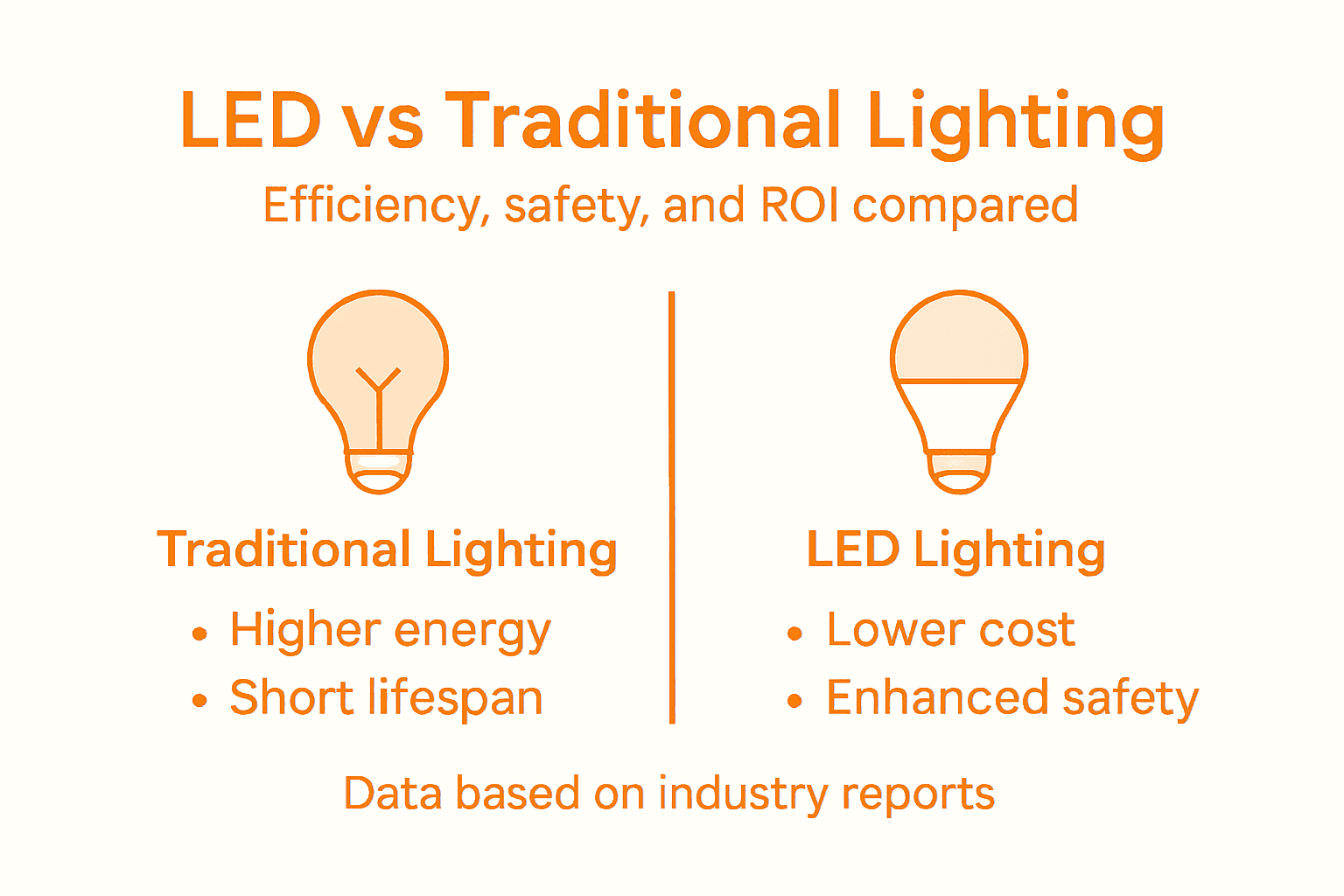
Here’s a summary comparing how traditional lighting and LED lighting impact commercial operations:
| Aspect | Traditional Lighting | LED Lighting |
|---|---|---|
| Efficiency | Low, energy wasted as heat | High, energy yields light |
| Longevity | Frequent replacements | Extended operational life |
| Maintenance | Regular, costly servicing | Minimal, cost-effective care |
| Environmental Impact | Contains toxic substances | Mercury-free, eco-friendly |
Pro tip: When evaluating LED lighting upgrades, always request detailed efficiency ratings and total lifetime cost projections to understand the full economic impact.
Key Types of LED Lighting for Commercial Use
Commercial LED lighting technologies have revolutionised how businesses illuminate their spaces, offering unprecedented versatility and efficiency across multiple application domains. These innovative lighting solutions go far beyond traditional illumination, providing targeted, energy-efficient alternatives for diverse commercial environments.
The primary categories of commercial LED lighting include:
- Street Lighting: High-durability outdoor fixtures for municipal and industrial zones
- Parking Garage Lighting: Enhanced safety and visibility solutions
- Walkway and Area Lighting: Uniform, energy-efficient exterior illumination
- Refrigerated Case Lighting: Specialised low-heat lighting for retail and food service
- Modular Lighting: Adaptable systems for flexible commercial spaces
- Task Lighting: Precision illumination for specific work environments
Advanced LED technologies are particularly transformative in sectors like retail, hospitality, and industrial facilities. The DesignLights Consortium plays a crucial role in establishing and maintaining stringent standards for commercial LED lighting, ensuring that businesses have access to verified, high-performance lighting solutions that meet rigorous energy efficiency criteria.

These lighting systems are not just about illumination – they represent a sophisticated approach to environmental sustainability, operational efficiency, and enhanced workplace functionality. Modern LED technologies can be precisely engineered to deliver optimal light quality, colour temperature, and directional control, making them far superior to traditional lighting technologies.
The table below outlines how different commercial sectors benefit uniquely from advanced LED lighting:
| Sector | Key LED Benefit | Example Improvement |
|---|---|---|
| Retail | Enhanced product visibility | Improved customer experience |
| Hospitality | Flexible ambience control | Increased guest satisfaction |
| Industrial | Reduced heat, better safety | Lower cooling costs, safer workspaces |
Pro tip: When selecting commercial LED lighting, always request comprehensive performance data and compare total lifetime costs, not just initial purchase price.
Major Benefits: Efficiency, Cost and Productivity
LED lighting offers transformative benefits that extend far beyond simple illumination, delivering substantial economic and operational advantages for commercial enterprises. These advanced lighting technologies represent a strategic investment that simultaneously addresses energy consumption, workplace efficiency, and long-term cost management.
The key efficiency benefits of LED lighting include:
- Energy Consumption: Uses 75% less energy compared to traditional lighting
- Longevity: Lasts up to 25 times longer than conventional bulbs
- Heat Reduction: Minimal heat emission reducing cooling system loads
- Maintenance Costs: Significantly lower replacement and servicing expenses
- Light Quality: Improved directional lighting enhancing workplace visibility
Productivity research in industrial settings demonstrates remarkable workplace performance improvements, particularly in environments with challenging thermal conditions. In garment factories, for instance, LED lighting not only reduced energy costs but also mitigated heat stress, directly contributing to enhanced worker output and operational efficiency.
Beyond immediate financial savings, LED lighting represents a holistic approach to sustainable business practices. The technology’s ability to provide precise, high-quality illumination while consuming minimal energy makes it an intelligent choice for organisations committed to reducing their environmental footprint and operational expenses.
Pro tip: Calculate your potential LED lighting savings by comparing total lifetime costs, including energy consumption, maintenance, and replacement expenses, not just initial installation price.
Safety, Compliance and Environmental Impact
LED lighting technologies demonstrate superior safety profiles that extend well beyond traditional illumination solutions, offering significant environmental and regulatory advantages for conscientious businesses. These advanced lighting systems represent a comprehensive approach to workplace safety, environmental responsibility, and regulatory compliance.
Key safety and environmental benefits include:
- Reduced Fire Risk: Lower heat generation compared to conventional lighting
- Mercury-Free Composition: Environmentally safer disposal options
- Energy Efficiency: Substantially lower greenhouse gas emissions
- Regulatory Compliance: Easier alignment with environmental standards
- Targeted Illumination: Minimised light pollution and energy waste
Responsible outdoor lighting practices play a crucial role in environmental stewardship, with LED technologies enabling precise control through advanced features like motion sensors and targeted shielding. These innovations allow businesses to maintain optimal lighting conditions while simultaneously reducing unnecessary energy consumption and minimising ecological disruption.
Compliance with standards such as ENERGY STAR ensures not just performance and safety, but also demonstrates a commitment to sustainable business practices. By selecting LED lighting, organisations can significantly reduce their carbon footprint, meet stringent environmental regulations, and contribute to broader sustainability goals.
Pro tip: Consult independent environmental certification bodies to validate the specific sustainability credentials of your chosen LED lighting solutions.
Upfront Investment, Savings and Payback Period
LED lighting investments represent a strategic financial approach that balances initial costs with substantial long-term economic benefits. While the upfront expense might seem higher compared to traditional lighting technologies, the comprehensive financial advantages make LED upgrades a compelling business decision.
Key financial considerations for LED lighting investments include:
- Initial Investment: Higher purchase price compared to conventional bulbs
- Energy Cost Reduction: Up to 75% lower electricity consumption
- Maintenance Savings: Significantly reduced replacement and servicing expenses
- Operational Longevity: Extended product lifespan reducing long-term costs
- Energy Price Protection: Hedge against rising electricity rates
Calculating the payback period provides critical insights into the financial viability of LED lighting upgrades. By dividing the total initial investment by annual savings from reduced energy and maintenance costs, businesses can determine the timeframe for recovering their initial expenditure, which typically ranges between 1 to 5 years depending on specific usage patterns and local energy pricing.
The economic landscape continues to favour LED investments, with declining product prices and increasing energy costs making these technologies increasingly attractive. Forward-thinking organisations recognise that LED lighting is not merely an expense, but a strategic investment that delivers measurable financial and operational benefits.
Pro tip: Request detailed financial modelling from LED suppliers that includes comprehensive lifetime cost analysis, demonstrating projected savings across different operational scenarios.
Discover the True Value of Switching to LED Lighting Today
If you are seeking to reduce energy expenses, improve safety standards, and ensure a strong return on investment, upgrading to commercial LED lighting is the smart choice. This technology not only cuts energy consumption by up to 75% and lowers maintenance costs but also enhances workplace safety by minimising heat emission and toxic materials. At Ledsupplyandfit.co.uk, we understand the challenges businesses face when planning lighting upgrades. We deliver tailored LED solutions with expert supply and professional installation services designed to meet the highest standards of efficiency and compliance.
Explore our comprehensive range of LED products, including ATEX-rated lighting for hazardous environments and bulk purchasing options that maximise savings. Don’t wait to experience the powerful benefits LED lighting offers for your shop, office, hotel or industrial site. Visit Ledsupplyandfit.co.uk now and take advantage of our next-day delivery and trade account support to start saving money and improving safety immediately.
Frequently Asked Questions
What are the cost benefits of switching to LED lighting?
LED lighting can reduce energy consumption by up to 75%, leading to significant savings on electricity bills. Additionally, LED lights have a longer lifespan, lasting up to 25 times longer than conventional bulbs, which reduces replacement and maintenance costs over time.
How does LED lighting enhance safety in commercial spaces?
LED lighting generates significantly less heat compared to traditional lighting, reducing the risk of fire hazards. Additionally, advanced features like motion sensors can enhance safety by providing targeted illumination only when needed, further reducing risk and energy consumption.
What is the expected payback period for investing in LED lighting?
The payback period for LED lighting investments typically ranges from 1 to 5 years, depending on local energy costs and the specific usage patterns of the installation. Calculating this period involves comparing the initial investment against annual energy and maintenance savings.
How does switching to LED lighting impact environmental sustainability?
LED lighting is mercury-free and produces substantially lower greenhouse gas emissions due to its energy efficiency. This makes it a more environmentally friendly option, aligning with sustainability goals and aiding in compliance with environmental regulations.
Recommended
- The Benefits Of Switching To Led Lighting
- Top 5 Signs It’s Time to Upgrade to LED Lighting | LED Supply & Fit
- The Sustainable Advantages of LED Street Lights | LED Supply & Fit
- The Benefits of LED Lights in the Workplace | LED Supply & Fit
- Gids duurzame verlichting: stap-voor-stap bespaar en verlicht – Holland Electric Duurzaam