
How to Upgrade Commercial Lighting for Cost Savings
Outdated lighting can leave retail and hospitality spaces in the UK with high energy bills and poor-quality ambience. Facility managers face mounting pressure to meet sustainability targets while maintaining safe and inviting environments. Energy-efficient LED solutions offer a practical path to lower costs and improved performance. Discover a systematic approach to lighting upgrades, from initial site assessment to ongoing performance optimisation, that supports compliance, productivity, and significant long-term savings.
Table of Contents
- Step 1: Assess Existing Lighting Setup
- Step 2: Define Lighting Goals And Requirements
- Step 3: Select Suitable Energy-Efficient LED Solutions
- Step 4: Plan Installation Logistics And Scheduling
- Step 5: Implement Lighting Upgrades And Fit LED Systems
- Step 6: Verify Performance And Optimise Usage
Quick Overview
| Main Insight | Detailed Explanation |
|---|---|
| 1. Assess Current Lighting Setup | Evaluate existing lighting to understand energy usage and identify upgrade opportunities. This can reveal up to 40% savings potential. |
| 2. Define Lighting Goals | Establish clear objectives addressing safety, comfort, energy efficiency, and legal compliance to tailor the lighting strategy effectively. |
| 3. Select Energy-Efficient LEDs | Choose high-quality LED solutions focusing on efficiency ratings, durability, and compliance with standards for significant long-term savings. |
| 4. Plan Installation Logistics | Develop a detailed plan that minimizes disruption, coordinates scheduling, and ensures safety compliance for the lighting upgrade process. |
| 5. Verify Performance and Optimise Usage | Continuously monitor and fine-tune the lighting system after installation to sustain optimal performance and maximise energy savings. |
Step 1: Assess existing lighting setup
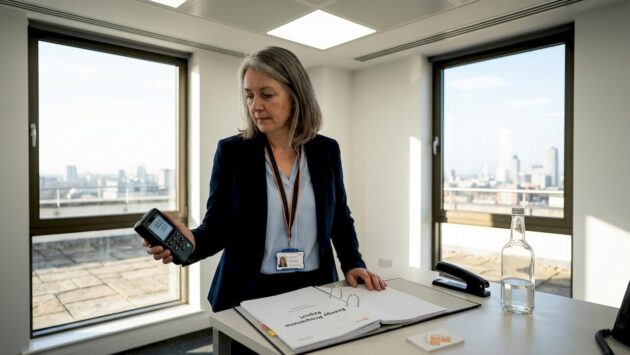
Assessing your commercial facility’s current lighting setup is the critical first step towards achieving significant energy savings and improving illumination quality. This comprehensive evaluation will help you understand your baseline energy consumption and identify strategic upgrade opportunities.
To thoroughly assess your existing lighting, you’ll want to conduct a systematic lighting installation survey. Start by documenting key details about your current lighting infrastructure:
- Inventory all existing light fixtures by type and location
- Record wattage for each fixture
- Note fixture age and current condition
- Measure current lighting power densities
- Identify areas with inadequate or outdated illumination
During this assessment, pay special attention to spaces with the most significant energy consumption. Manufacturing floors, warehouse areas, and large open office spaces typically represent the highest potential for lighting efficiency improvements.
A comprehensive lighting survey can reveal up to 40% potential energy savings in commercial settings.
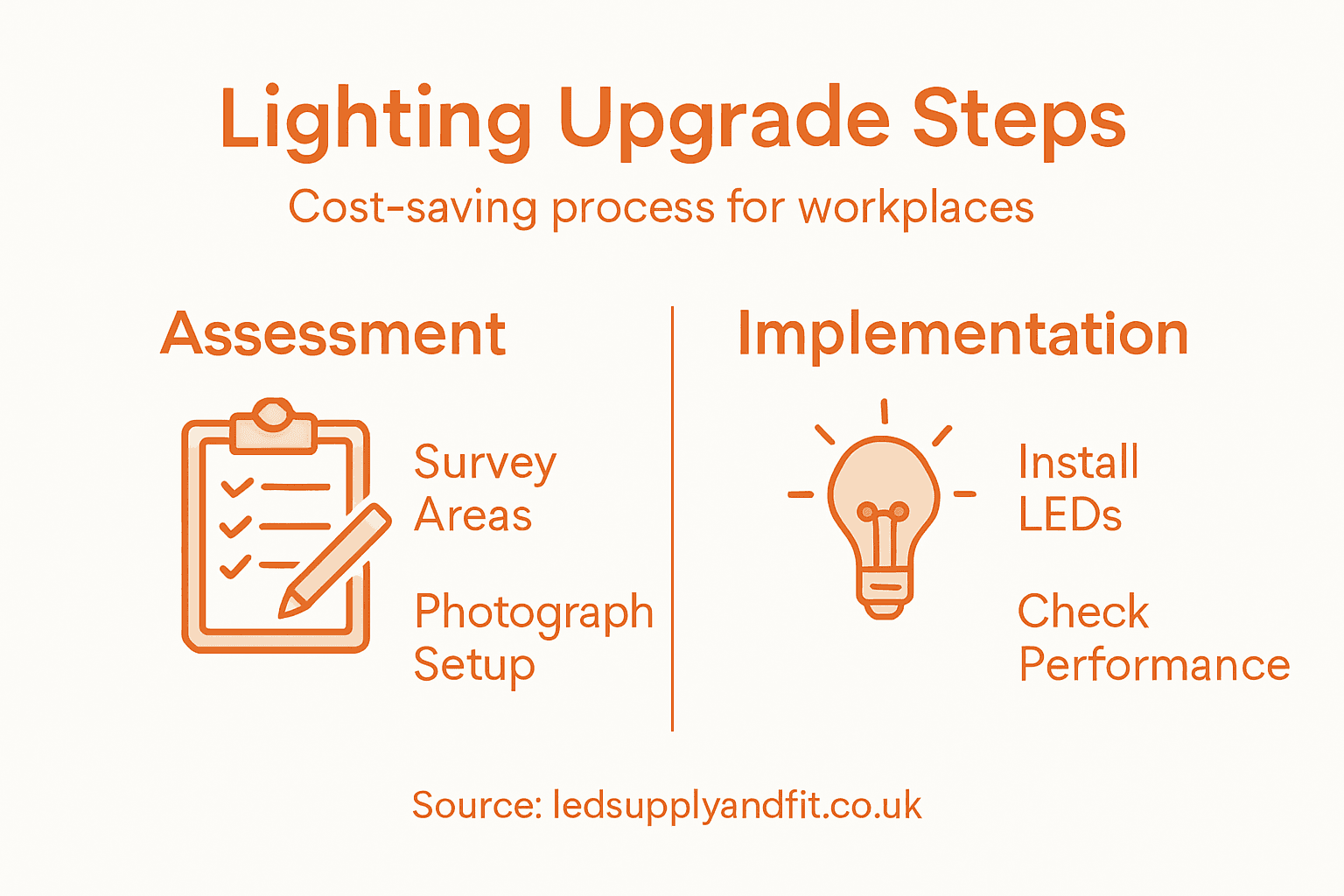
Document your findings meticulously, including photographs and detailed notes about each area’s current lighting configuration. This documentation will serve as your baseline for comparing future energy performance and calculating potential cost savings.
Professional tip: Use a standardised assessment template to ensure consistent and thorough documentation across different areas of your commercial facility.
Step 2: Define lighting goals and requirements
Defining clear lighting goals and requirements is essential for creating an effective and efficient commercial lighting strategy. This critical step will help you align your lighting upgrade with your organisation’s operational needs, energy efficiency targets, and regulatory compliance.
When establishing your lighting objectives, consider multiple dimensions that go beyond simple illumination. Commercial lighting codes provide a comprehensive framework for your planning, encompassing several key aspects:
- Safety and accessibility requirements
- Legal compliance with workplace regulations
- Energy efficiency targets
- Functional illumination for specific work environments
- Employee comfort and productivity considerations
- Aesthetic and branding requirements
Your goals should integrate technical specifications with practical operational needs. This means assessing each workspace’s unique lighting demands, from manufacturing floors to office areas, and understanding how different environments require tailored lighting solutions.
The following table summarises how different commercial areas have unique lighting needs and upgrade priorities:
| Area Type | Key Lighting Need | Upgrade Priority |
|---|---|---|
| Manufacturing Floor | High-intensity, task-focused | Energy efficiency, safety |
| Warehouse | Wide-area, uniform illumination | Coverage, cost reduction |
| Office Spaces | Glare-free, comfortable lighting | Comfort, productivity |
| Retail Spaces | Accent and display lighting | Aesthetic, branding impact |
Effective lighting design balances regulatory compliance, energy efficiency, and workplace functionality.
Ensure you document specific metrics for each lighting requirement, such as desired foot-candle levels, colour temperature preferences, and expected energy consumption reductions. These precise parameters will guide your subsequent selection and implementation stages.
Professional tip: Consult with a professional lighting engineer to ensure your goals comprehensively address technical, legal, and operational requirements.
Step 3: Select suitable energy-efficient LED solutions
Selecting the right LED lighting solutions is a pivotal moment in your commercial lighting upgrade journey. This step transforms your energy efficiency goals from abstract concepts into tangible, performance-driven implementations that can dramatically reduce operational costs.
Energy-efficient LED lighting design requires a strategic approach that considers multiple critical factors. When evaluating potential LED solutions, focus on these essential selection criteria:
- Lumens per watt efficiency rating
- Colour temperature consistency
- Compatibility with existing electrical infrastructure
- Durability and manufacturer warranty
- Expected operational lifespan
- Dimming and control capabilities
- Compliance with British commercial lighting standards
Your selection process should prioritise long-term performance over initial purchase price. High-quality LED solutions might require a higher upfront investment but will deliver substantial energy savings and reduced maintenance costs over their operational lifetime.
Intelligent LED selection can reduce lighting energy consumption by up to 75% compared to traditional lighting technologies.
Consider conducting pilot tests with shortlisted LED fixtures to validate their performance in your specific workplace environments. This approach allows you to assess real-world performance and ensure the solutions meet your precise operational requirements.
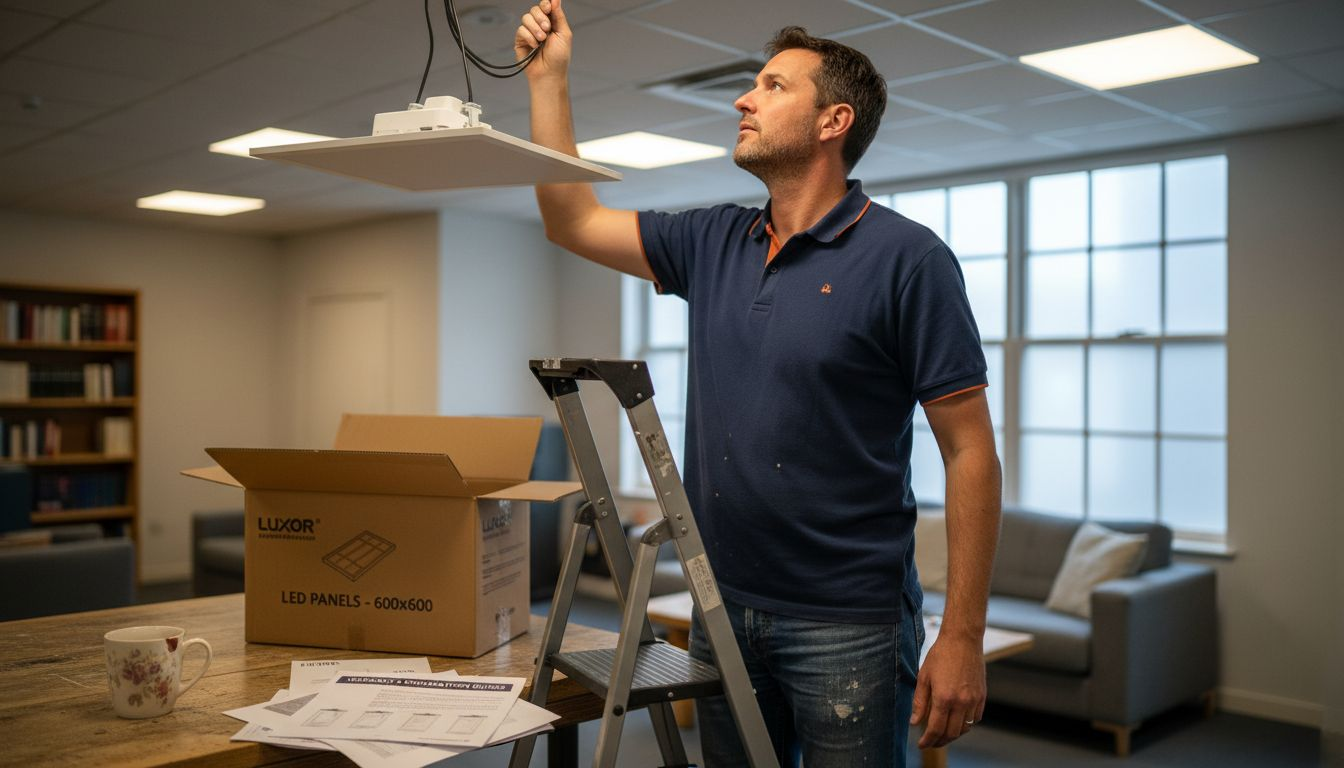
Professional tip: Request comprehensive photometric data and performance certificates from manufacturers to make an informed LED selection.
Step 4: Plan installation logistics and scheduling
Successful commercial lighting upgrades require meticulous planning and strategic scheduling to minimise operational disruption. Your installation logistics plan will serve as the critical roadmap that ensures a smooth, efficient transformation of your facility’s lighting infrastructure.
Installation planning for commercial lighting demands a comprehensive approach that addresses multiple logistical considerations. Key elements of your scheduling strategy should include:
- Detailed site survey and preparatory assessment
- Phased installation approach
- Minimal workplace disruption strategy
- Precise equipment and material procurement
- Clear communication protocols
- Safety compliance and risk management
- Contingency planning for unexpected challenges
Your installation schedule should prioritise strategic timing and minimal interruption. Consider executing the upgrade during off-peak hours, such as weekends, evenings, or during planned facility shutdowns to reduce operational impact.
Effective installation planning can reduce upgrade disruption by up to 60% compared to uncoordinated approaches.
Ensure comprehensive coordination between your installation team, facility management, and key stakeholders. This collaborative approach will help anticipate potential challenges, manage expectations, and create a seamless transition to your new lighting system.
Professional tip: Create a detailed project timeline with buffer periods to accommodate potential unexpected complications during the lighting upgrade process.
Step 5: Implement lighting upgrades and fit LED systems
Implementing your LED lighting upgrade is the pivotal moment where carefully laid plans transform into tangible energy efficiency improvements. This stage requires precision, technical expertise, and a systematic approach to ensure optimal system performance and minimal operational disruption.
Lighting system retrofit techniques involve several critical considerations for successful installation. Your implementation strategy should encompass the following core elements:
- Verify electrical compatibility with existing infrastructure
- Prepare necessary tools and personal protective equipment
- Conduct detailed site-specific wiring assessments
- Implement strategic installation sequence
- Bypass or replace existing ballasts
- Integrate advanced lighting control systems
- Perform comprehensive functional testing
Careful attention must be paid to the technical nuances of fitting LED systems. Each installation requires meticulous planning to ensure electrical safety, system reliability, and optimal performance across different workplace environments.
Proper LED system implementation can reduce energy consumption by up to 70% compared to traditional lighting technologies.
During the upgrade process, maintain clear communication with your installation team and facility management. Document every stage of the installation, including any modifications or unexpected challenges encountered during the retrofit.
Here is a comparison of potential energy savings at each major stage of a commercial LED lighting upgrade:
| Upgrade Stage | Typical Energy Savings | Main Benefit |
|---|---|---|
| Lighting Survey and Assessment | Up to 40% | Identifies inefficiency hotspots |
| Intelligent LED Selection and Installation | Up to 75% | Maximises operational cost reduction |
| Advanced System Implementation | Up to 70% | Ensures long-term energy reduction |
| Continuous Performance Optimisation | Additional 15% | Sustains efficiency over system life cycle |
Professional tip: Always conduct a comprehensive post-installation electrical safety inspection to verify the integrity and compliance of your new LED lighting system.
Step 6: Verify performance and optimise usage
Verifying the performance of your new LED lighting system and continuously optimising its usage represents the final crucial stage in your energy efficiency journey. This process transforms your initial investment into sustained long-term operational savings and enhanced workplace illumination.
Energy performance verification involves a comprehensive approach to monitoring and fine-tuning your lighting infrastructure. Your performance optimisation strategy should encompass the following critical elements:
- Conduct initial performance benchmarking
- Monitor real-time energy consumption
- Analyse lighting utilisation patterns
- Implement intelligent control mechanisms
- Regularly calibrate lighting controls
- Document ongoing energy performance
- Schedule periodic system reviews
Careful attention to performance metrics will enable you to identify potential further efficiency improvements and ensure your lighting system continues to deliver optimal results throughout its operational lifecycle.
Systematic performance verification can unlock additional energy savings of up to 15% beyond initial installation.
Establish a routine of continuous monitoring and incremental adjustments. This proactive approach will help you maintain peak lighting efficiency, adapt to changing workplace requirements, and maximise your return on investment.
Professional tip: Create a digital dashboard for tracking lighting performance metrics, enabling real-time insights and data-driven optimisation decisions.
Upgrade Your Commercial Lighting Today for Greater Savings and Efficiency
Upgrading your commercial lighting is a smart solution to tackle high energy costs and outdated illumination as highlighted in the article. With challenges such as selecting the right LED systems, optimising installation logistics and verifying ongoing performance, finding a trusted partner that offers both supply and expert installation is crucial. Achieving sustained energy savings, improving workplace safety, and enhancing employee comfort demands reliable guidance and quality products that meet British commercial lighting standards.

At Ledsupplyandfit.co.uk, we specialise in providing tailored LED lighting solutions that perfectly align with your goals. Whether you need bulk orders for warehouses or precision lighting for office spaces, our range includes energy-efficient LEDs designed to reduce costs and environmental impact. Benefit today from our trade account support, next-day delivery options and professional installation services that minimise downtime and ensure compliance. Do not wait to unlock your facility’s full energy potential. Visit us now to explore how easy it is to transform your commercial premises with expert support and premium LED products at https://ledsupplyandfit.co.uk.
Frequently Asked Questions
How can I assess my existing commercial lighting setup before an upgrade?
To assess your existing commercial lighting setup, conduct a systematic lighting installation survey. Document key details such as the type, location, and wattage of fixtures, as well as their age and condition. This will help you identify areas for improvement and estimate potential energy savings, ideally within 30 days.
What goals should I define for my commercial lighting upgrade?
Establish specific goals such as energy efficiency targets, safety and accessibility requirements, and employee comfort. Ensure these goals align with your operational needs and regulatory compliance, providing clear metrics like desired foot-candle levels for accurate measurements and tracking progress.
What factors should I consider when selecting energy-efficient LED solutions?
When selecting LED solutions, focus on factors such as lumens per watt efficiency, compatibility with your existing infrastructure, and expected lifespan. Prioritise long-term performance over initial purchase cost to maximise energy savings, which can reduce consumption by up to 75% compared to traditional lighting.
How should I plan the logistics and scheduling for my lighting installation?
Create a detailed logistical plan that includes a site survey, a phased installation approach, and minimal disruption strategies. Schedule your upgrade during off-peak hours, such as weekends, to reduce operational impact and ensure a smoother transition.
What steps should I follow during the actual installation of LED systems?
During installation, verify electrical compatibility, prepare necessary tools, and implement a strategic installation sequence. Follow all safety protocols and document the process thoroughly to ensure compliance and optimal performance of your new lighting system.
How can I verify the performance of my upgraded lighting system?
To verify performance, benchmark initial energy consumption, monitor real-time usage, and calibrate lighting controls regularly. This ongoing monitoring can unlock additional energy savings of up to 15% beyond the initial installation, ensuring your system remains efficient over its lifespan.
Recommended
- How to Select LED Fixtures for Commercial Spaces
- Upgrade Your Commercial LED Lighting! | LED Supply & Fit | LED Solutions
- 7 Practical Examples of Energy Saving Lights for Businesses
- Why Choose Energy Saving Lights for UK Businesses
- Rechargeable LED lights: Energy efficiency and style together! – Dekoja.net