Hotel Lighting Solutions Explained: Saving Costs, Enhancing Experience
Choosing the right lighting for a hotel often feels more complex than it first appears, especially when common myths can cloud good judgement. For facility managers in the United Kingdom, the wrong choices can mean higher energy bills and missed chances to impress guests. By replacing old assumptions with customised LED lighting strategies, your hotel can reduce operational costs, support regulatory compliance, and create an inviting atmosphere that guests will remember.
Table of Contents
- Hotel Lighting Solutions And Common Myths
- LED Lighting Types For Hotels Explained
- Key Features For Guest Comfort And Safety
- UK Regulations And Compliance Requirements
- Cost Implications And Installation Needs
- Avoiding Common Hotel Lighting Mistakes
Key Takeaways
| Point | Details |
|---|---|
| Customised Lighting Solutions | Each hotel area requires unique lighting tailored to its specific needs to enhance guest experience and efficiency. |
| Layered Illumination Techniques | Combining ambient, task, and accent lighting is essential for creating depth and functionality in hotel spaces. |
| Energy Efficiency Management | Implementing modern LED technologies with intelligent controls can significantly reduce energy costs while improving guest satisfaction. |
| Regulatory Compliance | Understanding and adhering to UK lighting regulations is crucial for ensuring guest safety and operational integrity. |
Hotel lighting solutions and common myths
Many hoteliers harbour misunderstandings about lighting that can significantly impact guest experience and operational costs. Understanding these misconceptions is crucial for creating inviting, energy-efficient spaces that enhance both aesthetic appeal and functionality.
Contrary to popular belief, lighting solutions are not one-size-fits-all. Different areas within a hotel require unique lighting approaches, from reception areas to guest rooms and conference spaces. Some prevalent myths include:
- All LED lights are identical in quality and performance
- Brighter lighting always means better illumination
- Natural light is sufficient for all hotel spaces
- Lighting controls are unnecessary additional expenses
Historic hotels particularly struggle with lighting challenges, as architectural preservation must be balanced with modern efficiency requirements. Customised lighting solutions become paramount, recognising that each space has distinct needs beyond generic illumination strategies.
The key is understanding that effective hotel lighting involves layered illumination techniques. This means strategically combining ambient, task, and accent lighting to create depth, warmth, and functionality. Colour temperature, dimming capabilities, and precise light placement matter far more than raw luminosity.
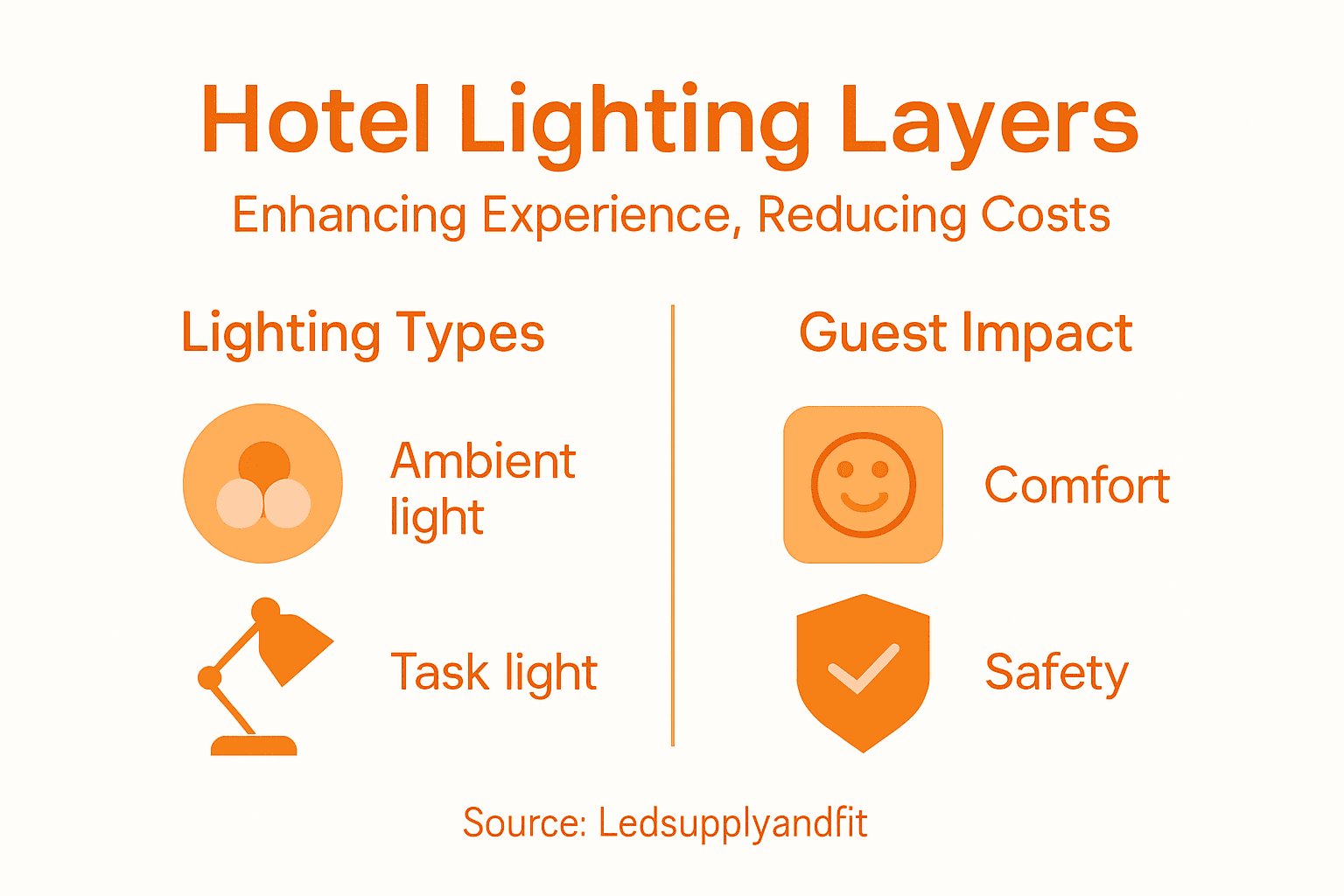
Here is a comparison of layered lighting components and their benefits for hotels:
| Lighting Layer | Primary Function | Guest Impact |
|---|---|---|
| Ambient Lighting | General illumination | Fosters comfort and safety |
| Task Lighting | Focused functionality | Enhances convenience |
| Accent Lighting | Highlights features | Adds visual interest |
Energy efficiency emerges as another critical consideration. Modern LED technologies offer nuanced control mechanisms that can dramatically reduce electricity consumption while maintaining optimal guest comfort. Hotels can achieve significant cost savings by implementing intelligent lighting systems that adapt to different times of day and occupancy levels.
Pro tip: Conduct a comprehensive lighting audit to identify inefficiencies and potential upgrade opportunities in your hotel’s current lighting infrastructure.
LED lighting types for hotels explained
Hotels require diverse lighting solutions that cater to different functional spaces and guest experiences. LED lighting technologies have revolutionised how hospitality venues approach illumination, offering unprecedented flexibility and efficiency.
The primary LED lighting types for hotels include:
- Panel Lights: Ideal for reception areas and conference rooms, providing uniform, glare-free illumination
- Recessed Downlights: Perfect for creating ambient lighting in guest rooms and corridors
- Linear Strip Lights: Excellent for highlighting architectural features and creating dramatic accent lighting
- Track Lighting: Versatile option for adjustable lighting in dining areas and exhibition spaces
- Decorative LED Fixtures: Designed to enhance aesthetic appeal while maintaining energy efficiency
Colour temperature plays a crucial role in creating the right atmosphere. Warm white lights (2700-3000K) work brilliantly in relaxation areas like guest rooms and spas, while cooler whites (4000-5000K) are more suitable for task-oriented spaces such as reception and workspaces.
Modern LED technologies offer incredible advantages beyond basic illumination. Smart lighting controls enable hotels to programme lighting scenes, adjust brightness levels, and implement motion sensors that significantly reduce energy consumption. These systems can automatically dim or switch off lights in unoccupied areas, representing a substantial cost-saving opportunity for hotel management.
Each lighting type serves a specific purpose, allowing hotel managers to create layered, adaptive lighting environments that enhance guest comfort while maintaining operational efficiency. The key is selecting the right combination of fixtures that meet both aesthetic and functional requirements.
Below is a summary of LED lighting types and their optimal hotel applications:
| LED Type | Best Used In | Key Advantage |
|---|---|---|
| Panel Lights | Reception, conference rooms | Uniform, glare-free lighting |
| Recessed Downlights | Guest rooms, corridors | Subtle, ambient illumination |
| Linear Strip Lights | Architectural features | Dramatic accent creation |
| Track Lighting | Dining, exhibitions | Flexible, adjustable focus |
| Decorative LED Fixtures | Lobbies, lounges | Stylish and energy-efficient |
Pro tip: Implement a comprehensive lighting design that incorporates multiple LED fixture types to create dynamic, energy-efficient spaces that adapt to different guest needs and times of day.
Key features for guest comfort and safety
Hotel lighting design requires a sophisticated approach that balances aesthetic appeal with functional safety. Creating an environment that feels both welcoming and secure demands careful consideration of lighting strategies that address multiple guest needs simultaneously.
Key safety and comfort features in hotel lighting design include:
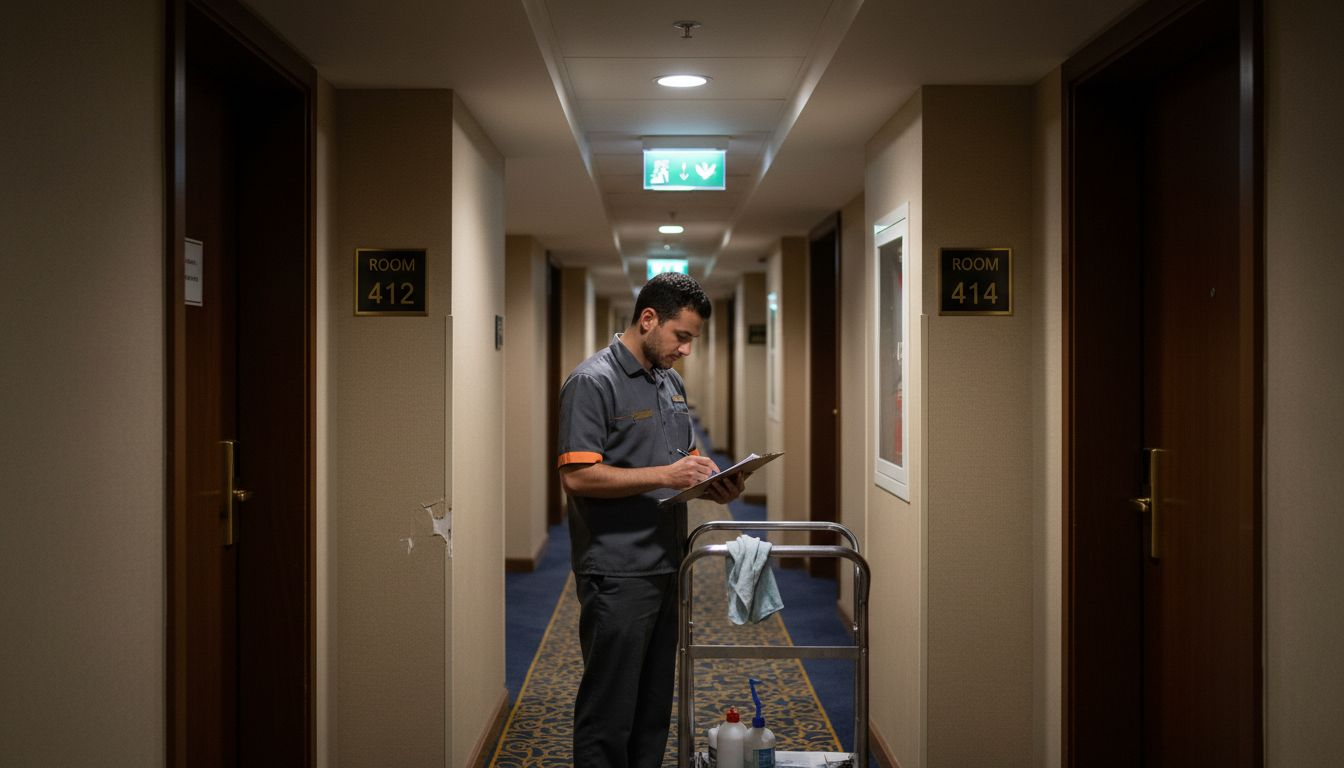
- Uniform Corridor Illumination: Ensuring consistent, glare-free lighting to prevent disorientation
- Emergency Pathway Markers: Integrated low-level lighting that activates during power failures
- Motion-Activated Night Lights: Providing gentle illumination for guest rooms without disturbing sleep
- Adjustable Bedside Controls: Allowing guests to personalise their lighting environment
- High Colour Rendering Index (CRI) lighting that reproduces colours accurately and creates a more natural atmosphere
Colour temperature plays a crucial role in creating the right psychological environment. Warm white lights (2700-3000K) promote relaxation and comfort, while slightly cooler tones (3500-4000K) maintain alertness in communal spaces without feeling harsh.
Safety extends beyond simple illumination. Intelligent lighting systems can integrate multiple functions, such as occupancy detection, automated dimming, and emergency signalling. These advanced technologies not only enhance guest comfort but also provide critical safety mechanisms that can respond quickly to potential hazards.
Effective hotel lighting design is about creating an invisible infrastructure that anticipates and meets guest needs without drawing attention to itself.
Strategic lighting placement can significantly impact guest perception of safety. Well-lit reception areas, clear signage, and thoughtfully illuminated pathways communicate a sense of security and professionalism that begins the moment guests enter the premises.
Pro tip: Implement a multi-layered lighting approach that combines ambient, task, and accent lighting to create a dynamic, safe, and comfortable guest environment.
UK regulations and compliance requirements
UK hotel regulations encompass a complex framework of legal requirements designed to ensure guest safety, operational integrity, and business compliance across multiple domains. Understanding these regulations is crucial for hotel managers seeking to maintain both legal standards and professional excellence.
Key regulatory compliance areas for hotel lighting include:
- Fire Safety Regulations: Ensuring all lighting installations meet British Standards for fire resistance
- Electrical Safety Standards: Compliance with BS 7671 (IET Wiring Regulations)
- Emergency Lighting Requirements: Mandatory installation of backup lighting systems
- Energy Performance Certificates: Meeting minimum efficiency standards
- Disability Access Regulations: Providing appropriate illumination for accessibility
Electrical installation standards represent a critical compliance area for hotel lighting systems. The British Standards Institution (BSI) mandates rigorous testing and certification for all electrical infrastructure, with specific guidelines governing LED lighting installations in commercial hospitality environments.
Compliance is not just about meeting legal minimums, but creating safe, efficient environments that protect both guests and business interests.
Beyond technical specifications, hotels must navigate complex licensing requirements that intersect with lighting design. This includes ensuring that lighting installations do not interfere with alcohol licensing conditions, meet health and safety regulations, and provide adequate illumination for emergency evacuation procedures.
Pro tip: Conduct annual comprehensive lighting compliance audits to ensure ongoing adherence to evolving UK regulatory standards and minimize potential legal risks.
Cost implications and installation needs
Energy-efficient lighting strategies require careful financial planning and strategic investment for hotel managers seeking long-term operational savings. Understanding the nuanced cost implications of LED lighting installation involves examining both initial expenditure and potential future returns.
Key financial considerations for hotel lighting investments include:
- Initial Capital Investment: Upfront costs of LED fixture replacement
- Energy Consumption Reduction: Potential annual electricity savings
- Maintenance Expenditure: Decreased replacement and servicing costs
- Depreciation and Tax Incentives: Potential financial benefits from energy-efficient upgrades
- Financing Options: Leasing, phased implementation, and government grants
Installation complexity varies significantly depending on hotel infrastructure and existing electrical systems. Older properties may require more extensive electrical upgrades, potentially increasing initial implementation costs. Professional assessment becomes crucial in determining the most cost-effective retrofit strategy.
The true value of LED lighting investments extends far beyond simple electricity savings, representing a comprehensive approach to operational efficiency and guest experience enhancement.
Modern LED technologies offer sophisticated control systems that can dramatically reduce energy consumption. Intelligent lighting networks with motion sensors, adaptive brightness controls, and zonal management can generate substantial long-term financial benefits, often recovering initial installation expenses within 2-3 years.
Pro tip: Request detailed return-on-investment projections from lighting installation professionals to understand the comprehensive financial implications of your lighting upgrade strategy.
Avoiding common hotel lighting mistakes
Hotel lighting design requires nuanced understanding to create environments that truly enhance guest experience. Most hotels inadvertently compromise comfort through seemingly minor lighting errors that can significantly impact guest perception and satisfaction.
Common lighting mistakes to avoid include:
- Uniform, Harsh Lighting: Creating flat, uncomfortable environments
- Incorrect Colour Temperatures: Using inappropriate light tones for different spaces
- Poor Fixture Placement: Generating glare and uneven illumination
- Neglecting Task Lighting: Failing to provide functional illumination for specific areas
- Limited Lighting Controls: Not offering guests personalised lighting options
Bedside and workspace lighting demand particular attention. Guests require flexible illumination that allows reading, working, and relaxing without strain. Adjustable, dimmable fixtures with warm colour temperatures (2700-3000K) create welcoming, adaptable environments that cater to individual preferences.
Exceptional hotel lighting is invisible – it should enhance atmosphere without drawing attention to itself.
Technical considerations extend beyond aesthetic choices. Modern hotels must balance energy efficiency, guest comfort, and operational costs through intelligent lighting strategies. This involves selecting high-quality LED fixtures with appropriate colour rendering, implementing zonal lighting controls, and creating layered illumination schemes that adapt to different times of day and guest activities.
Pro tip: Conduct periodic guest feedback surveys specifically addressing lighting comfort to continuously refine and improve your hotel’s illumination strategy.
Transform Your Hotel Lighting Into an Efficient, Guest-Friendly Experience
Lighting challenges in hotels range from balancing ambience with safety to reducing operational costs through energy efficiency. This article highlights the importance of layered illumination, the smart use of LED lighting types, and compliance with UK regulations — all critical factors for hoteliers eager to enhance guest comfort while saving money. Common issues like poor fixture placement and inadequate lighting controls can now be solved with modern, adaptable LED solutions designed specifically for commercial hospitality environments.
At Ledsupplyandfit, we provide a comprehensive range of customised LED lighting products and professional installation services that help hotels overcome these challenges. Whether you need uniform, glare-free panel lights for your reception or adjustable downlights for guest rooms, our high-quality, energy-efficient solutions offer long-term savings and meet stringent safety standards. We support trade accounts and bulk orders and provide next-day delivery to businesses across the UK.
Ready to upgrade your hotel lighting and transform guest experience while cutting costs? Visit Ledsupplyandfit to explore our full LED range and installation options. Benefit from expert advice tailored for commercial settings and take the first step towards an intelligent, adaptable lighting system that works for you. Contact us today and see how our professional solutions can brighten your business the right way.
Frequently Asked Questions
What are the benefits of using layered lighting in hotels?
Layered lighting combines ambient, task, and accent lighting to create depth, warmth, and functionality, enhancing guest comfort and experience while improving the overall aesthetics of hotel spaces.
How can energy-efficient lighting solutions impact hotel operating costs?
Energy-efficient solutions, such as modern LED technologies, significantly reduce electricity consumption, leading to substantial cost savings over time through decreased energy bills and lower maintenance costs.
What is the importance of colour temperature in hotel lighting design?
Colour temperature affects the atmosphere of different spaces; warm white lights are ideal for relaxation areas, while cooler whites are better suited for task-oriented areas, helping to create a welcoming environment that meets guests’ needs.
How can hotels ensure compliance with lighting-related regulations?
Hotels need to adhere to various regulations, including fire safety, electrical safety standards, and emergency lighting requirements, by conducting regular audits and working with professionals who understand current compliance standards.