

Why Choose Energy Saving Lights for UK Businesses
Rising electricity bills often leave facility managers searching for smarter ways to manage commercial properties across the United Kingdom. Meeting tight budgets while supporting sustainability goals makes choosing the right lighting even more urgent. With energy saving lights offering up to 90% less energy use than traditional bulbs, this guide breaks down the latest LED options so you can cut costs without sacrificing quality or performance.
Table of Contents
- What Are Energy Saving Lights?
- Types And Technologies For Commercial Use
- Key Features And Performance Benefits
- Cost Savings And Environmental Impact
- Risks, Regulations, And Compliance
- Comparing Alternatives And Common Mistakes
Key Takeaways
| Point | Details |
|---|---|
| Energy Saving Technologies | Energy saving lights, including LEDs and CFLs, significantly reduce electricity consumption compared to traditional bulbs, enhancing overall efficiency. |
| Financial and Environmental Benefits | Businesses can achieve substantial cost savings while contributing to sustainability goals, significantly lowering carbon emissions. |
| Regulatory Compliance | Adherence to UK and European lighting regulations is crucial to avoid penalties and ensure the effective implementation of energy saving technologies. |
| Comprehensive Audits | Conducting thorough energy audits is essential for identifying suitable lighting solutions and maximising efficiency within commercial environments. |
What Are Energy Saving Lights?
Energy saving lights represent an innovative lighting technology designed to dramatically reduce electricity consumption compared to traditional illumination methods. These advanced lighting solutions utilise sophisticated semiconductor and fluorescent technologies to deliver superior performance while minimising energy expenditure.
The primary categories of energy saving lights include:
- LED lights: Semiconductor-based lighting with exceptional efficiency
- Compact Fluorescent Lamps (CFLs): Low-energy alternatives to incandescent bulbs
- Smart lighting systems: Technologies with integrated energy management controls
LED technology has emerged as the most prominent energy saving lighting solution, capable of reducing energy consumption by up to 90%. These lighting systems transform electrical energy into light with remarkable efficiency, generating significantly less heat and consuming substantially less power than traditional bulbs.
Commercial environments particularly benefit from energy saving lights due to their long-term cost advantages. By implementing these advanced lighting technologies, businesses can achieve substantial reductions in electricity expenses while simultaneously reducing their carbon footprint. Modern energy saving lights often feature additional intelligent controls like motion sensors, timers, and adaptive brightness settings, further enhancing their energy efficiency.
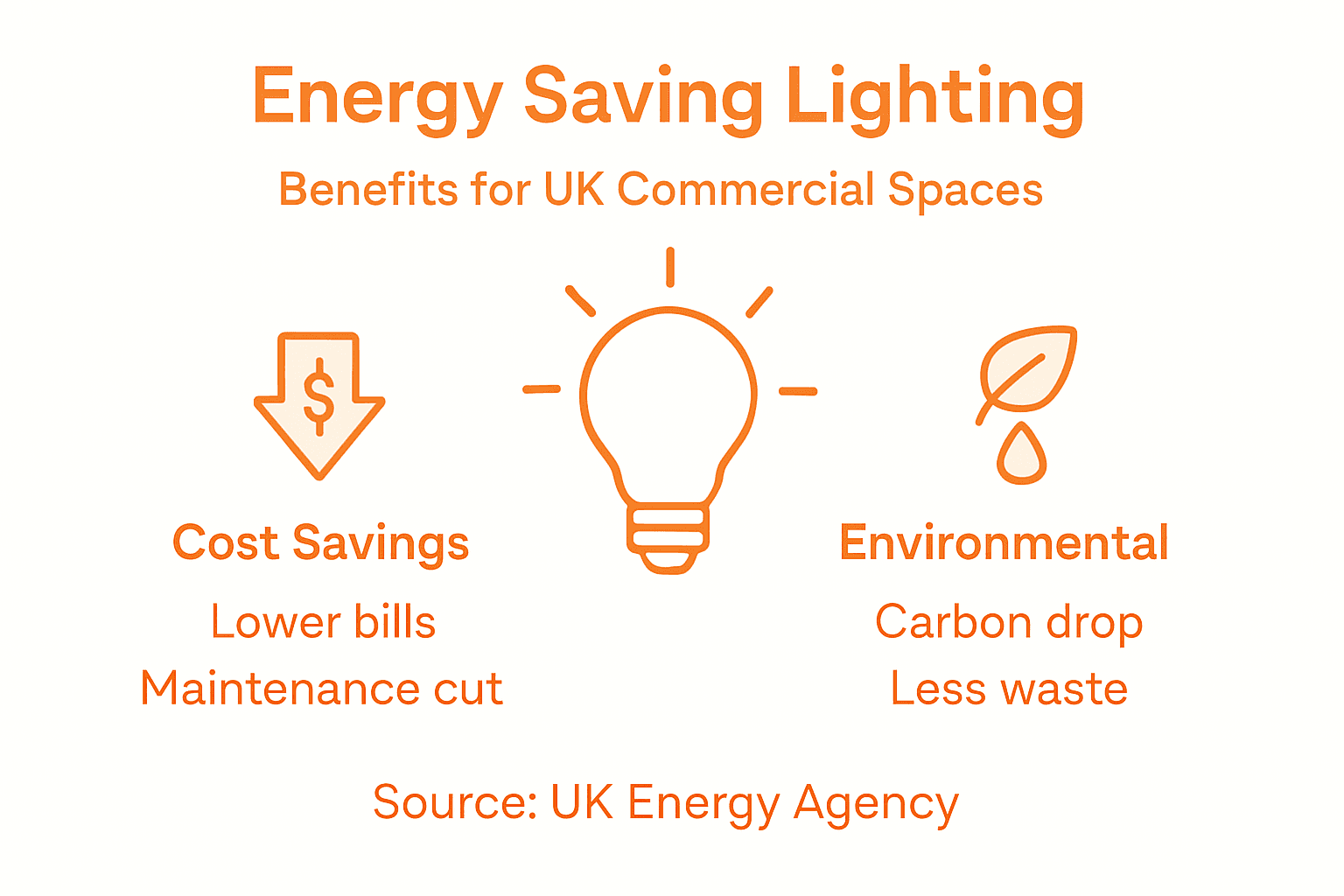
Pro tip: Conduct a comprehensive energy audit to identify the most suitable energy saving lights for your specific business environment and operational requirements.
Types and Technologies for Commercial Use
Commercial environments demand sophisticated energy saving lighting solutions that balance efficiency, performance, and adaptability. Comprehensive lighting technologies have evolved to meet these complex requirements, offering businesses multiple options for reducing energy consumption while maintaining optimal illumination standards.
The primary types of energy saving lighting technologies for commercial applications include:
- LED Replacement Bulbs: Direct substitutes for traditional lighting with superior efficiency
- Specialised Fixtures: Designed for specific commercial environments like warehouses, offices, and retail spaces
- Intelligent Lighting Controls: Advanced systems featuring:
- Motion sensor activation
- Daylight-responsive dimming
- Programmable scheduling
Modern commercial lighting technologies can achieve remarkable energy reductions, with some systems cutting energy consumption by up to 80%. These advanced solutions go beyond simple illumination, providing integrated management systems that adapt to changing environmental conditions and usage patterns.
Commercial lighting technologies are categorised into several critical performance categories, including fluorescent tube lighting (T-5 and T-8 variants), LED panels, and horticultural lighting systems. Each technology offers unique advantages for specific commercial applications, enabling businesses to select precise solutions matching their operational requirements and sustainability goals.
The following table contrasts the practical impacts of popular commercial lighting technologies:
| Technology Type | Typical Efficiency Gain | Impact on Maintenance | Suitability for Commercial Use |
|---|---|---|---|
| LED Panels | Up to 90% reduction | Minimises frequent replacements | Office, retail, warehouses |
| Fluorescent Tubes (T-5, T-8) | Up to 60% reduction | Moderate replacement needs | Warehouses, large offices |
| CFLs | Up to 75% reduction | Occasional replacement needed | Retrofits, small offices |
| Intelligent Controls | Varies, up to 80% | Reduces manual checks | Smart buildings, all sectors |
Pro tip: Conduct a comprehensive lighting audit to identify the most suitable energy saving technologies tailored to your specific commercial environment and operational needs.
Key Features and Performance Benefits
Energy saving lights offer a comprehensive suite of performance benefits that extend far beyond traditional lighting solutions. Advanced lighting technologies provide businesses with sophisticated options for reducing energy consumption while maintaining superior illumination quality.
Key performance features include:
- Energy Efficiency: Significant reduction in electricity consumption
- Cost Savings: Lower operational expenses through reduced power usage
- Extended Lifespan: Dramatically longer operational periods compared to traditional bulbs
- Improved Light Quality: Enhanced colour rendering and directional lighting
The environmental advantages of modern energy saving lights are particularly compelling. Innovative lighting solutions contribute to reduced carbon emissions and support broader clean energy objectives by minimising electricity demand and improving overall energy security.
Commercial applications benefit from multiple advanced features, including intelligent control systems that optimise lighting performance. These technologies offer precise management capabilities such as motion-activated illumination, daylight-responsive dimming, and programmable scheduling. By integrating these sophisticated controls, businesses can achieve unprecedented levels of energy efficiency and operational performance.
Pro tip: Implement a comprehensive lighting management strategy that combines advanced energy saving technologies with intelligent control systems to maximise both energy efficiency and workplace productivity.
Cost Savings and Environmental Impact
Business leaders across the United Kingdom are increasingly recognising the dual benefits of energy saving lights through their significant economic and environmental advantages. These innovative lighting solutions provide a strategic approach to reducing operational costs while simultaneously supporting national sustainability objectives.
Key financial benefits include:
- Reduced Electricity Expenses: Substantial decrease in energy consumption
- Lower Maintenance Costs: Extended equipment lifespan reduces replacement frequency
- Improved Cash Flow: Predictable and minimised lighting-related expenditures
- Tax Incentive Potential: Potential eligibility for green investment tax credits
Energy efficiency measures represent a critical strategy for UK businesses seeking to minimise their carbon footprint. By implementing advanced lighting technologies, companies can simultaneously achieve meaningful financial savings and contribute to broader environmental sustainability goals. The potential for reducing carbon dioxide emissions through strategic lighting upgrades is substantial, with some organisations reporting up to 70% reduction in electricity consumption.

The environmental impact extends beyond immediate energy savings. By transitioning to energy saving lights, businesses directly support the United Kingdom’s commitment to net-zero carbon emissions, demonstrating corporate responsibility and environmental stewardship. These technologies reduce reliance on fossil-fuel generated electricity, helping to mitigate climate change while creating more sustainable operational practices.
Here is a summary of financial and environmental benefits for UK businesses adopting energy saving lights:
| Benefit Area | Financial Effect | Environmental Outcome |
|---|---|---|
| Electricity Costs | Significantly reduced bills | Lower grid demand |
| Maintenance | Fewer replacements, less spend | Less waste generation |
| Tax Incentives | Potential eligibility | Promotes sustainable investment |
| Carbon Emissions | Savings reflected in reporting | Supports net-zero commitments |
Pro tip: Conduct a comprehensive energy audit to quantify potential savings and environmental benefits before implementing energy saving lighting solutions across your business.
Risks, Regulations, and Compliance
Navigating the complex landscape of energy saving lighting requires a comprehensive understanding of regulatory requirements and compliance standards. UK businesses must carefully evaluate potential risks and ensure full adherence to national and European lighting regulations to avoid potential legal and financial complications.
Key regulatory considerations include:
- Product Registration: Mandatory documentation and certification processes
- Efficiency Standards: Minimum performance requirements for lighting technologies
- Electrical Safety Compliance: Adherence to British electrical installation standards
- Environmental Impact Assessments: Documentation of energy efficiency and sustainability metrics
UK energy efficiency regulations impose strict guidelines for commercial lighting installations. These requirements encompass multiple aspects of lighting design, installation, and operational performance, with specific focus on:
- Energy consumption thresholds
- Product lifetime expectations
- Environmental impact measurements
- Electrical safety protocols
Business leaders must proactively manage compliance risks by maintaining detailed documentation, conducting regular equipment assessments, and staying informed about evolving regulatory frameworks. Failure to meet these standards can result in potential financial penalties, restricted market access, and reputational damage.
Pro tip: Engage a qualified compliance consultant specialising in energy efficiency regulations to conduct a comprehensive audit of your current lighting infrastructure and identify potential regulatory gaps.
Comparing Alternatives and Common Mistakes
Making informed decisions about energy saving lighting requires a comprehensive understanding of available technology alternatives. Business leaders must carefully evaluate different lighting solutions to maximise efficiency and avoid costly implementation errors.
Comparative analysis of lighting technologies reveals critical performance differences:
- LED Lights:
- Highest energy efficiency
- Longest operational lifespan
- Superior light quality
- Compact Fluorescent Lamps (CFLs):
- Moderate energy savings
- Shorter lifespan than LEDs
- Lower initial purchase cost
- Incandescent Bulbs:
- Lowest energy efficiency
- Shortest operational lifespan
- Lowest initial purchase price
Energy management strategies highlight several common mistakes businesses frequently encounter when implementing lighting upgrades. These include inadequate spatial assessment, neglecting compatibility with existing electrical systems, and failing to integrate intelligent control mechanisms.
Successful lighting transitions demand a holistic approach that considers technological compatibility, installation requirements, and long-term performance metrics. Businesses must conduct thorough assessments, including detailed cost-benefit analyses and comprehensive energy audits to ensure optimal lighting solutions.
Pro tip: Engage a professional lighting consultant to conduct a comprehensive evaluation of your current lighting infrastructure before implementing any technological upgrades.
Unlock Major Energy Savings with Professional LED Lighting Solutions for UK Businesses
Choosing the right energy saving lights can be a challenging step for any commercial business aiming to lower electricity costs, reduce carbon emissions and improve lighting quality. This article highlights key concerns including energy efficiency, intelligent lighting controls, and long-term cost savings. If you want to avoid costly mistakes like poor compatibility or inefficient installations, it is vital to partner with a trusted provider who understands your unique business needs.
At Ledsupplyandfit.co.uk, we specialise in supplying and professionally fitting top-tier LED lighting solutions tailored for shops, offices, warehouses and many other commercial settings across the UK. Benefit from our wide range of energy saving products, next-day delivery and expert advice to maximise your savings and reduce maintenance hassles. Act now to transform your premises with cost-effective, eco-friendly lighting that supports your business goals. Explore how our professional installation services can upgrade your lighting infrastructure efficiently and reliably today.
Frequently Asked Questions
What are the different types of energy saving lights available for commercial use?
Energy saving lights primarily include LED lights, Compact Fluorescent Lamps (CFLs), and smart lighting systems. Each type offers varying levels of efficiency and suitability for different commercial applications.
How much can businesses save by switching to energy saving lights?
Businesses can achieve significant energy savings, with some modern systems reducing energy consumption by up to 90%. This translates to lower electricity expenses and less frequent maintenance costs due to longer lifespan of the lights.
What are the environmental benefits of using energy saving lights?
Energy saving lights reduce electricity demand, thereby lowering carbon emissions. By adopting these technologies, businesses contribute to broader sustainability goals and help support national commitments to net-zero carbon emissions.
How do intelligent lighting controls enhance energy efficiency in commercial settings?
Intelligent lighting controls, such as motion sensors and programmable schedules, optimise energy use by adjusting lighting according to actual needs. This dynamic management significantly decreases unnecessary energy consumption, enhancing overall efficiency.