Why Choose LED Panels in UK 2026: Save Up to 75% Energy
Commercial property managers in the UK are discovering that LED panels can slash lighting energy consumption by up to 75%, delivering immediate cost relief and supporting ambitious sustainability targets. This guide explores the financial, operational, and environmental advantages of LED panel adoption, debunks common myths, and provides practical implementation strategies to help you make informed decisions that transform your commercial lighting investment into measurable returns.
Key Takeaways
| Point | Details |
|---|---|
| Energy Savings | LED panels reduce lighting energy use by 50-75%, drastically cutting utility bills for UK commercial properties. |
| Extended Lifespan | With 50,000+ hour lifespans, LED panels last over twice as long as fluorescents, minimizing maintenance costs and disruption. |
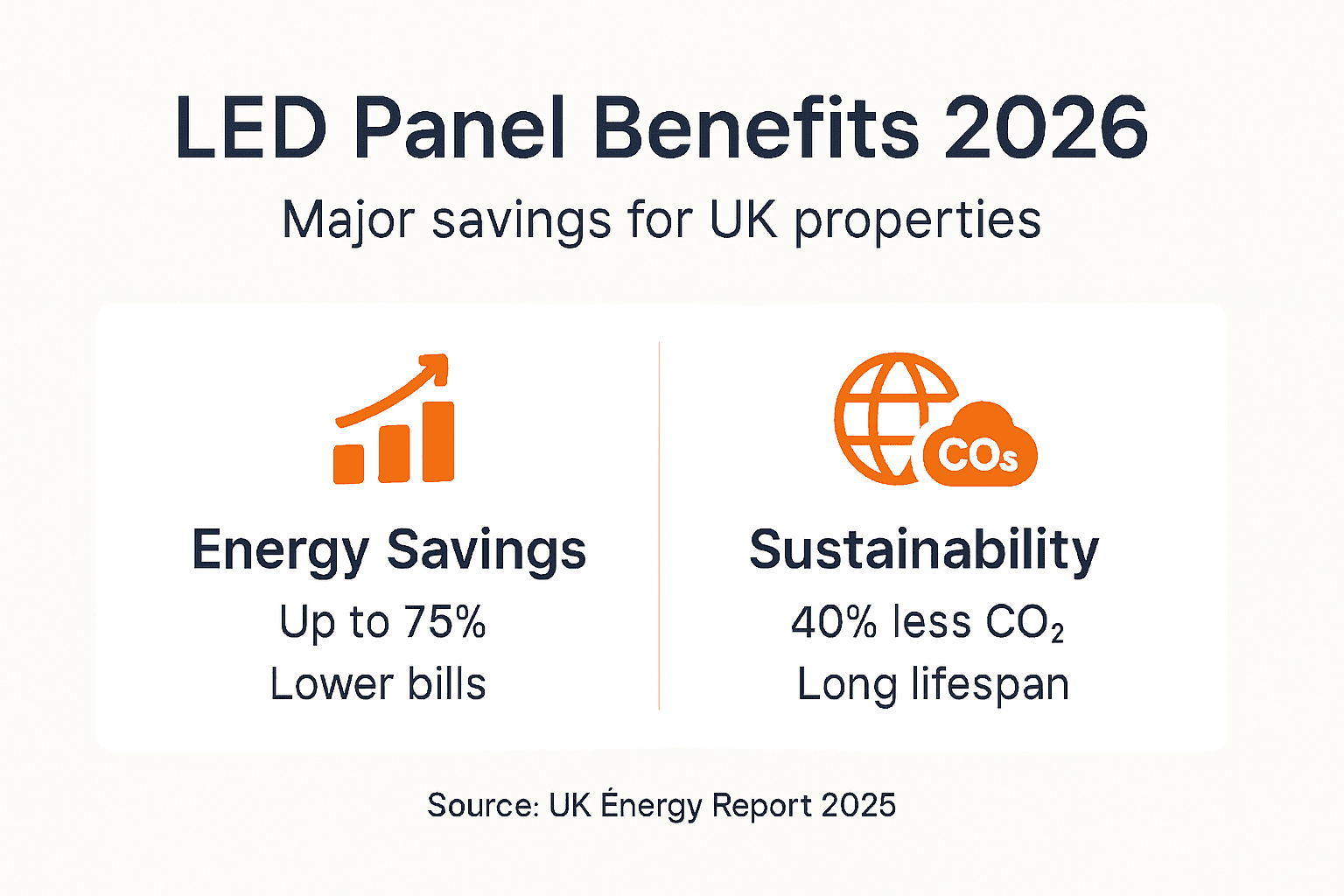
| Carbon Reduction | Switching to LED panels can lower commercial carbon footprints by up to 40%, supporting UK sustainability compliance. |
| Quality Improvements | High CRI values and flicker-free operation enhance workplace comfort, productivity, and employee satisfaction. |
| Fast ROI | Typical payback periods of 2-3 years make LED panels a financially sound investment for most UK businesses. |
Introduction to LED Panels for Commercial Properties
LED panels are flat, energy efficient lighting fixtures designed to replace traditional fluorescent tube arrays in commercial ceilings. You’ll encounter two main types in UK commercial buildings: recessed panels that sit flush within suspended ceilings, and surface-mounted versions fixed directly to solid ceilings. Both deliver uniform, glare-free illumination suited to offices, retail spaces, warehouses, and hospitality venues.
Commercial properties face three critical lighting challenges:
- High energy costs from inefficient legacy systems consuming excessive electricity
- Frequent maintenance disruptions and expense from short-lived fluorescent tubes
- Poor light quality causing eye strain, reduced productivity, and customer dissatisfaction
Traditional fluorescent lighting wastes substantial energy as heat, requires ballast replacements, and suffers from flickering and colour rendering deficiencies. LED technology addresses these issues through solid-state design that converts electricity to light with minimal heat loss, operates without failure-prone ballasts, and provides stable, high-quality illumination. Understanding these fundamental differences helps you appreciate why LED lighting benefits for UK commercial properties extend far beyond simple bulb replacement, representing a comprehensive upgrade to your facility’s operational efficiency and environmental performance.
Energy Efficiency and Cost Savings from LED Panels
LED panels consume up to 75% less energy than traditional fluorescent lighting, translating directly to substantial electricity bill reductions. A typical 600x600mm fluorescent panel drawing 50 watts can be replaced with an LED equivalent using just 12-18 watts while delivering the same or better light output. For a medium-sized office running 200 panels 10 hours daily, this shift saves approximately £3,000-£4,500 annually at current UK commercial electricity rates.
The financial benefits extend across multiple dimensions:
- Lower peak demand charges reducing overall utility contract costs
- Reduced HVAC expenses from minimal heat emission compared to hot fluorescent ballasts
- Eligibility for UK energy efficiency grants and tax incentives supporting green investments
- Improved cash flow from immediate operational cost reductions
Pro Tip: Conduct a simple energy audit by recording your current lighting fixtures’ wattage and operating hours, then compare against LED panel specifications to project your specific savings before making purchasing decisions.
| Lighting Type | Power Draw (W) | Annual Energy Cost (200 units, 10hrs/day) | Heat Output |
|---|---|---|---|
| Fluorescent Panel | 50W | £7,300 | High |
| LED Panel | 15W | £2,190 | Minimal |
| Annual Savings | 70% | £5,110 | Lower HVAC load |
Beyond direct electricity savings, LED panels reduce hidden costs through decreased cooling requirements. Fluorescent fixtures generate significant heat that your HVAC system must counteract, especially in densely lit spaces. Switching to cool-running LEDs can reduce cooling loads by 10-15%, delivering compounding energy-saving lighting options that optimize your entire building’s energy profile. When evaluating LED energy savings in UK businesses, remember that upgrading to LEDs for 65% savings represents a conservative estimate for many commercial applications. The Carbon Trust on LED lighting efficiency provides comprehensive guidance on maximizing these benefits.
Lifespan and Maintenance Benefits of LED Panels
LED panels operate reliably for approximately 50,000 hours compared to 15,000-20,000 hours for fluorescent tubes, more than doubling usable life. This extended lifespan transforms maintenance schedules and budgets. A commercial property lighting 200 fixtures 10 hours daily would replace fluorescent tubes every 4-6 years, while LED panels continue performing for 13-15 years before requiring replacement.
Maintenance cost reductions manifest through:
- Fewer replacement purchases reducing material expenses by 60-70%
- Dramatically reduced labor costs from infrequent changeouts
- Eliminated emergency callouts for failed lighting during business hours
- Lower storage requirements and inventory management overhead
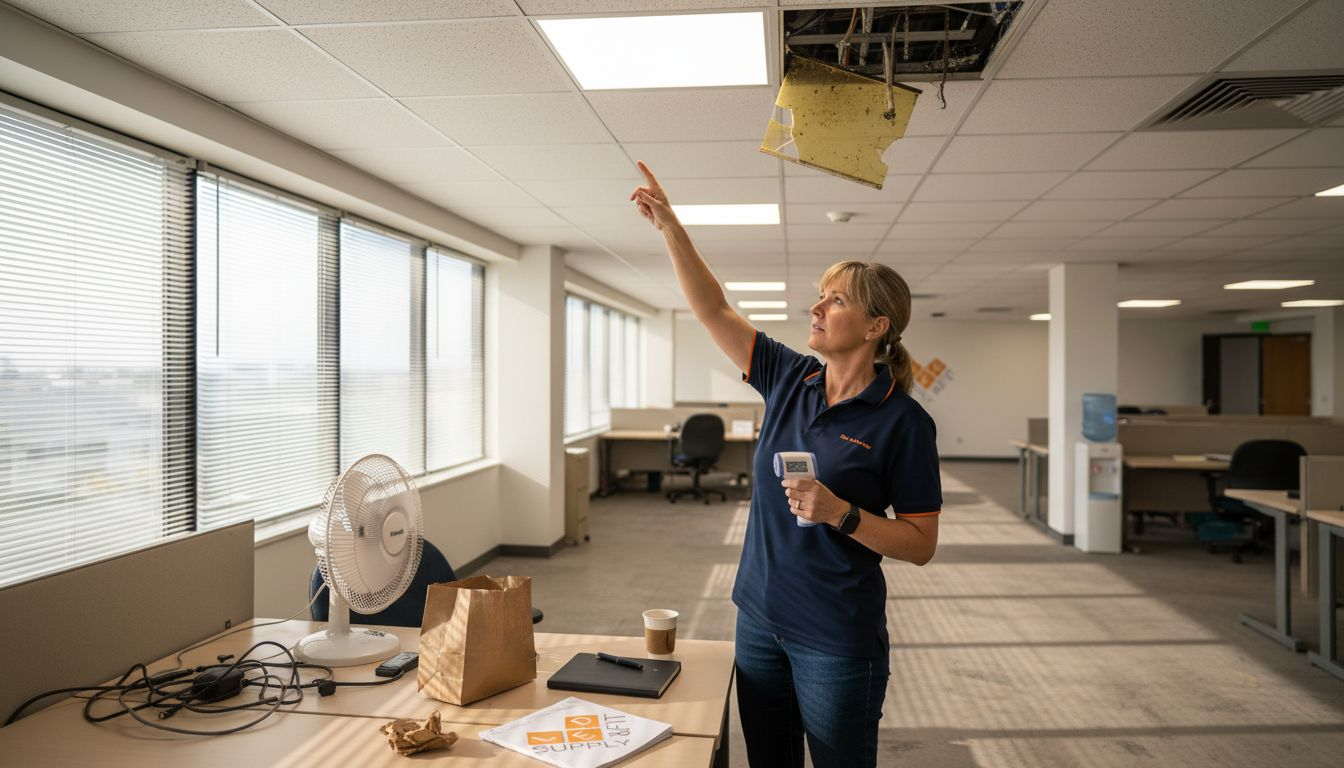
Beyond financial savings, reduced maintenance frequency minimizes operational disruption. Fluorescent tube failures often occur unpredictably, requiring immediate attention that interrupts workflows and potentially closes areas to customers or employees. LED panels degrade gradually over their lifespan, allowing planned replacements during scheduled maintenance windows. This reliability particularly benefits 24/7 operations like warehouses, hospitals, and manufacturing facilities where lighting failures impact productivity and safety.
Pro Tip: When calculating LED panel ROI, include maintenance labor savings alongside energy reductions. For properties using external contractors, this often represents 20-30% of total cost savings and significantly shortens payback periods.
The extended service life also supports LED lighting durability and cost savings in ways that compound over decades. A single LED panel installation can outlast three complete fluorescent tube replacement cycles, avoiding the cumulative disruption, waste, and expense of repeated interventions across your property’s lighting infrastructure.
Environmental Impact and Sustainability Advantages
Switching to LED panels can reduce a commercial property’s carbon footprint by up to 40% due to lower electricity consumption and decreased manufacturing waste from longer product lifespans. This substantial emissions reduction helps UK businesses meet increasingly stringent environmental regulations and corporate sustainability commitments. With UK government net zero targets driving regulatory changes, proactive LED adoption positions your property ahead of compliance requirements.
Environmental benefits extend across multiple dimensions:
- Reduced grid electricity demand lowering fossil fuel consumption at power generation sources
- Minimal hazardous material content compared to mercury-containing fluorescent tubes
- Decreased landfill waste from fewer replacements over building lifetime
- Lower manufacturing carbon footprint when amortized across extended operational life
LED retrofits directly support qualification for environmental certifications like BREEAM and LEED, enhancing property values and tenant appeal. Commercial landlords report sustainability credentials increasingly influence lease decisions, with energy-efficient buildings commanding premium rents and lower vacancy rates. The Energy Saving Trust on LED environmental benefits documents how lighting upgrades contribute meaningfully to broader environmental strategies.
Carbon Footprint Reduction: Up to 40% when replacing fluorescent lighting with LED panels across commercial properties, based on reduced electricity consumption and longer product lifecycles.
Beyond compliance and marketing advantages, reduced environmental impact aligns with employee values and recruitment goals. UK workforce surveys consistently show sustainability practices influence employer choice, particularly among younger professionals. Visible investments like LED lighting communicate environmental commitment in ways that resonate with staff and visitors, supporting workplace culture and brand reputation objectives alongside operational efficiency gains.
Common Misconceptions About LED Panels
Myth: LED panels cost too much upfront for typical commercial budgets. Reality: While initial purchase prices exceed fluorescent equivalents, typical payback periods of 2-3 years through energy and maintenance savings make LED panels financially advantageous within normal capital planning cycles. Many UK suppliers offer financing options spreading costs across savings realization periods.
Myth: LED light quality appears harsh and unflattering compared to warm fluorescent illumination. Reality: Modern LED panels achieve Color Rendering Index (CRI) values exceeding 80-90, matching or surpassing fluorescent performance. You can select colour temperatures from warm (3000K) to cool (6500K) matching any aesthetic or functional requirement. Independent testing confirms LED panels render colours more accurately than most fluorescent systems.
Myth: LED lighting causes headaches and eye strain through flickering. Reality: Quality LED panels operate with imperceptible flicker well above human visual perception thresholds, providing more stable illumination than fluorescent tubes that flicker at mains frequency. This stability actually reduces eye strain and associated headaches compared to legacy systems. Proper LED panel selection eliminates flicker concerns entirely.
These misconceptions often stem from early LED technology experiences or exposure to low-quality products. The LED market has matured substantially, with reputable manufacturers delivering performance that addresses historical limitations. When debunking LED lighting myths, evidence-based comparisons consistently favor modern LED panels across cost, quality, and health metrics. Understanding these realities helps you evaluate LED investments objectively based on current capabilities rather than outdated perceptions.
Light Quality and User Experience Enhancements
LED panels deliver uniform light distribution that eliminates the harsh shadows and bright spots characteristic of fluorescent tube arrangements. This even illumination reduces visual fatigue in office environments, improves product display visibility in retail settings, and enhances safety in warehouses and industrial spaces. Employees report increased comfort and reduced end-of-day eye strain after LED retrofits.
Superior colour rendering transforms workplace environments:
- High CRI values make printed materials, displays, and product colours appear accurate and vibrant
- Adjustable colour temperatures suit different tasks and spaces within single properties
- Stable light output maintains consistent conditions throughout operating hours
- Reduced glare improves screen visibility for computer-intensive work
Flicker-free operation represents a significant health and productivity advantage. Fluorescent tubes cycle at mains frequency creating subtle flicker that contributes to headaches, eye strain, and concentration difficulties even when not consciously perceived. LED panels provide constant illumination that eliminates this stressor, supporting employee wellbeing and performance. UK businesses implementing LED upgrades consistently report improved workplace satisfaction scores.
The combination of quality improvements creates tangible business value beyond energy savings. Retail environments benefit from enhanced merchandise presentation, offices experience productivity gains from improved visual comfort, and hospitality venues create more appealing atmospheres. These user experience benefits amplify the financial case for LED adoption, delivering returns through employee retention, customer satisfaction, and operational efficiency alongside direct cost reductions. The LED lighting quality and workplace experience improvements represent competitive advantages that extend well beyond utility bill savings.
Procurement and Practical Implementation Considerations
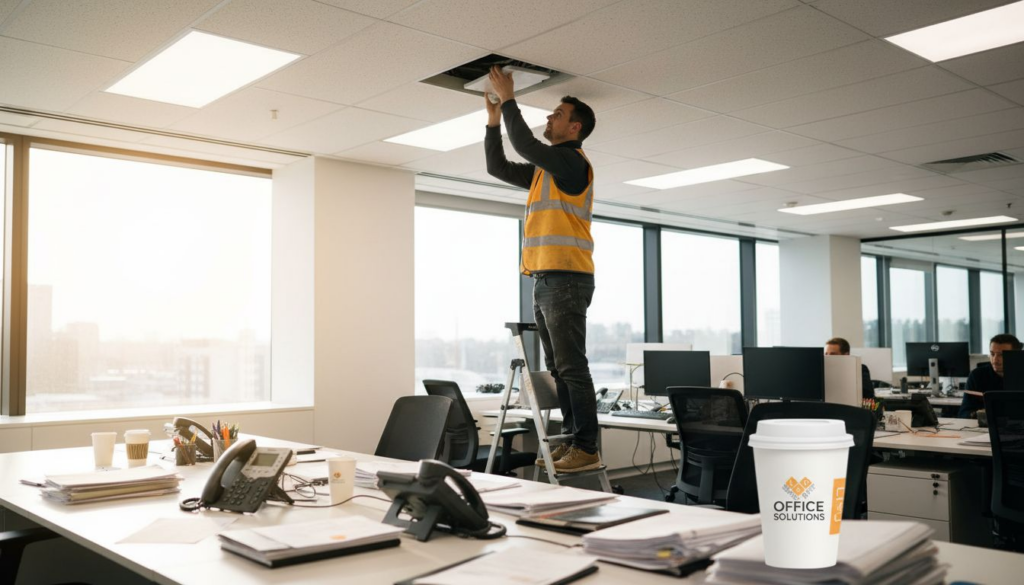
Successful LED panel implementation begins with comprehensive assessment of your current lighting infrastructure. Document fixture types, quantities, operating hours, and energy consumption to establish baseline costs and identify priority upgrade areas. This analysis informs procurement decisions and ROI projections.
- Assess your existing lighting energy use and maintenance costs to establish savings potential
- Define requirements including light levels, colour temperature preferences, and installation constraints
- Evaluate LED panel options against efficiency ratings, quality certifications, and warranty terms
- Select suppliers offering professional installation and project management support
- Plan installation timing to minimize operational disruption, typically during off-hours or phased approaches
- Verify installer qualifications and UK electrical safety compliance certifications
Key evaluation criteria for LED panel selection include efficacy ratings (lumens per watt), CRI values above 80, compatibility with existing ceiling systems, and manufacturer warranty coverage. Prioritize products meeting UK safety standards and energy efficiency certifications. Beware of bargain options lacking proper testing and support, as poor-quality LEDs fail to deliver promised savings and may require premature replacement.
Pro Tip: Engage experienced suppliers who provide end-to-end project management from specification through commissioning. Their expertise ensures optimal product selection, efficient installation, and proper system configuration maximizing your investment returns.
Bulk purchasing through trade accounts substantially reduces unit costs for properties upgrading multiple areas simultaneously. Many suppliers offer tiered pricing with significant discounts beginning at 50-100 units. The commercial LED lighting upgrade guidance and bulk purchasing and savings for LEDs resources help optimize procurement strategies. Professional installation typically completes within days for medium-sized properties, with minimal disruption when scheduled appropriately. Experienced installers work efficiently around your operations, often completing sections overnight or during weekends to avoid business interruption.
Case Studies and Return on Investment Examples
A Midlands warehouse facility replaced 400 fluorescent high-bay fixtures with LED panels, achieving 70% energy reduction and £18,000 annual savings. The installation cost £45,000 with a 2.5-year payback period. Beyond energy savings, the company eliminated quarterly maintenance costs exceeding £3,000 annually, accelerating actual ROI to under 2 years. Improved visibility reduced picking errors by 15%, delivering additional operational value.
A London office building upgraded 600 ceiling panels across three floors, investing £38,000 in LED replacements. Annual energy savings exceeded £14,000, with maintenance cost reductions adding £4,200 yearly. Employee satisfaction surveys showed 28% improvement in lighting quality ratings, correlating with reduced absenteeism. The project achieved full payback in 2.1 years while qualifying for BREEAM certification upgrades that increased property valuation.
| Business Type | Fixtures Replaced | Energy Savings | Annual Cost Reduction | Payback Period | Additional Benefits |
|---|---|---|---|---|---|
| Warehouse | 400 high-bay | 70% | £21,000 | 2.1 years | 15% fewer picking errors |
| Office Building | 600 panels | 65% | £18,200 | 2.1 years | BREEAM upgrade, 28% satisfaction improvement |
| Retail Chain | 250 panels | 60% | £9,800 | 2.8 years | Enhanced product display, 12% sales increase |
A retail chain replaced fluorescent panels across five locations, documenting not only expected energy savings but measurable sales increases. Better colour rendering improved merchandise presentation, contributing to 12% revenue growth that store managers attributed partially to enhanced lighting. The environmental benefits supported corporate sustainability reporting, helping meet investor ESG requirements.
These energy-efficient lighting case studies demonstrate consistent returns across diverse UK commercial applications. The combination of energy savings, maintenance reductions, and operational improvements creates compelling financial cases that extend well beyond simple utility bill calculations. Properties achieving similar results share common factors: quality product selection, professional installation, and comprehensive planning that addresses specific operational requirements.
Upgrade Your Commercial Lighting with LED Supply & Fit
Ready to transform your commercial property’s lighting performance? LED Supply & Fit specializes in tailored LED panel installations for UK businesses seeking proven energy savings and operational improvements. Our expert team guides you through selection, procurement, and professional installation, ensuring optimal results that maximize your investment returns.
We’ve delivered successful projects for clients including Stockton Riverside College, achieving substantial cost reductions and sustainability improvements. Our comprehensive approach handles everything from initial assessment through commissioning and aftercare support. Whether you’re upgrading a single location or managing multi-site rollouts, we provide the expertise and reliability that ensure smooth implementation and measurable results. Take the first step toward reducing your energy costs by 50-75% while enhancing workplace quality. Upgrade your commercial lighting with confidence, learn from our Stockton Riverside College LED project success, or request a quote for LED panels tailored to your specific requirements today.
Frequently Asked Questions About LED Panels for Commercial Properties
What’s the typical payback period for LED panel investments in UK businesses?
Most UK commercial properties achieve payback within 2-3 years through combined energy and maintenance savings. High-usage facilities like 24/7 warehouses often recover costs faster, sometimes under 18 months, while lower-usage spaces may extend to 3-4 years but still deliver strong lifetime returns.
Are LED panels compatible with existing commercial lighting fixtures?
LED panels are designed as direct replacements for standard fluorescent fittings in suspended and solid ceilings. Most installations require minimal structural modification, with panels fitting existing ceiling grid systems. Professional installers assess compatibility during planning to ensure seamless integration.
How do LED panels contribute to UK business sustainability targets?
LED panels reduce carbon emissions by 30-40% through lower electricity consumption, support waste reduction goals via extended lifespans, and help qualify for environmental certifications like BREEAM. These measurable improvements directly support net zero commitments and ESG reporting requirements.
Can LED panel installation disrupt normal commercial operations?
Professional installers minimize disruption through careful scheduling, often working outside business hours or in phases. Most medium-sized properties complete installations within days, with individual areas offline for just hours. Proper planning ensures minimal impact on daily operations.
Do LED panels require special maintenance compared to traditional lighting?
LED panels require virtually no maintenance beyond occasional cleaning. Unlike fluorescent systems needing regular tube and ballast replacements, LED panels operate maintenance-free for 50,000+ hours. This simplicity eliminates ongoing service contracts and unexpected failure callouts.