
Benefits of Commercial LED Lighting in the UK
Reducing energy bills can feel like a constant challenge for facility managers in United Kingdom hotels and retail shops. Finding a smarter solution matters when every pound saved increases your business’s efficiency. Commercial LED lighting brings clear advantages including dramatically reduced energy consumption and better sustainability. This guide unpacks the technical innovations of LED lighting, clarifies its benefits, and shows how you can transform your workspace with modern, cost-effective illumination.
Table of Contents
- Commercial LED Lighting Defined and Debunked
- Types of Commercial LED Lighting Solutions
- How LED Technology Delivers Energy Efficiency
- Financial and Environmental Impact for Businesses
- Comparing LED to Traditional Lighting Alternatives
Key Takeaways
| Point | Details |
|---|---|
| Energy Efficiency | Commercial LED lighting significantly reduces energy consumption and carbon emissions compared to traditional lighting solutions. |
| Environmental Sustainability | LEDs contribute to lower carbon footprints and meet evolving regulatory standards, enhancing corporate sustainability credentials. |
| Cost Savings | Adopting LED lighting leads to reduced electricity bills and lower maintenance expenses, providing direct financial benefits to businesses. |
| Flexible Solutions | LED systems offer versatility across various commercial settings, ensuring optimal lighting tailored to specific business needs. |
Commercial LED Lighting Defined and Debunked
Commercial LED lighting represents a sophisticated technological solution transforming how businesses illuminate their workspaces. Light-emitting diodes (LEDs) are semiconductor devices that produce light through electron recombination, creating photon emissions with remarkable energy efficiency.
Unlike traditional lighting technologies, LEDs operate fundamentally differently. They generate light through electronic processes rather than heating filaments, which translates into significant performance advantages. The technology involves combining red, green, and blue LED components to create white light, or using blue LEDs with specialised chemical phosphor layers that convert wavelengths into visible illumination.
Key characteristics of commercial LED lighting include:
- Dramatically reduced energy consumption
- Extended operational lifespan
- Superior colour rendering capabilities
- Minimal heat generation
- Enhanced environmental sustainability
Technical specifications play a crucial role in understanding LED lighting systems. LED lighting designs require careful consideration of electrical configurations, including AC and DC power applications, safety protocols, and advanced dimming capabilities.
Modern commercial LED systems offer unprecedented flexibility for businesses. They can be precisely engineered to match specific spatial requirements, providing consistent, high-quality illumination across diverse environments like retail spaces, hospitality venues, and industrial settings.
Pro tip: When evaluating LED lighting solutions, request comprehensive technical specifications and performance data to ensure optimal compatibility with your specific commercial environment.
Types of Commercial LED Lighting Solutions
Commercial LED lighting encompasses a diverse range of solutions tailored to meet specific business requirements across various industries. Commercial LED lighting technologies offer unprecedented versatility, addressing unique illumination needs for different professional environments.
The primary categories of commercial LED lighting solutions include:
- Indoor Commercial Lighting
- Office workspace illumination
- Retail display lighting
- Hospitality area lighting
- Outdoor Commercial Lighting
- Architectural facade lighting
- Parking area illumination
- Landscape and perimeter lighting
- Specialised Lighting Solutions
- Industrial zone lighting
- Healthcare facility illumination
- Educational institution lighting
Commercial luminaire designs address critical considerations beyond simple illumination. These advanced systems prioritise energy efficiency, environmental sustainability, and precise light distribution across commercial spaces. Modern LED solutions integrate smart technologies that enable dynamic lighting control, occupancy sensing, and adaptive brightness management.
Each lighting category serves distinct functional purposes. Indoor commercial lighting focuses on creating optimal working environments, enhancing productivity and employee comfort. Outdoor solutions emphasise safety, security, and aesthetic appeal, while simultaneously minimising light pollution and energy consumption.

Pro tip: Consult professional lighting designers who can perform comprehensive site assessments to recommend the most appropriate LED lighting solutions for your specific commercial environment.
How LED Technology Delivers Energy Efficiency
LED lighting standards represent a revolutionary approach to energy conservation in commercial environments. These advanced lighting technologies transform electrical energy into light with unprecedented efficiency, dramatically reducing power consumption across business settings.
The key energy efficiency mechanisms of LED technology include:
- Quantum Mechanics Principles
- Direct electron-to-photon energy conversion
- Minimal heat generation
- Maximum light output per watt
- Electrical Energy Optimization
- Lower power requirements
- Reduced carbon emissions
- Sustainable illumination strategies
- Performance Characteristics
- Extended operational lifespan
- Consistent light quality
- Adaptive energy management
Quantum mechanics principles underpin LED technology’s remarkable energy efficiency. Unlike traditional incandescent bulbs that waste substantial energy as infrared radiation, LEDs convert electrical energy directly into visible light with minimal thermal loss. This fundamental technological advantage enables businesses to achieve significant reductions in energy consumption.
Commercial LED systems offer sophisticated energy management capabilities. Smart LED technologies can integrate occupancy sensing, dynamic brightness control, and automated lighting schedules, further enhancing overall energy efficiency. These advanced features allow businesses to optimise lighting performance while minimising unnecessary power usage.
Pro tip: Implement LED lighting with integrated smart controls to maximise energy savings and create adaptable illumination environments for your commercial space.
Financial and Environmental Impact for Businesses
LED lighting standards represent a transformative approach for businesses seeking substantial financial and environmental benefits. By adopting these advanced technologies, companies can simultaneously reduce operational costs and minimise their carbon footprint.
The key financial and environmental advantages include:
- Direct Cost Savings
- Reduced energy consumption
- Lower electricity bills
- Minimal maintenance expenses
- Environmental Benefits
- Decreased carbon dioxide emissions
- Reduced fossil fuel dependency
- Contribution to climate change mitigation
- Long-term Business Advantages
- Enhanced corporate sustainability credentials
- Potential tax incentives
- Improved brand reputation
Global climate strategies emphasise the critical role of energy-efficient technologies in commercial sectors. LED lighting enables businesses to dramatically reduce energy consumption, with potential savings reaching up to 70% compared to traditional lighting systems. These reductions translate directly into meaningful financial and environmental outcomes.
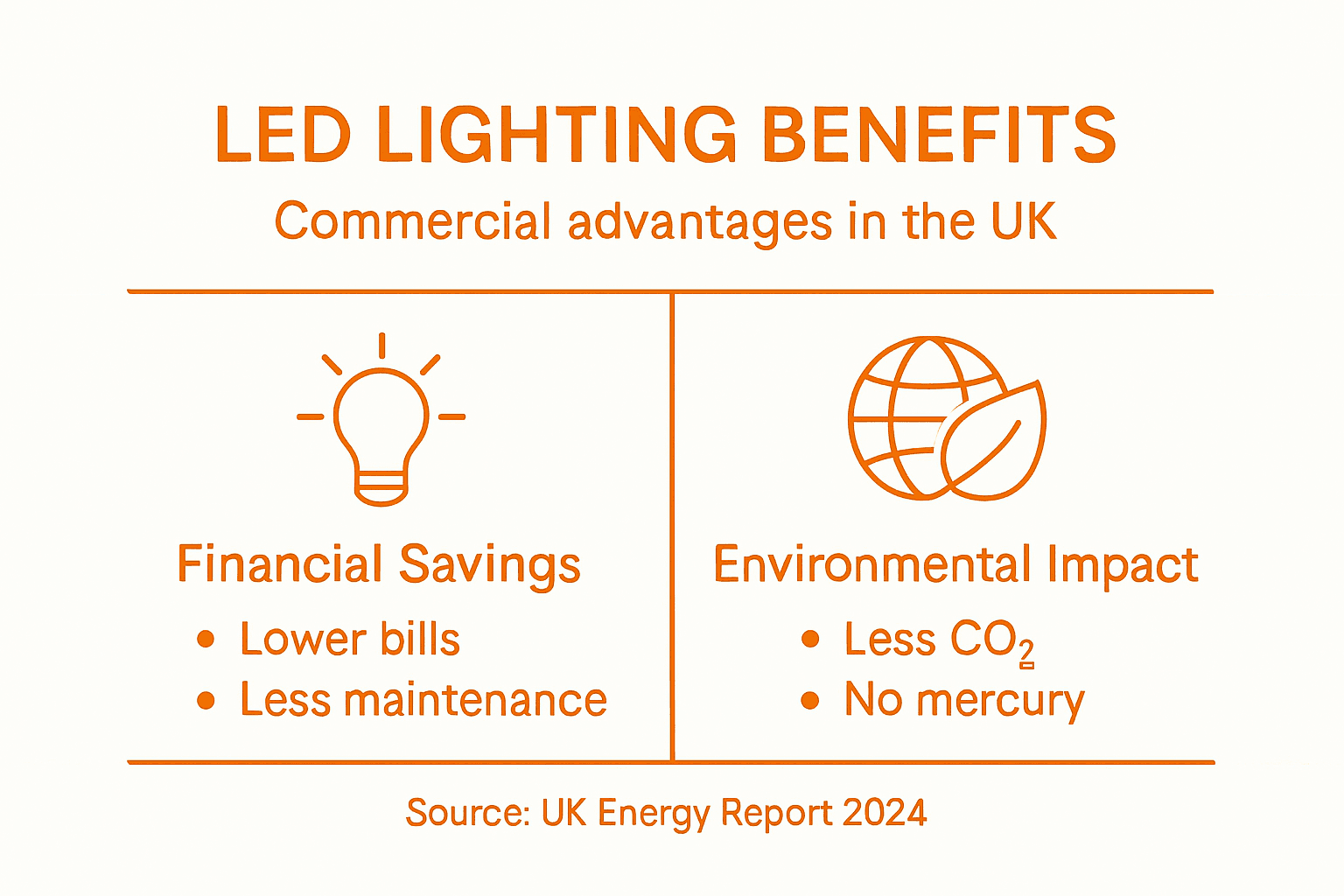
By implementing LED technologies, businesses can expect comprehensive benefits beyond immediate cost savings. The technologies support broader sustainability objectives, help meet evolving regulatory requirements, and demonstrate corporate commitment to environmental responsibility. Moreover, the long-term financial advantages make LED lighting an intelligent strategic investment for forward-thinking organisations.
Below is a summary of how commercial LED lighting impacts businesses financially and environmentally:
| Impact Area | Short-Term Benefit | Long-Term Advantage |
|---|---|---|
| Cost Savings | Reduced electricity bills | Lower ongoing maintenance expenditure |
| Sustainability | Fewer carbon dioxide emissions | Strengthened corporate reputation |
| Regulatory Compliance | Meets energy efficiency standards | Supports future environmental policies |
| Incentives | Access to tax benefits | Potential for further government grants |
Pro tip: Conduct a comprehensive energy audit to quantify potential LED lighting savings and develop a tailored implementation strategy for your specific business environment.
Comparing LED to Traditional Lighting Alternatives
LED lighting technology represents a revolutionary advancement in commercial illumination, offering substantial performance improvements over traditional lighting solutions. Unlike older technologies, LEDs provide businesses with an intelligent, sustainable alternative that delivers remarkable efficiency and versatility.
Key comparative differences between LED and traditional lighting include:
- Energy Efficiency
- LEDs consume significantly less electricity
- Minimal heat generation
- Higher lumens per watt output
- Environmental Impact
- No hazardous substances
- Reduced carbon emissions
- Lower manufacturing ecological footprint
- Operational Performance
- Extended lifespan (50,000+ hours)
- Consistent light quality
- Instant full brightness
Quantum physics principles underpin LED lighting’s superior performance. Traditional incandescent and fluorescent bulbs lose substantial energy as heat, whereas LEDs convert electrical energy directly into light with unprecedented precision. This fundamental technological difference enables dramatically improved energy conversion rates and operational efficiency.
Traditional lighting technologies like incandescent and fluorescent bulbs have significant limitations. They generate excessive heat, contain toxic materials such as mercury, and require frequent replacements. In contrast, LED lighting offers businesses a comprehensive solution that reduces maintenance costs, enhances workplace environments, and supports sustainability objectives.
This table offers a quick comparison of LED lighting and traditional alternatives for commercial spaces:
| Criterion | LED Lighting | Traditional Lighting |
|---|---|---|
| Lifespan | Over 50,000 hours | 1,000–10,000 hours |
| Energy Use | Highly energy-efficient | Higher energy consumption |
| Environmental Risk | No hazardous materials | Mercury and toxic substances |
| Light Quality | Consistent and adjustable | Can flicker or degrade |
Pro tip: When transitioning from traditional to LED lighting, conduct a comprehensive audit to identify specific fixture requirements and potential energy savings across different commercial spaces.
Unlock the Full Benefits of Commercial LED Lighting for Your UK Business
The article highlights the challenges businesses face in reducing energy consumption while improving lighting quality and sustainability. If you are seeking to lower operational costs, extend lighting lifespans, and enhance your commercial premises with cutting-edge LED technology, the goal is clear. You want reliable, energy-efficient solutions tailored for your specific environment — whether offices, retail spaces, hospitality venues or warehouses — combined with expert installation support.
At Ledsupplyandfit.co.uk, we understand these pain points and deliver comprehensive LED lighting solutions that align perfectly with the article’s insights on energy efficiency, environmental impact, and long-term savings. Our extensive range includes ATEX-rated lighting for hazardous areas and offers bulk discounts plus next-day delivery to meet urgent business needs. Furthermore, our professional fitting service ensures seamless integration that maximises performance and minimises downtime.
Take the next step towards transforming your commercial lighting setup and reaping significant financial and environmental benefits.
Explore tailored commercial LED solutions that address your unique business needs with proven expertise and quality products.
Ready to reduce costs and upgrade your lighting effortlessly Start your journey today with Ledsupplyandfit.co.uk and experience the difference of expert supply and installation across the UK. Contact us now for a personalised consultation and discover how modern LED lighting can energise your business environment.
Frequently Asked Questions
What are the energy efficiency benefits of commercial LED lighting?
LED lighting consumes significantly less electricity compared to traditional lighting, resulting in reduced energy consumption and lower utility bills. They operate with minimal heat generation and offer higher lumens per watt output.
How long does commercial LED lighting last compared to traditional lighting?
Commercial LED lighting can last over 50,000 hours, significantly outlasting traditional incandescent or fluorescent bulbs, which typically last between 1,000 to 10,000 hours. This extended lifespan leads to lower maintenance costs.
What are the environmental advantages of using LED lighting in businesses?
LED lighting has a lower environmental impact as it contains no hazardous substances, such as mercury, and produces fewer carbon emissions. It also supports sustainability goals by reducing the dependency on fossil fuels.
How does the light quality of LED lighting compare to traditional lighting?
LED lighting provides consistent and adjustable light quality, ensuring optimal visibility and comfort. In contrast, traditional lighting may flicker or degrade over time, leading to inconsistent illumination.