
Why compliance matters in lighting for UK businesses
TL;DR:
- Lighting compliance is crucial for safety, energy efficiency, and legal adherence in UK commercial properties. Regular testing, proper documentation, and smart monitoring are essential to maintain ongoing compliance and avoid penalties. Investing in compliant systems and integrated management prevents costly failures and enhances building safety and performance.
Lighting compliance is one of those subjects many commercial property managers treat as paperwork rather than priority. That attitude is expensive. Understanding why compliance matters in lighting goes well beyond ticking a box for the council or satisfying an insurer. It affects whether your staff can evacuate safely in a fire, whether your energy bills are legally defensible, and whether your building can stay open after an inspection. This article cuts through the misconceptions and gives you a practical, UK-focused view of what compliance actually demands and why getting it right pays.
Why compliance matters in lighting: the safety case
Emergency lighting is the sharpest edge of lighting compliance. When mains power fails during a fire or evacuation, you have seconds. Standards require that emergency lighting activates within 10 seconds of power failure and sustains adequate illumination for a minimum of 90 minutes, giving occupants time to reach a place of safety.
The testing obligations that accompany this are non-negotiable. The required protocol includes two distinct checks:
- Monthly functional test. A 30-second activation test confirming the system switches on and lights illuminate as intended.
- Annual endurance test. A full 90-minute discharge test to prove batteries and lamps can sustain output for the required duration, with documentation filed as evidence.
Skipping these is where businesses get caught out. Emergency lighting failures are the most common fire code violation found during inspections, usually caused by dead batteries, failed lamps, or obstructed exit signs. None of these failures are complicated to prevent. They simply require discipline.
The liability angle matters too. If an incident occurs and you cannot demonstrate that your emergency lighting was tested and maintained, insurers can reject claims and enforcement bodies can pursue prosecution. The physical presence of a luminaire on the wall proves nothing without the log to back it up.
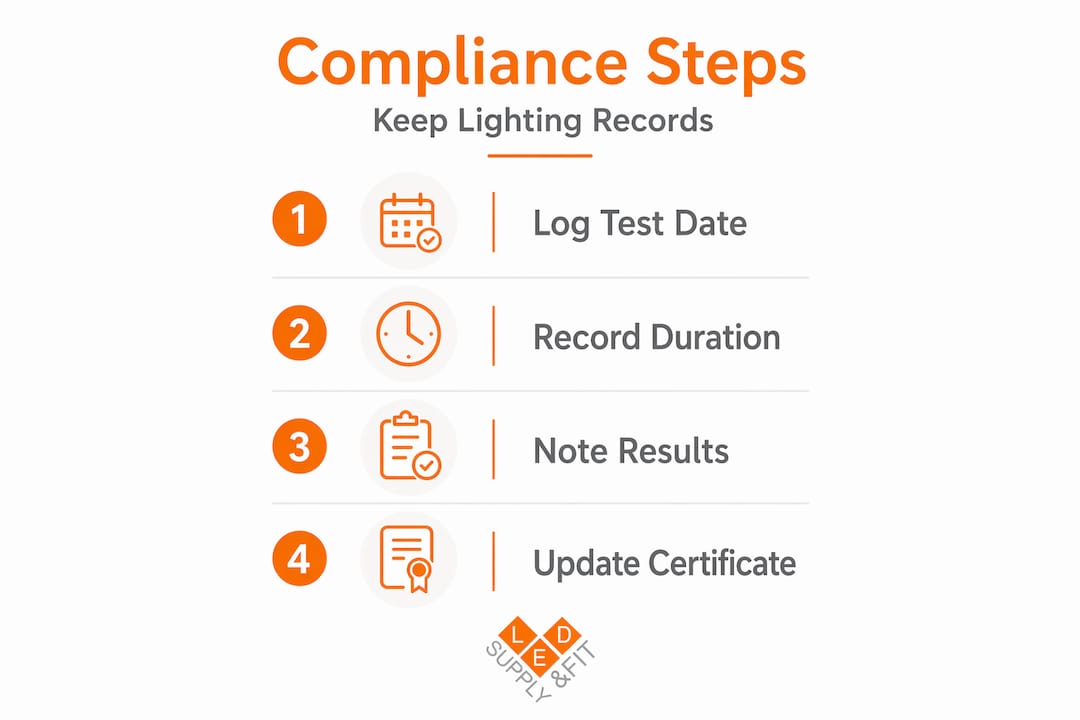
Pro Tip: Keep a dedicated compliance log for each unit in your building. Note the date, duration, and result of every test. Digital records are acceptable, but they need to be consistently maintained and accessible during inspection.
Energy efficiency and the compliance connection
Lighting compliance is not only about emergencies. Lighting controls compliance is integral to meeting energy codes, and the performance of your controls depends on more than simply specifying the right product. Commissioning, tuning, and ongoing maintenance all determine whether your system actually behaves as the code requires.
For commercial properties, the practical benefits of getting this right include:
- Reduced energy consumption. Occupancy sensors and daylight-linked dimming can cut lighting energy use by a substantial margin. Smarter LED lighting paired with properly commissioned controls can reduce bills by up to 40%.
- Lower operational costs. Compliant systems with long-life LEDs reduce the frequency of lamp replacements, maintenance callouts, and associated labour costs.
- Avoidance of regulatory penalties. Non-compliant energy use in commercial buildings can attract enforcement action, particularly as UK building performance standards tighten under net zero commitments.
- Improved audit outcomes. A well-documented, compliant energy management system positions you favourably during building assessments, lease renewals, and property transactions.
The catch that catches most businesses out is the commissioning gap. Controls must be tuned and verified after installation to confirm dimming behaviour, occupancy shutoff timing, and daylight response actually match the specified design. Specifying the right controls but never commissioning them properly leaves you non-compliant even if the hardware looks correct.
Pro Tip: After any lighting upgrade, request a commissioning certificate from your installer confirming controls have been set and tested against your energy code requirements. This protects you during future audits.

The UK legal framework you need to know
Commercial property managers in the UK operate under a clear statutory framework. The Workplace Health, Safety and Welfare Regulations 1992 require employers to provide suitable and sufficient lighting for safe work and movement, maintain lighting systems in efficient working order, and prevent hazardous glare or deep shadow that could cause accidents.
The table below summarises the key regulatory obligations and their practical implications:
| Regulation or standard | What it requires | Consequence of breach |
|---|---|---|
| Workplace (Health, Safety and Welfare) Regulations 1992 | Adequate lighting for work tasks and safe movement | Improvement notices, prosecution, civil liability |
| Emergency lighting standards (BS 5266) | Functional emergency lighting with tested backup duration | Insurance voidance, enforcement, prohibition notices |
| Building Regulations Part L | Energy-efficient lighting and controls in commercial buildings | Refusal of completion certificate, retrospective remediation costs |
| Health and Safety at Work Act 1974 | General duty of care, including working environment safety | Unlimited fines, custodial sentences in serious cases |
Enforcement is not theoretical. Municipal ordinances around lighting standards have demonstrated that authorities will issue violation letters and set firm deadlines for remediation. In the UK, local authorities and the Health and Safety Executive both have powers to inspect, issue improvement notices, and bring prosecutions. Compliance supports your insurance cover, your occupancy permit, and your ability to operate without interruption.
Practical strategies for ongoing compliance
Managing lighting compliance consistently is less about one-off upgrades and more about building reliable processes. The businesses that stay compliant are the ones that treat it as part of routine building management, not a separate project.
Practical measures that make this manageable include:
- Scheduled test calendar. Set calendar reminders for monthly functional tests and book annual endurance tests at least three months in advance to avoid last-minute scrambles.
- Centralised documentation. Testing logs and audit trails are as important as the physical system. Facilities regularly fail inspections not because their lights are broken but because their records are missing.
- Smart monitoring systems. Digital monitoring platforms provide real-time alerts, automate test records, and give portfolio-wide oversight. For multi-site managers, this removes the single biggest compliance risk: human error in scheduling.
- Battery replacement programme. Most emergency lighting failures come down to battery neglect. A rolling replacement schedule, typically every three to four years depending on the manufacturer’s guidance, prevents the most common audit failure.
- Integrate with broader maintenance. Tie lighting checks into your existing planned preventative maintenance schedule. When it sits alongside HVAC, fire alarm, and access control checks, it stops falling through the gaps.
For properties undergoing upgrades, the LED lighting upgrade checklist from Ledsupplyandfit covers both safety and energy compliance in a single structured process.
Emergency lighting systems compared
Choosing the right type of emergency lighting system has direct compliance implications. The three main approaches each carry different maintenance burdens and design considerations.
| System type | How it works | Compliance complexity | Best suited for |
|---|---|---|---|
| Self-contained unit equipment | Battery within each luminaire | Low to medium; each unit tested individually | Small to medium commercial premises |
| Central battery system | Single battery bank powers multiple luminaires | Medium to high; centralised but complex wiring | Large offices, hotels, multi-floor buildings |
| Maintained inverter system | Mains and emergency supply from a central inverter | High; requires specialist commissioning | Hospitals, large retail, critical facilities |
Large facilities face significant operational burdens when maintaining compliance across multiple systems. The choice made at the design stage determines how difficult and costly compliance management will be for the life of the building. Choosing a self-contained system for a small office is straightforward. Specifying the same approach for a 10-storey hotel creates a testing and replacement burden that is difficult to manage without smart monitoring.
My perspective on why compliance gets overlooked
In my experience working with commercial property managers across the UK, the most common reason lighting compliance slips is not negligence. It is that building managers are managing dozens of obligations simultaneously and lighting feels like a low-stakes item until it is not.
I have seen properties fail inspections over missing test logs for lights that were functioning perfectly. The physical kit was fine. The paperwork was not. That is a gap between knowing the rules and building the habit of recording evidence. It is entirely preventable and entirely unnecessary.
What I have also seen is how smart building integration changes the conversation. Managers who invest in connected monitoring systems stop worrying about whether tests were done. The system tells them. That shift from reactive to proactive is where most of the real compliance value sits.
My honest take: treat lighting compliance as a continuous safety investment, not a cost to minimise. The businesses that do this well are not spending more in the long run. They are spending less, because they catch problems early, keep their insurance intact, and never face the disruption of a prohibition notice.
— John
How Ledsupplyandfit helps you stay compliant
If the obligations outlined above feel like a lot to manage alone, you do not have to manage them alone. Ledsupplyandfit supplies and installs compliant commercial LED lighting across the UK, covering everything from emergency lighting systems and energy-efficient controls to specialist ATEX-rated fittings for hazardous environments.

Working with clients from veterinary practices to further education colleges, the team at Ledsupplyandfit designs solutions that meet current regulations and are backed by proper installation documentation. Whether you are upgrading a single premises or managing a portfolio, you get expert advice, next-day product availability, and installation support that covers your compliance requirements from the start. Contact Ledsupplyandfit to discuss your project or explore the full product range.
FAQ
Is emergency lighting a legal requirement in UK commercial buildings?
Yes. The Workplace Health, Safety and Welfare Regulations 1992 require suitable emergency lighting wherever normal lighting failure would create a safety risk, and this applies to the vast majority of commercial premises.
How often does emergency lighting need to be tested?
Monthly functional tests and annual endurance tests are required, with records kept for each. The annual test must confirm the system sustains full output for at least 90 minutes.
Can missing test records cause a compliance failure even if the lights work?
Yes. Facilities regularly fail audits because test documentation is absent, even when the physical lighting system is fully operational. Records are considered part of the compliance obligation, not optional evidence.
Do lighting controls need commissioning to be compliant?
Yes. Specifying code-compliant controls is not sufficient on its own. Controls must be commissioned and verified after installation to confirm dimming, occupancy response, and shutoff behaviour match what the energy code requires.
What are the penalties for lighting non-compliance in the UK?
Penalties range from improvement notices to unlimited fines and, in serious cases involving the Health and Safety at Work Act 1974, custodial sentences. Non-compliance can also void insurance policies and result in premises being prohibited from operating.