
How to choose LED panels for commercial lighting in 2026
Facility managers face mounting pressure to reduce operating costs while maintaining quality lighting standards. Commercial lighting accounts for a substantial portion of energy expenditure, yet many businesses overlook the significant savings available through LED panel upgrades. This guide walks you through selecting the right LED panels for your commercial space, helping you achieve energy savings up to 85% whilst enhancing lighting quality for staff and customers. You’ll learn practical selection criteria, installation best practices, and how to measure results that justify your investment.
Key takeaways
| Point | Details |
|---|---|
| Energy reduction | LED panels save up to 85% energy compared to traditional lighting systems |
| Quick payback | Typical return on investment occurs within two years through energy and maintenance savings |
| Smart integration | Motion and daylight sensors can further reduce energy consumption by up to 70% |
| Quality matters | Professional selection and installation maximise both savings and lighting performance |
| Measurable impact | Proper monitoring demonstrates cost savings whilst improving workplace comfort |
Why upgrading to LED panels makes commercial sense
Commercial lighting represents one of the largest controllable operating expenses for businesses across the UK. Traditional fluorescent and halogen systems consume excessive energy whilst requiring frequent maintenance and replacement. The financial case for LED panels becomes compelling when you examine the numbers.
LED panels cut energy consumption by up to 85% compared to conventional lighting technologies. This dramatic reduction translates directly to lower electricity bills month after month. For a typical office building, lighting can account for 40% of total energy use. Switching to efficient LED panels immediately reduces this burden whilst maintaining or improving light quality.
The investment pays for itself remarkably quickly. Most facilities experience a payback period under two years when factoring in both energy savings and reduced maintenance costs. LED panels last significantly longer than traditional bulbs, eliminating frequent replacement expenses and the labour costs associated with changing fixtures in high ceilings or difficult locations.
Beyond financial benefits, LED upgrades support your sustainability commitments. Reduced energy consumption means lower carbon emissions, helping your business meet environmental targets and demonstrate corporate responsibility. Many organisations now face stakeholder pressure to reduce their carbon footprint, making LED lighting a straightforward step towards these goals.
The quality improvements matter too. LED panels provide consistent, flicker-free illumination that reduces eye strain and fatigue. Better lighting creates more comfortable working environments, potentially improving productivity and employee satisfaction. Customers also respond positively to well-lit retail and hospitality spaces.
Key advantages include:
- Dramatic energy cost reductions from day one
- Minimal maintenance requirements over 50,000+ hour lifespans
- Enhanced lighting quality improving workplace comfort
- Reduced carbon footprint supporting sustainability goals
- Quick return on investment justifying upgrade costs
Businesses that delay LED adoption continue paying unnecessarily high energy bills whilst missing opportunities to improve their facilities. The technology has matured to the point where LED panels outperform traditional lighting across every meaningful metric. Understanding why LED panels deliver superior value helps you make informed decisions about your lighting infrastructure.
Pro Tip: Calculate your current annual lighting costs before meeting with suppliers. This baseline figure helps you accurately project savings and evaluate proposals from different providers.
Key factors to consider when choosing LED panels
Selecting the right LED panels requires evaluating several technical and practical criteria. Making informed choices ensures you maximise energy savings whilst achieving optimal lighting performance for your specific commercial environment.
Brightness, measured in lumens, determines how much light a panel produces. Office spaces typically require 300 to 500 lumens per square metre for general tasks, whilst detailed work areas may need higher levels. Assess your space requirements carefully rather than simply replacing old fixtures with equivalent wattage. LED technology allows you to achieve the same or better brightness whilst using far less energy.
Colour temperature significantly impacts ambiance and functionality. Measured in Kelvin, this characteristic ranges from warm yellowish tones around 3000K to cool bluish whites above 5000K. Office environments often benefit from neutral white around 4000K, which promotes alertness without harsh glare. Retail spaces might choose warmer tones to create inviting atmospheres, whilst technical facilities may prefer cooler temperatures for precision work.
Energy efficiency ratings expressed as lumens per watt indicate how effectively a panel converts electricity into light. Higher ratings mean greater efficiency and lower operating costs. Quality LED panels typically achieve 100 to 140 lumens per watt, vastly outperforming traditional technologies. Comparing this metric across products helps identify the most cost-effective options.
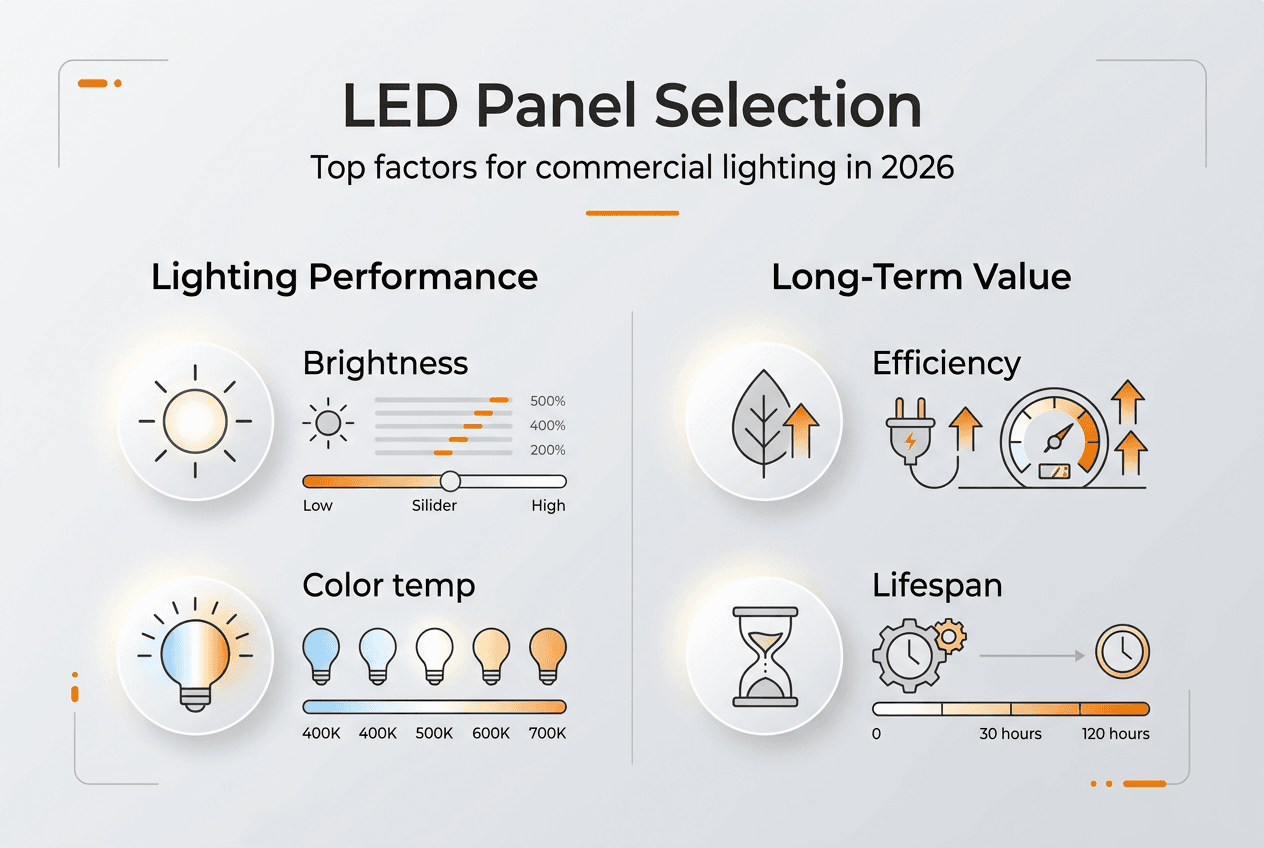
Product lifespan directly affects long-term value. Premium LED panels last 50,000 to 100,000 hours under normal operating conditions. This longevity eliminates frequent replacements and associated labour costs. Verify manufacturer warranties and expected lifespans before purchasing, as cheaper products may require earlier replacement, negating initial savings.
Certifications and compliance matter for safety and performance. Look for products meeting UK standards and bearing appropriate marks. Quality manufacturers provide detailed specifications and test results. Good panel selection enhances lighting quality for both staff and customers, making this research worthwhile.
Integration capabilities extend efficiency gains. Panels compatible with occupancy sensors, daylight harvesting systems, and dimming controls allow you to reduce energy use even further. These smart features ensure lights operate only when and where needed, potentially cutting consumption by an additional 30% to 50%.
Essential selection criteria:
- Appropriate lumen output for your space and tasks
- Suitable colour temperature for your environment
- High lumens per watt ratio for maximum efficiency
- Extended lifespan reducing replacement frequency
- Proper certifications ensuring safety and quality
- Compatibility with control systems and sensors
Different commercial environments have distinct requirements. Warehouses need robust panels with high output for large open spaces. Offices benefit from panels with good colour rendering and glare control. Retail environments may prioritise aesthetic design alongside performance.
Pro Tip: Request sample panels to test in your actual environment before committing to large orders. Real-world evaluation reveals how lighting performs under your specific conditions and helps avoid costly mistakes.
Exploring practical LED lighting strategies and reviewing energy-saving lighting examples provides additional context for your selection process.
How to plan and execute LED panel installation successfully
Proper installation planning ensures your LED upgrade delivers maximum benefits whilst minimising disruption to business operations. A systematic approach prevents common pitfalls and sets the foundation for long-term success.
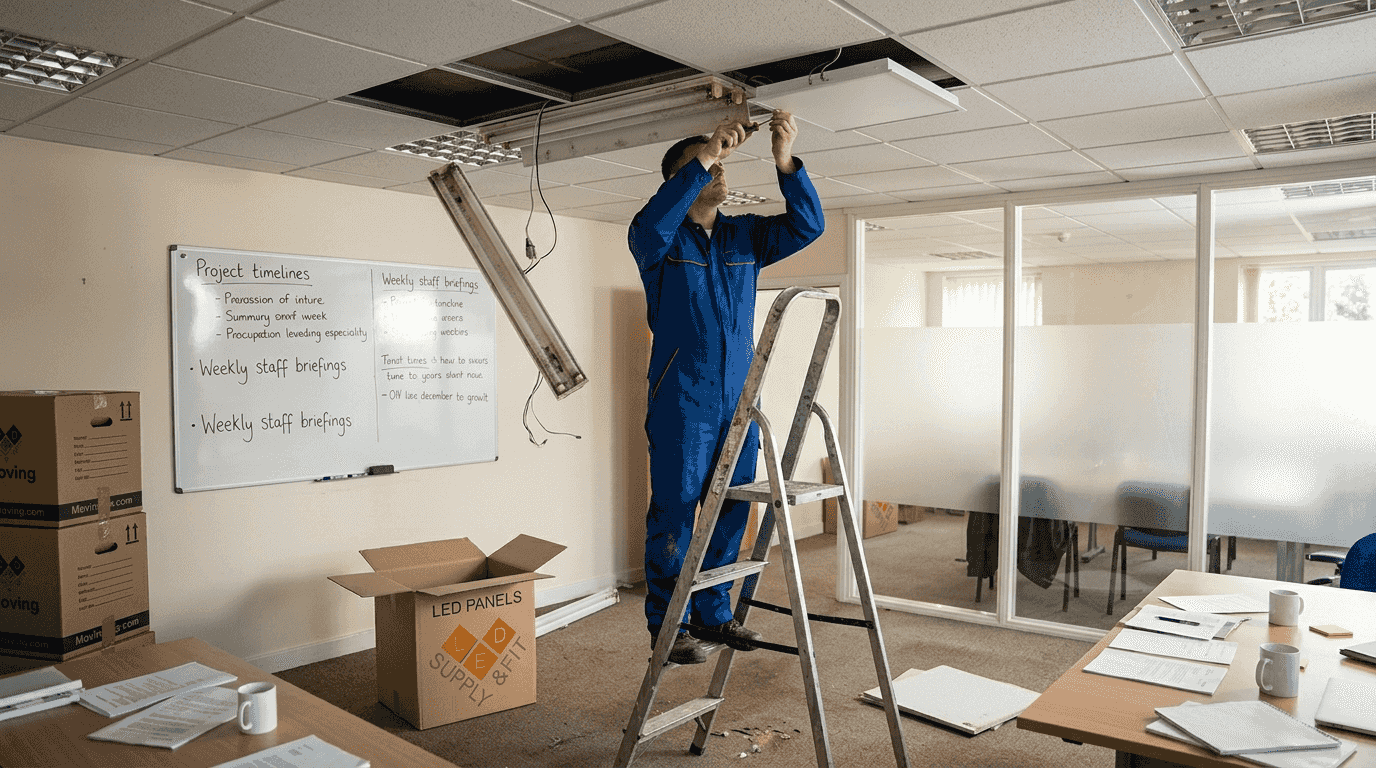
Engage experienced installers familiar with commercial environments. Professional teams understand the complexities of working in occupied buildings, managing access to ceiling voids, and coordinating with other trades. They ensure proper electrical connections, secure mounting, and compliance with building regulations. Attempting DIY installation or hiring inexperienced contractors risks poor results and potential safety issues.
Scheduling matters significantly for businesses that cannot afford downtime. Plan installations during off-hours, weekends, or quieter periods when disruption has minimal impact. Break large projects into phases allowing sections of your facility to remain operational. Clear communication with staff about timing and temporary lighting arrangements prevents confusion and maintains productivity.
Sensor integration dramatically enhances energy savings. Professional installation teams manage sensor integration for energy savings up to 70%. Motion sensors detect occupancy and switch lights off in empty spaces. Daylight harvesting systems dim artificial lighting when natural light suffices. These technologies require proper placement and calibration, which experienced installers handle efficiently.
Follow this installation sequence:
- Conduct a detailed site survey identifying existing fixtures, electrical capacity, and access requirements
- Develop a comprehensive installation plan specifying products, quantities, and scheduling
- Coordinate with building management regarding access, power shutdowns, and safety protocols
- Remove old fixtures safely, disposing of fluorescent tubes according to environmental regulations
- Install new LED panels with proper mounting and electrical connections
- Integrate sensors and control systems according to manufacturer specifications
- Test all circuits and lighting zones ensuring proper operation
- Commission control systems and adjust settings for optimal performance
- Provide staff training on new lighting controls and features
- Document installation details for future maintenance reference
Testing lighting quality with staff feedback ensures satisfaction. Walk through spaces with employees after installation, adjusting light levels or positions if needed. This collaborative approach identifies issues early whilst demonstrating your commitment to creating better working conditions.
Maintain clear communication throughout the project. Regular updates keep stakeholders informed about progress, any challenges encountered, and completion timelines. Transparency builds confidence and helps manage expectations.
Pro Tip: Photograph your existing lighting setup before work begins. These reference images prove invaluable if questions arise later about original configurations or if you need to replicate successful installations in other areas.
Reviewing successful projects like the Utility Alliance installation and Stockton Riverside College upgrade demonstrates what professional execution achieves in real commercial environments.
Measuring results and maximising benefits from your LED panel investment
Verifying the success of your LED installation requires systematic measurement and ongoing attention. Proper monitoring demonstrates return on investment whilst identifying opportunities for further optimisation.
Track energy consumption before and after installation to quantify savings. Most businesses can access detailed electricity usage data through their energy supplier or building management systems. Compare consumption during equivalent periods, accounting for seasonal variations and occupancy changes. This data provides concrete evidence of cost reductions.
Data monitoring tools offer ongoing performance assessment. Smart meters and energy management platforms track consumption patterns in real time. These systems highlight anomalies indicating maintenance needs or opportunities to adjust lighting schedules. Regular review of this information ensures your LED system continues delivering expected benefits.
Employee and customer feedback highlights lighting quality improvements that numbers alone cannot capture. Survey staff about comfort, visibility, and satisfaction with the new lighting. Observe customer behaviour in retail environments. Positive responses validate your investment beyond financial metrics.
Addenbrooke’s Hospital saved £15,000 annually with a 53% carbon footprint reduction and an ROI of 4.32 years after LED upgrades. Mole Valley Farmers achieved over £1.1m net savings and reduced 3420 tonnes of CO₂e emissions over six years. These real-world results demonstrate the substantial impact possible with proper LED implementation.
| Metric | Before LED upgrade | After LED upgrade | Improvement |
|---|---|---|---|
| Annual energy cost | £45,000 | £12,000 | 73% reduction |
| Maintenance hours | 240 hours | 30 hours | 88% reduction |
| Carbon emissions | 85 tonnes CO₂e | 23 tonnes CO₂e | 73% reduction |
| Light quality complaints | 12 per month | 1 per month | 92% reduction |
Regular maintenance extends panel lifespan and sustains savings. LED panels require minimal upkeep compared to traditional lighting, but periodic cleaning and inspection ensure optimal performance. Dust accumulation on panels reduces light output over time. Schedule annual cleaning as part of routine facility maintenance.
Calculating return on investment justifies your decision and informs future upgrades. Divide total project costs by annual savings to determine payback period. Factor in both energy cost reductions and maintenance savings for a complete picture. Most commercial LED projects achieve positive ROI within 18 to 30 months.
Key measurement activities:
- Compare energy bills before and after installation
- Monitor consumption patterns identifying optimisation opportunities
- Gather qualitative feedback from building occupants
- Track maintenance requirements and costs
- Calculate financial and environmental returns
- Document lessons learned for future projects
Successful measurement creates compelling evidence supporting additional efficiency investments. Share results with stakeholders demonstrating your commitment to cost management and sustainability. This transparency builds support for continued facility improvements.
Learning how to upgrade commercial lighting effectively ensures you maximise returns from your LED investment over its entire lifespan.
Explore expert LED panel solutions and services
Transforming your commercial lighting requires both quality products and experienced support. Specialist suppliers understand the unique challenges facility managers face when upgrading lighting systems in occupied commercial buildings.
Access expert advice tailored for commercial LED lighting needs helps you navigate technical specifications and identify optimal solutions for your specific environment. Professional consultations consider your space characteristics, usage patterns, and budget constraints to recommend appropriate products and configurations.
Choose from top-rated energy-efficient LED panels for 2026 designed specifically for commercial applications. These products deliver proven performance in demanding environments whilst meeting UK standards and regulations.
Real client success stories demonstrate what professional LED solutions achieve. The Wilson Veterinary Group project shows how veterinary practices benefit from improved lighting quality. The Stockton Riverside College installation illustrates successful educational facility upgrades. These case studies provide practical insights into project execution and results.
Benefit from professional installation and ongoing support ensuring your lighting system performs optimally throughout its lifespan. Experienced teams handle every aspect from initial assessment through commissioning and maintenance, allowing you to focus on your core business operations.
How to choose LED panels: frequently asked questions
What wattage LED panel is suitable for commercial office spaces?
Office spaces typically require 30 to 40 watt LED panels for standard ceiling heights and desk work. Focus on lumens rather than watts, aiming for 300 to 500 lumens per square metre for general office tasks.
Can LED panels integrate with existing lighting control systems?
Most modern LED panels integrate with existing control systems through compatible drivers and dimming protocols. Verify compatibility with your current system, as some older controls may require upgrades to work properly with LED technology.
How long does a commercial LED panel typically last?
Quality commercial LED panels last 50,000 to 100,000 hours under normal operating conditions. This translates to 10 to 20 years of typical office use, dramatically reducing replacement frequency compared to traditional lighting.
Are there financing options available for large LED panel installations?
Many suppliers and financial institutions offer financing programmes for commercial LED upgrades. Options include equipment leasing, energy performance contracts, and green loans specifically designed for efficiency improvements.
What maintenance is required after LED panel installation?
LED panels require minimal maintenance beyond periodic cleaning to remove dust accumulation. Annual inspection of fixtures and connections ensures continued safe operation. Most businesses incorporate LED maintenance into existing facility management schedules.