
Warehouse Lighting Upgrade Guide for Maximum Efficiency
Rising energy bills and demanding regulatory standards push many British warehouse managers to reconsider how lighting impacts both costs and operations. Assessing your facility’s lighting is the first move towards a smarter upgrade, letting you spot outdated systems and identify improvements for safer, more efficient workspaces. This guide walks you through every step, from a thorough lighting audit to expertly installing and testing modern LED solutions for true long-term savings.
Table of Contents
- Step 1: Assess Existing Warehouse Lighting And Requirements
- Step 2: Plan Optimal LED Lighting Layout And Selection
- Step 3: Secure Products And Prepare Warehouse For Upgrade
- Step 4: Install New LED Fixtures Safely And Efficiently
- Step 5: Test Lighting And Verify Compliance With Standards
Quick Summary
| Key Message | Explanation |
|---|---|
| 1. Conduct a thorough lighting audit | Assess existing lighting technology and energy use to identify areas for improvement and inform upgrade strategies. |
| 2. Plan a strategic LED layout | Establish zoning and specific lighting requirements to ensure optimal visibility and energy efficiency across all areas. |
| 3. Verify product compliance and specifications | Ensure all lighting products meet safety standards and performance qualifications before installation to prevent costly issues later. |
| 4. Follow standard installation procedures | Adhere to proper electrical and safety protocols during installation to minimise risks and ensure effective lighting performance. |
| 5. Implement rigorous post-installation testing | Conduct thorough testing to confirm that the new lighting complies with regulations and meets operational efficiency goals. |
Step 1: Assess existing warehouse lighting and requirements
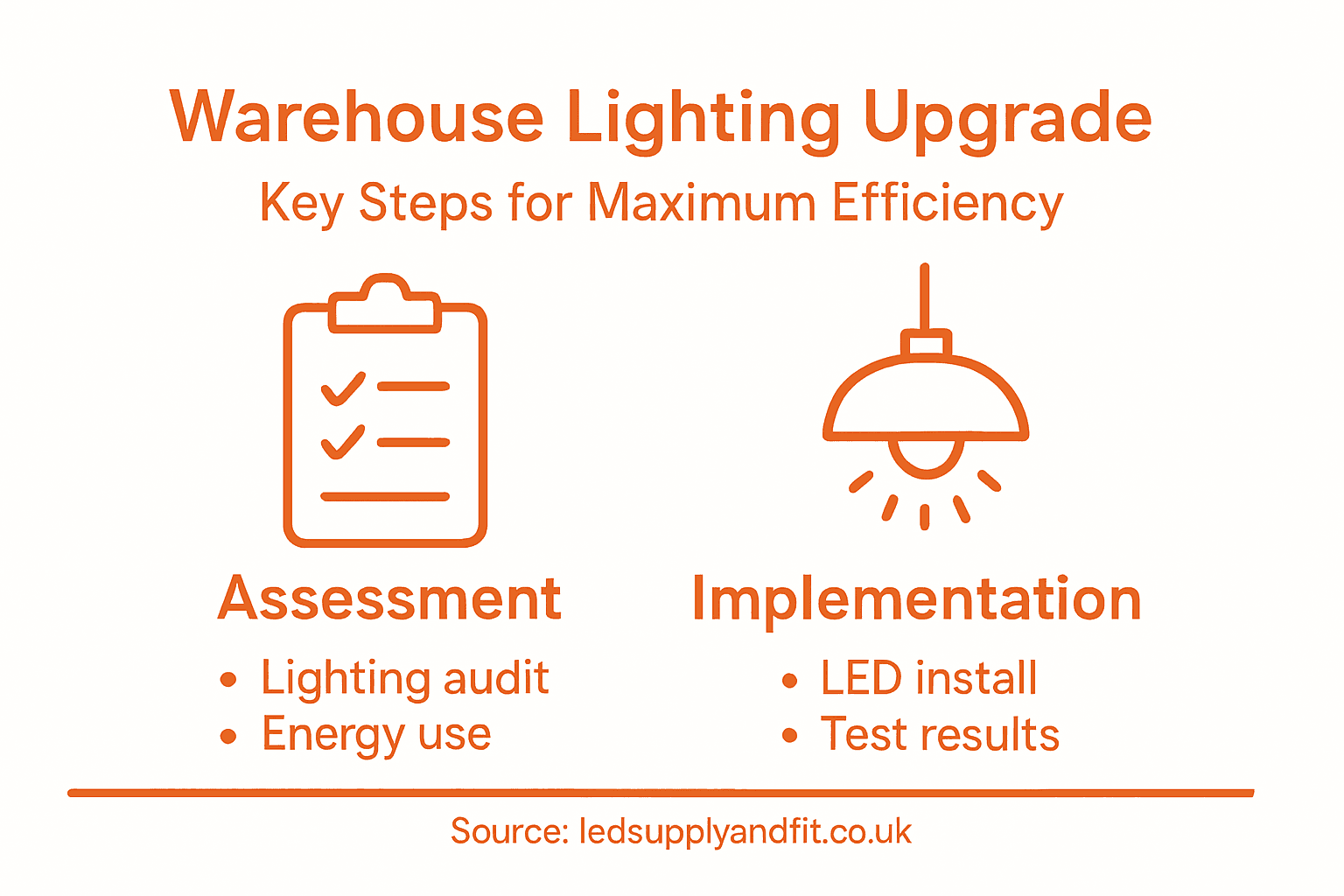
Optimising warehouse lighting begins with a comprehensive evaluation of your current lighting infrastructure. Understanding your existing system allows you to pinpoint inefficiencies and develop a targeted upgrade strategy that enhances energy performance and workplace functionality.
Start by conducting a systematic lighting audit which involves several critical assessment steps. First, document your current lighting technology – are you using traditional metal halide, fluorescent, or older LED fixtures? Note the wattage, fixture type, and total number of lights across different warehouse zones. Lighting control system evaluation is equally crucial, examining your current control mechanisms such as occupancy sensors, daylight harvesting capabilities, and zone-specific dimming options.
Your assessment should capture key metrics including:
Here is a summary of common warehouse lighting technologies and their characteristics:
| Lighting Type | Typical Efficiency | Lifespan | Maintenance Need |
|---|---|---|---|
| Metal Halide | Low | 6,000 hours | Frequent lamp changes |
| Fluorescent | Moderate | 15,000 hours | Ballast replacements |
| Early LED | Moderate | 35,000 hours | Occasional checks |
| Modern LED | High | 50,000+ hours | Minimal maintenance |
- Current energy consumption per lighting fixture
- Average operational hours of lighting systems
- Age and maintenance history of existing fixtures
- Illumination levels across different warehouse areas
- Compliance with current UK energy efficiency standards
A thorough evaluation enables you to understand potential energy savings and identify precise upgrade requirements. By mapping out your existing lighting landscape, you create a strategic foundation for implementing high-efficiency LED solutions that align with your operational needs.
The table below contrasts two warehouse lighting upgrade approaches:
| Approach | Upfront Cost | Energy Savings Potential | Suitability |
|---|---|---|---|
| Partial Retrofit | Lower | Moderate | Budget-limited improvements |
| Full LED Replacement | Higher | Substantial | Maximum efficiency, longevity |
Professional insight: Engage a professional lighting engineer to conduct a detailed photometric survey, which provides precise illumination measurements and helps validate your initial assessment.
Step 2: Plan optimal LED lighting layout and selection
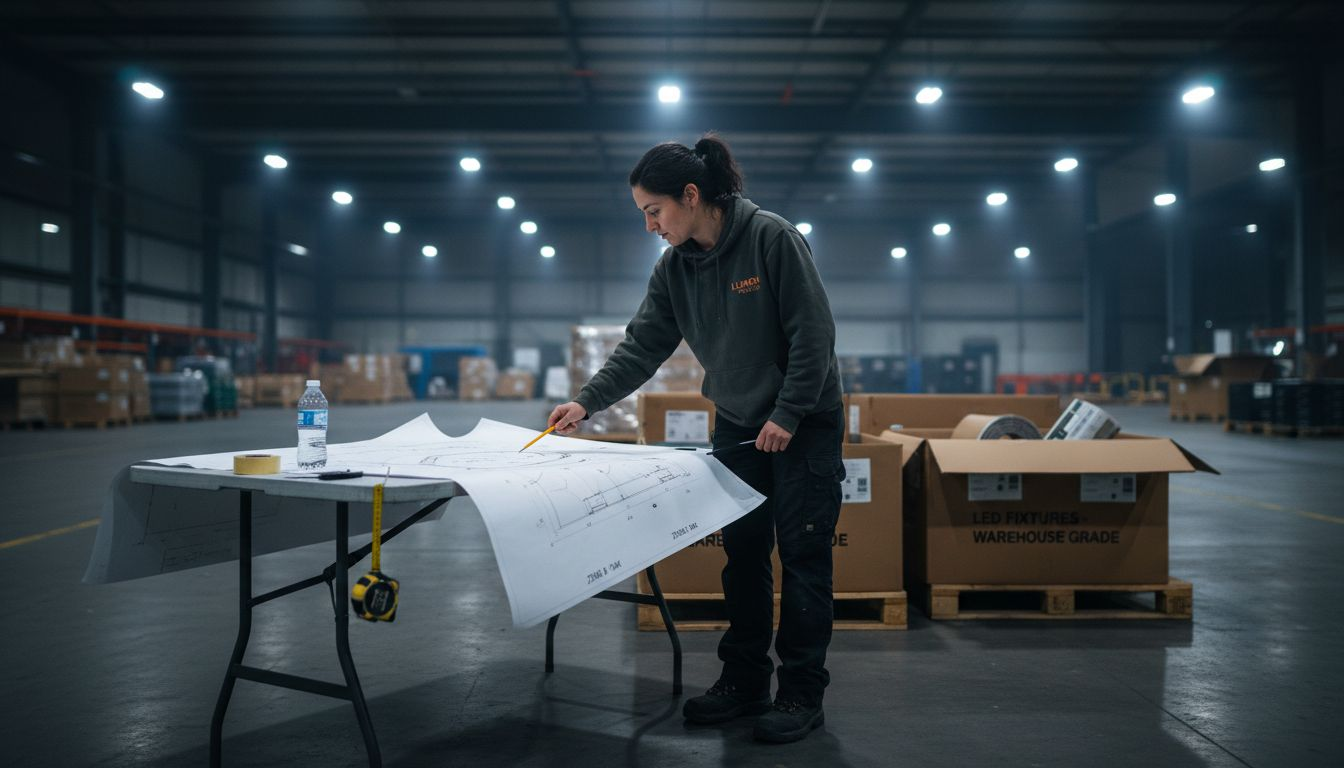
Designing an effective LED lighting layout for your warehouse requires strategic planning and a comprehensive understanding of your specific operational requirements. The goal is to create a lighting solution that maximises energy efficiency while ensuring optimal visibility and safety across all warehouse zones.
Begin by calculating precise lighting requirements based on your specific warehouse characteristics. This involves determining the appropriate lumens per square metre for different areas, considering factors such as ceiling height, rack configuration, and specific work tasks. Critical considerations include:
- Mounting height of fixtures
- Distance between light installations
- Beam angle and light distribution
- Colour temperature requirements
- Compatibility with existing electrical infrastructure
Your LED selection should prioritise fixtures that offer:
- High luminous efficacy (lumens per watt)
- Robust construction suitable for industrial environments
- Compatibility with advanced lighting control systems
- Minimum five-year warranty
- Energy Star or equivalent certification
Optimal warehouse lighting design balances visual performance, energy efficiency, and long-term cost savings.
Carefully map out your lighting zones, ensuring uniform illumination while avoiding over-lighting areas that do not require intense brightness. This approach not only reduces energy consumption but also creates a more comfortable and productive working environment.
Professional advice: Consult a professional lighting engineer who can provide a detailed photometric analysis to ensure your LED layout meets both regulatory standards and your specific operational needs.
Step 3: Secure products and prepare warehouse for upgrade
Preparing your warehouse for a comprehensive LED lighting upgrade requires meticulous planning and strategic product procurement. The process involves carefully selecting, verifying, and preparing for the installation of high-performance lighting solutions that will transform your facility’s energy efficiency and operational capabilities.
Begin by verifying lighting product certifications to ensure compliance with UK industrial standards. Your procurement checklist should include:
- Checking manufacturer warranties
- Confirming electrical compatibility
- Validating performance specifications
- Reviewing safety and environmental certifications
- Ensuring suitable IP rating for warehouse conditions
Your preparation phase should focus on creating an optimal installation environment by:
- Clearing installation zones
- Ensuring electrical systems can support new fixtures
- Protecting existing inventory and equipment
- Scheduling minimal operational disruption
- Coordinating with installation professionals
Successful warehouse lighting upgrades require thorough preparation and strategic product selection.
Carefully inspect your chosen LED fixtures upon delivery, checking for any transportation damage and verifying that all components match the original specifications. Create a detailed inventory and tracking system to manage your new lighting equipment from procurement through to installation.
Professional advice: Create a comprehensive project timeline that includes buffer periods for unexpected challenges, ensuring a smooth and efficient lighting upgrade process.
Step 4: Install new LED fixtures safely and efficiently
Installing LED lighting in a warehouse requires precision, technical expertise, and a methodical approach to ensure maximum performance and safety. Your installation process will transform your facility’s lighting infrastructure, demanding careful execution and professional attention to detail.
Begin by following industrial lighting installation protocols that guarantee electrical safety and optimal fixture placement. Your comprehensive installation checklist should include:
- Verifying electrical circuit compatibility
- Using appropriate mounting hardware
- Ensuring proper wire connections
- Implementing earthing and grounding procedures
- Checking fixture alignment and positioning
Your installation team should focus on several critical preparation steps:
- De-energising electrical circuits before work begins
- Using appropriate personal protective equipment
- Confirming load-bearing capacity of mounting surfaces
- Testing electrical connections before final installation
- Documenting installation procedures and equipment details
Precise and careful LED fixture installation minimises future maintenance requirements and ensures optimal performance.
Carefully test each fixture after installation, verifying complete electrical integration and confirming that all components function correctly. Systematic testing will help identify and resolve any potential issues before final commissioning of your warehouse lighting system.
Professional advice: Always engage qualified electrical professionals who understand both industrial lighting requirements and specific warehouse environmental conditions.
Step 5: Test lighting and verify compliance with standards
Final verification of your warehouse LED lighting upgrade requires systematic testing and comprehensive compliance checks to ensure optimal performance and regulatory adherence. This critical stage confirms that your new lighting infrastructure meets safety, efficiency, and operational standards.
Begin by conducting comprehensive electrical testing protocols that validate your installation’s technical integrity. Your verification process should encompass:
- Measuring actual illuminance levels
- Checking electrical circuit performance
- Verifying fixture alignment and coverage
- Testing lighting control systems
- Documenting performance metrics
Your detailed compliance verification checklist should include:
- Confirming OSHA electrical safety requirements
- Validating manufacturer performance specifications
- Reviewing energy efficiency ratings
- Assessing uniformity of light distribution
- Ensuring emergency lighting functionality
Rigorous post-installation testing guarantees your lighting upgrade delivers maximum operational efficiency and safety.
Carefully document all test results and performance measurements, creating a comprehensive installation compliance record that demonstrates your warehouse’s commitment to professional lighting standards. This documentation will serve as crucial evidence for potential future inspections or insurance requirements.
Professional advice: Engage an independent lighting compliance specialist to conduct an objective third-party assessment of your new lighting system, providing additional validation of your installation’s quality.
Maximise Your Warehouse Lighting Efficiency with Expert LED Solutions
Upgrading warehouse lighting to modern LED systems can be a complex challenge requiring precise planning, quality products, and professional installation. The article highlights key pain points such as assessing existing lighting inefficiencies, selecting optimal LED layouts, ensuring compliance with UK standards, and minimising operational disruption during installation. If you face these common hurdles or want to unlock substantial energy savings and improved working conditions, high-quality LED solutions are essential.
Ledsupplyandfit.co.uk specialises in delivering exactly that. We provide a comprehensive range of industrial-grade LED lighting tailored for warehouses along with expert fitting services designed to facilitate smooth, compliant upgrades. Our bulk discounts, next-day delivery options, and trade accounts ensure you get premium products fast and affordably. Whether you need robust, energy-efficient fixtures or professional advice on layout and controls, our team is ready to support your project.
Discover how your warehouse can benefit from reduced energy costs, longer fixture lifespan, and enhanced workplace safety. Visit Ledsupplyandfit.co.uk today to explore our solutions and arrange a consultation. Take the first step towards a brighter, more efficient warehouse now!
Frequently Asked Questions
What initial steps should I take before upgrading my warehouse lighting?
Assess your current lighting system through a detailed audit. Document the types of fixtures, wattage, and lumens per square metre required for specific areas to identify inefficiencies.
How can I determine the best layout for my new LED lighting?
Calculate the optimal lighting requirements by considering factors like ceiling height and work tasks. Mapping out your lighting zones ensures uniform illumination while preventing over-lighting, which can cut energy costs by approximately 20%.
What should I consider when selecting LED fixtures for my warehouse?
Prioritise fixtures that offer high luminous efficacy and are built for industrial conditions with a minimum five-year warranty. Verify compatibility with your existing electrical systems to smooth the installation process.
How can I ensure that the installation of new LED fixtures is safe and effective?
Follow established industrial lighting installation protocols, ensuring proper circuit compatibility and secure mounting. Prepare a thorough installation checklist to minimise future maintenance issues and enhance performance.
What testing procedures should I follow after installing LED lighting?
Conduct comprehensive electrical testing to verify your installation’s performance and compliance with safety standards. Measure illuminance levels and check the functionality of lighting controls to ensure optimal efficiency.
How do I document and verify compliance after the lighting upgrade?
Create a detailed installation compliance record by documenting all test results and performance metrics. This record will be crucial for future inspections and will help verify adherence to regulatory standards.
Recommended
- Warehouse Lighting Explained: Boost Safety and Savings
- High Bay Lighting + LED Warehouse Lighting | LED Supply & Fit
- LED Lighting Selection Process for UK Commercial Facilities
- 7 Practical Examples of Energy Saving Lights for Businesses
- Top Workshop Organization Tips for Diesel Injection Technicians 2025 – My WordPress
- Marbed 8211 Inspection Lamp | InjectionPower®