

Energy Efficient Lighting Guide for UK Businesses
Reducing energy bills and improving sustainability are high priorities for every facility manager in the UK commercial sector. With lighting recognised as a substantial energy consumer by the International Energy Agency, evaluating your current lighting infrastructure is the first step towards long-term cost savings and environmentally responsible operations. This guide highlights the actionable steps to transition to energy-efficient LED lighting solutions, enabling you to cut operational costs while meeting growing sustainability expectations.
Table of Contents
- Step 1: Assess Current Lighting and Energy Usage
- Step 2: Identify Suitable LED Lighting Solutions
- Step 3: Plan Installation for Maximum Efficiency
- Step 4: Install Energy Efficient Lighting Systems
- Step 5: Verify Performance and Energy Savings
Quick Summary
| Key Insight | Explanation |
|---|---|
| 1. Assess Your Current Lighting | Conduct a thorough inventory of existing lighting to identify energy savings opportunities. |
| 2. Choose Appropriate LED Solutions | Evaluate LED fixtures based on luminous efficacy, colour temperature, and compatibility with existing systems. |
| 3. Plan Efficient Installation | Strategically map light requirements and consider natural light integration for optimal performance. |
| 4. Follow Precise Installation Steps | Ensure compliance with manufacturer specifications and industry standards for effective LED implementation. |
| 5. Verify Energy Savings Post-Installation | Systematically measure and document energy consumption to confirm real savings and performance improvements. |
Step 1: Assess Current Lighting and Energy Usage
Understanding your current energy consumption is crucial for developing an effective lighting efficiency strategy for your business. By meticulously examining your existing lighting infrastructure, you can identify opportunities for significant energy and cost savings. This step involves a systematic evaluation of your current lighting systems and their associated energy usage.
To conduct a comprehensive lighting assessment, follow these essential steps:
- Perform an inventory of all existing lighting fixtures across your premises
- Document the type of bulbs currently in use (fluorescent, incandescent, halogen)
- Record wattage and quantity of each lighting fixture
- Calculate total energy consumption for lighting per month or year
- Identify areas with highest energy usage
The energy consumption trends published by the UK government provide valuable insights into sector-wide energy usage patterns. These resources can help you benchmark your current lighting consumption against industry standards.
Businesses should pay special attention to areas with continuous or extended lighting requirements, such as warehouses, production floors, and office spaces. Energy system analysis from the International Energy Agency suggests that lighting can represent a substantial portion of commercial energy expenditure.
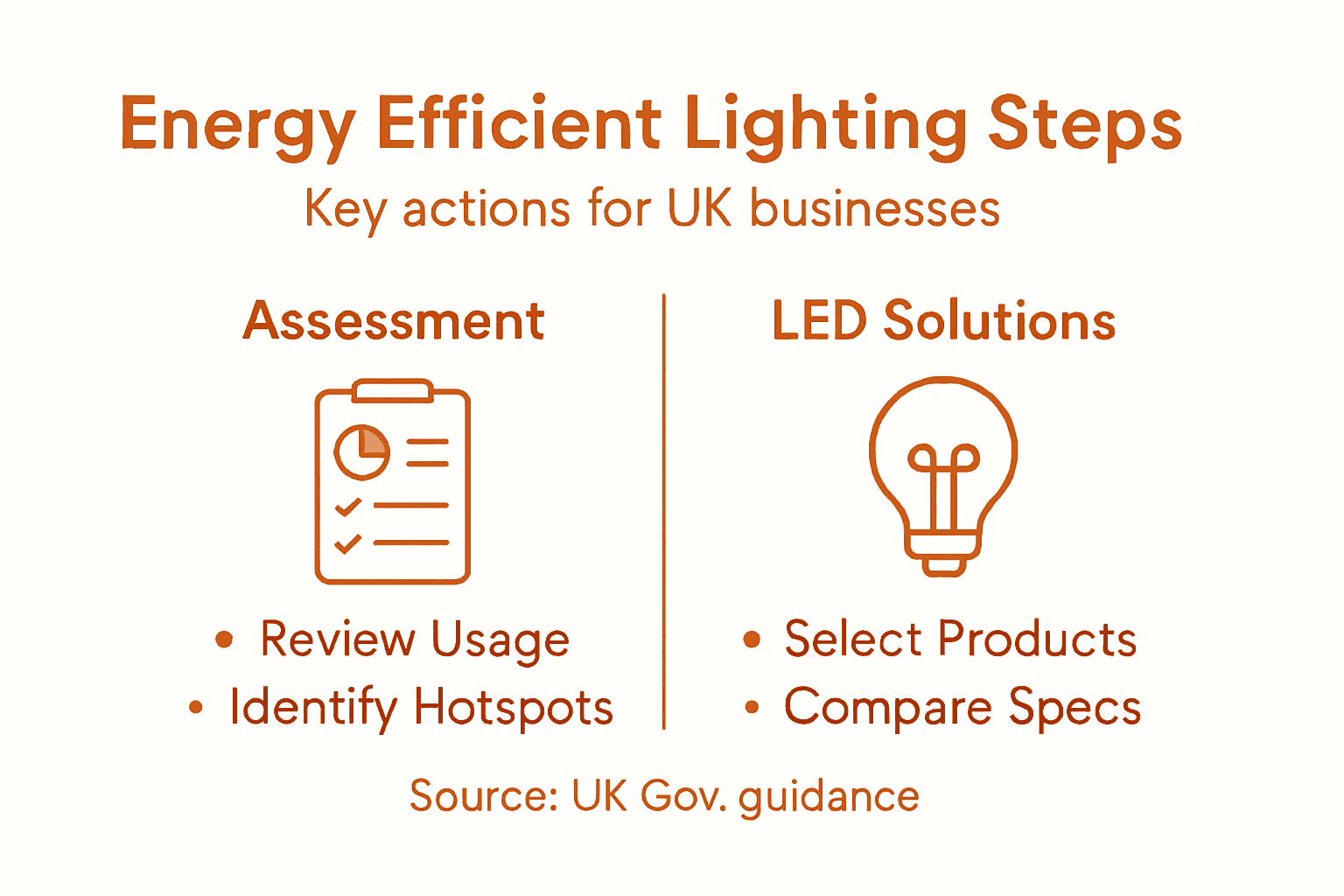
Here is a comparison of traditional commercial lighting types versus LED solutions:
| Lighting Type | Average Lifespan | Energy Efficiency | Typical Maintenance Frequency |
|---|---|---|---|
| Incandescent | 1,000 hours | Low | Monthly |
| Fluorescent | 7,000–15,000 hours | Moderate | Quarterly |
| Halogen | 2,000–4,000 hours | Below average | Bi-monthly |
| LED | 25,000–50,000 hours | High | Annually |
Tracking your current lighting energy consumption is the foundational step towards creating a more sustainable and cost-effective lighting strategy.
Pro tip: Invest in a digital energy monitoring device to continuously track your lighting system’s real-time electricity consumption and identify immediate improvement opportunities.
Step 2: Identify Suitable LED Lighting Solutions
Identifying the most appropriate LED lighting solutions for your business requires a strategic approach that balances performance, energy efficiency, and specific workspace requirements. This step involves carefully evaluating your lighting needs across different areas of your commercial premises to select the most effective LED fixtures.
Key considerations for selecting LED lighting solutions include:
- Assess colour temperature and its impact on workspace ambience
- Evaluate luminous efficacy (lumens per watt)
- Consider beam angles and light distribution requirements
- Check compatibility with existing electrical systems
- Review IP ratings for different environmental conditions
Lighting specification guidelines from the Society of Light and Lighting provide comprehensive insights into selecting high-performance LED solutions that meet professional standards.
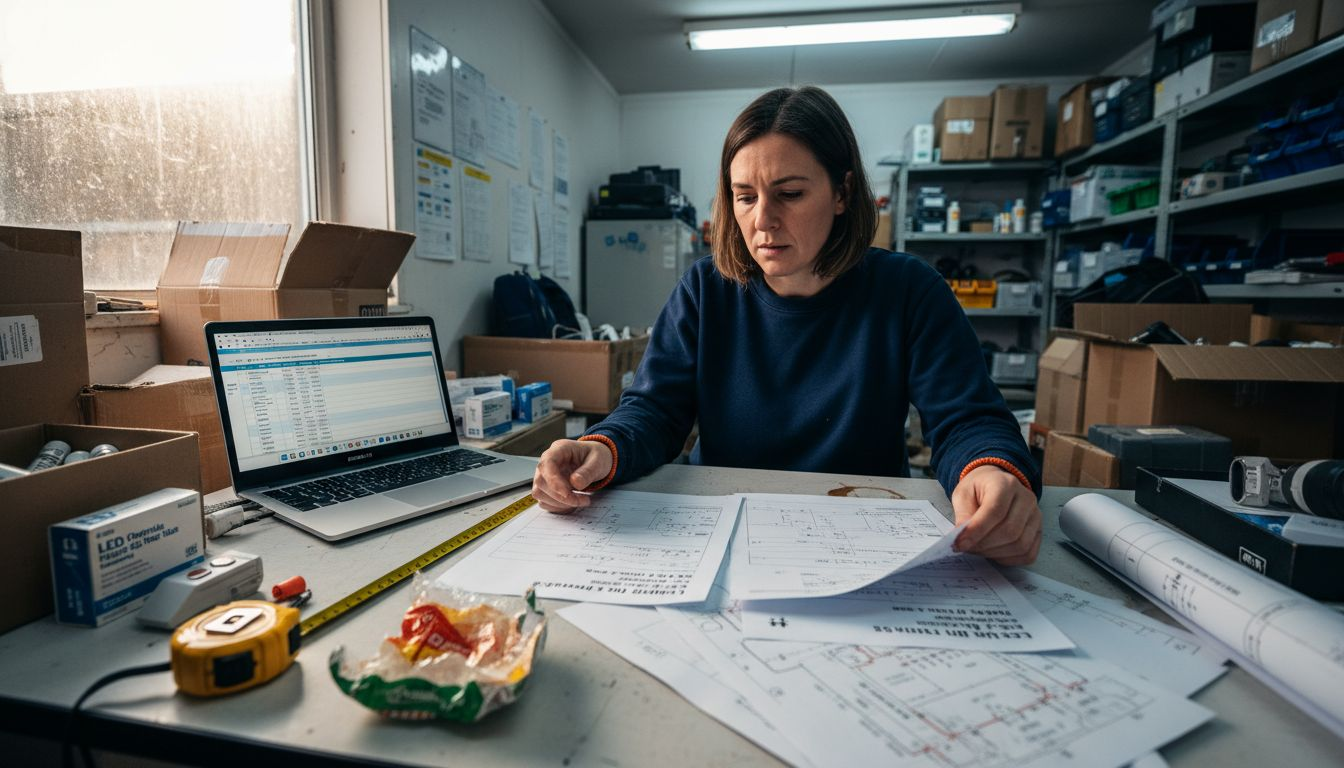
The engineering codes of practice published by the Institution of Engineering and Technology offer detailed recommendations for LED lighting selection, ensuring you choose fixtures that deliver optimal energy savings and performance across different commercial environments.
Below is a summary of key factors for selecting the optimal LED solution for various business spaces:
| Area Type | Ideal Colour Temperature | Required Luminous Efficacy | Environmental Concerns |
|---|---|---|---|
| Office Spaces | 4000–5000K (Cool white) | 80+ lumens per watt | Glare control |
| Warehouses | 5000–6500K (Daylight) | 100+ lumens per watt | Dust and impact resistance |
| Retail Areas | 3000–4000K (Warm/Cool) | 80–100 lumens per watt | Colour rendering accuracy |
Professional LED lighting selection goes beyond simple replacement – it’s about creating an intelligent lighting ecosystem tailored to your specific business needs.
Pro tip: Request product specifications and photometric data from manufacturers to conduct a detailed comparison of LED lighting performance before making your final selection.
Step 3: Plan Installation for Maximum Efficiency
Planning your LED lighting installation requires a strategic approach that maximises energy efficiency, ensures optimal performance, and minimises disruption to your business operations. Careful preparation will help you achieve a seamless transition to your new lighting system while delivering significant long-term energy savings.
Key steps in planning an efficient LED lighting installation include:
- Map your workspace thoroughly before beginning installation
- Calculate precise light requirements for each area
- Identify optimal fixture placement to minimise shadows
- Consider natural light integration
- Plan electrical infrastructure modifications
Lighting design guidelines from CIBSE provide comprehensive insights into creating an energy-efficient lighting strategy that meets professional standards and regulatory requirements.
The practical installation guidance published by the Institution of Engineering and Technology offers detailed recommendations for balancing task lighting requirements, ensuring uniform illumination, and maximising overall energy efficiency across different commercial environments.
Successful LED lighting installation is not just about replacing old fixtures – it’s about creating an intelligent, adaptive lighting ecosystem tailored to your specific business needs.
Pro tip: Engage a professional lighting designer to conduct a comprehensive photometric study of your workspace, ensuring optimal LED placement and maximum energy efficiency.
Step 4: Install Energy Efficient Lighting Systems
Installing energy-efficient lighting systems requires precision, technical expertise, and a systematic approach to ensure optimal performance and maximum energy savings. Your installation process will determine the long-term effectiveness of your LED lighting investment and directly impact your business’s operational efficiency.
Critical installation steps include:
- Disconnect existing electrical connections safely
- Verify electrical circuit compatibility
- Mount fixtures according to manufacturer specifications
- Connect LED drivers and power supplies
- Test individual fixture functionality
- Validate overall system performance
Energy-efficient electrical installation guidelines from the Institution of Engineering and Technology provide comprehensive procedures for ensuring safe and compliant LED lighting system implementation.
The LED lighting installation standards published by the IET offer detailed technical recommendations that help UK businesses achieve reliable and energy-efficient lighting installations across various commercial environments.
Successful LED lighting installation transcends simple equipment replacement – it represents a strategic investment in your business’s operational efficiency and sustainability.
Pro tip: Engage a certified electrical contractor with specific experience in commercial LED installations to ensure compliance with current UK electrical regulations and maximise system performance.
Step 5: Verify Performance and Energy Savings
Verifying the performance and energy savings of your newly installed LED lighting system is crucial to validate your investment and ensure you’re achieving the anticipated efficiency improvements. This step involves systematic measurement, comparison, and documentation of your lighting system’s actual performance against initial projections.
Key verification methods include:
- Measure electrical consumption before and after installation
- Compare actual energy usage with predicted savings
- Monitor lighting quality and uniformity
- Document performance metrics
- Calculate return on investment
- Conduct regular performance audits
Energy savings opportunity guidelines from the UK government provide structured frameworks for businesses to comprehensively evaluate their energy efficiency investments and ensure accountability.
The LED luminaire performance evaluation guidelines help UK businesses conduct precise comparisons, confirming that installed lighting systems deliver the expected energy savings and meet sustainability targets.
Performance verification is not a one-time event but an ongoing process of continuous improvement and strategic energy management.
Pro tip: Implement digital energy monitoring systems that provide real-time data tracking, enabling instant insights into your lighting system’s performance and efficiency.
Transform Your Business Lighting with Expert LED Solutions
If you are looking to tackle high energy costs and outdated lighting systems discussed in the “Energy Efficient Lighting Guide for UK Businesses” then the next step is upgrading to professional LED lighting that promises long-lasting performance, remarkable energy savings, and enhanced ambience. We understand that businesses across shops, offices, warehouses, and hospitality venues want to solve pain points such as frequent maintenance, poor illumination, and soaring electricity bills by choosing well-suited LED fixtures with perfect colour temperature and luminous efficacy.
At Ledsupplyandfit.co.uk, you can explore a comprehensive range of commercial-grade LED lighting options tailored to your unique requirements. Our solutions extend beyond supply with expert installation services ensuring your lighting system delivers maximum efficiency and compliance with UK standards, just like the professional guidance mentioned in the article.

Don’t let inefficient lighting hold your business back. Benefit from next-day delivery, bulk discounts, and personalised advice from lighting specialists based in Darlington ready to help you plan and implement your ideal lighting upgrade. Start your journey towards smarter energy management—visit Ledsupplyandfit.co.uk now and bring your workplace lighting into the future. For a smooth experience from selection to installation choose LED lighting solutions and installation from Ledsupplyandfit and discover the difference of energy-efficient lighting tailored to UK businesses.
Frequently Asked Questions
How can I assess my current lighting and energy usage?
To assess your current lighting and energy usage, conduct a thorough inventory of all existing fixtures, noting the types of bulbs used and their wattage. Calculate your total energy consumption and identify areas with the highest usage to target potential savings effectively.
What should I consider when choosing LED lighting solutions?
When selecting LED lighting solutions, evaluate colour temperature, luminous efficacy, and beam angles specific to your workspace needs. Aim for a high luminous efficacy (80+ lumens per watt) to maximise energy savings and ensure the light quality suits the environment.
How can I plan an efficient installation of LED lighting systems?
To plan an efficient LED lighting installation, thoroughly map your workspace and calculate the precise light requirements for each area. Determine the optimal fixture placement to minimise shadows and ensure a seamless transition with minimal disruption to your business operations.
What steps are involved in installing energy-efficient lighting systems?
The installation process involves safely disconnecting existing electrical connections, verifying circuit compatibility, and correctly mounting new fixtures according to manufacturer specifications. After installation, test individual fixtures to ensure overall system performance and compliance with safety standards.
How can I verify the performance and energy savings of my new lighting system?
To verify the performance and energy savings, measure your electrical consumption before and after installation and compare actual usage with predicted savings. Conduct regular performance audits to ensure that you continue achieving the targeted energy efficiency and maintain a record of your findings.