Lighting controls explained: cut energy costs by up to 83%
Lighting can account for nearly 40% of energy use in commercial buildings across the UK, yet many property managers believe switching to LED fixtures alone maximises savings. The truth is that LED lighting without controls leaves significant energy waste on the table. This guide explains how lighting controls can dramatically cut energy costs, ensure compliance with UK Building Regulations, and deliver measurable returns while improving occupant comfort in your office or retail space.
Key takeaways
| Point | Details |
|---|---|
| Lighting controls automate and adjust light levels | Occupancy sensors, daylight harvesting, dimming, and scheduling reduce waste and optimise energy use. |
| Combined LED and controls deliver major savings | LED lighting with controls can save between 40-83% energy compared to traditional lighting. |
| UK regulations mandate controlled lighting | Part L of Building Regulations requires controlled lighting for commercial upgrades since 2022. |
| Professional installation maximises benefits | Expert design, commissioning, and training ensure compliance and sustained performance. |
Introduction to lighting controls in commercial properties
Lighting controls are systems that automate or adjust lighting to reduce waste and improve efficiency. They complement commercial lighting by ensuring lights operate only when needed and at appropriate levels. While LED fixtures reduce energy use per lumen, controls prevent unnecessary operation altogether.
Lighting accounts for nearly 40% of energy use in commercial buildings, making controls crucial for savings. Without them, lights burn at full brightness in empty rooms or during daylight hours, wasting energy and money. Core control types include occupancy sensors, daylight harvesting, dimming, and scheduling, each addressing different inefficiency patterns.

Effective controls contribute to lower operational costs and improved occupant comfort. They also support energy-efficient lighting control strategies required by modern building standards. Property managers who understand these technologies can make informed decisions that maximise return on investment while meeting regulatory requirements.
Key control categories:
- Occupancy sensors detect presence and switch lights accordingly
- Daylight harvesting adjusts artificial light based on natural light availability
- Dimming controls modify brightness for savings and ambience
- Scheduling automates lighting based on time or business hours
“Lighting controls transform energy waste into measurable savings by ensuring lights operate only when and where needed, delivering reductions that LED fixtures alone cannot achieve.”
Types of lighting controls and how they work
Occupancy sensors switch lights off when spaces are unoccupied, saving 20 to 40% of energy. These sensors use passive infrared or ultrasonic technology to detect movement. They work best in intermittently used areas like meeting rooms, toilets, and storage spaces where manual switching is unreliable.
Daylight harvesting dims artificial lighting based on natural light availability. Photosensors measure ambient light levels and automatically reduce fixture output when sufficient daylight enters through windows. This strategy works particularly well in perimeter offices and retail spaces with substantial glazing.
Dimming controls reduce energy consumption by adjusting output, often adding 10 to 30% savings beyond LED efficiency. Modern dimmable LED drivers allow smooth brightness adjustment without flicker. Dimming also extends lamp life and provides flexibility for different tasks and ambiences.
Scheduling automates lighting according to time or business hours, preventing unnecessary use outside operating periods. Time-based controls can be programmed for different zones, accommodating varied occupancy patterns across a building. Integration with building management systems enables centralised oversight and adjustment.
Matching controls to space usage:
| Space type | Recommended controls | Expected savings |
|---|---|---|
| Private offices | Occupancy sensors + dimming | 30-50% |
| Open plan offices | Daylight harvesting + scheduling | 25-40% |
| Meeting rooms | Occupancy sensors + scheduling | 40-60% |
| Retail floor | Daylight harvesting + dimming | 20-35% |
| Corridors and toilets | Occupancy sensors | 50-70% |
Combining controls tailored to space usage maximises energy reductions. A comprehensive approach addresses multiple inefficiency sources simultaneously. For guidance on integrating controls into your lighting design considerations, consult specialists who understand UK commercial lighting types and application requirements.
Pro Tip: Install occupancy sensors with adjustable time delays to prevent lights switching off during brief absences while still capturing savings from genuine vacancy periods.
Energy savings and cost benefits of lighting controls
Savings from LED combined with controls range from 40% to as high as 83% compared to traditional lighting systems. This dramatic reduction stems from both fixture efficiency and intelligent operation. Dimming adds 10-30% additional savings beyond LED fixture efficiency by reducing output when full brightness is unnecessary.
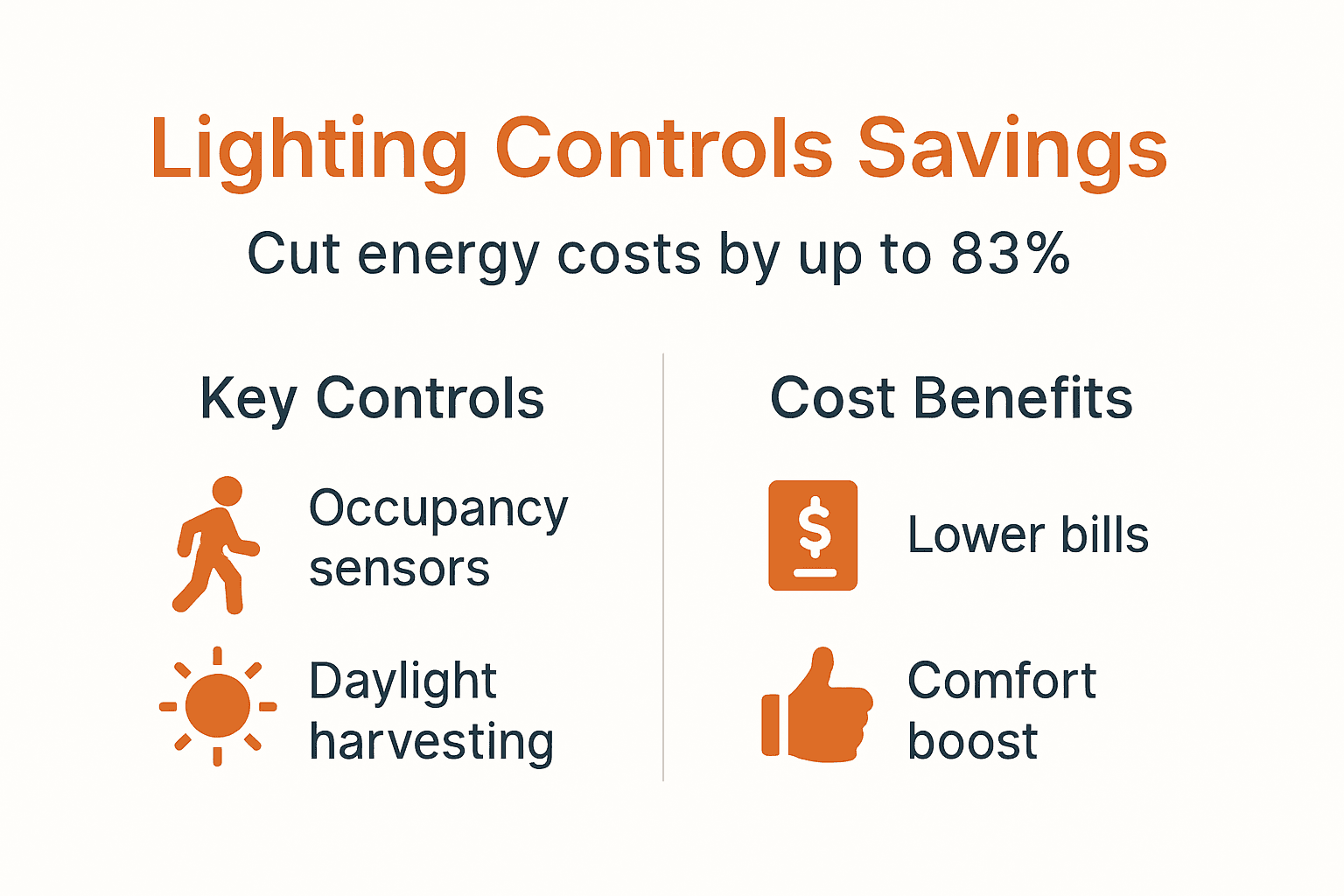
Occupancy sensors reduce energy use by 20 to 40%, especially in intermittent use areas like conference rooms and break spaces. These savings accumulate rapidly across multiple zones. A typical 1,000 square metre office might save £2,000 to £5,000 annually through properly implemented controls.
Improved lighting quality enhances occupant comfort and productivity. Studies show that appropriate light levels and colour temperatures support alertness and reduce eye strain. Dimming capability allows adjustment for different tasks, from detailed paperwork to casual meetings.
Quantified savings by control type:
| Control technology | Typical energy reduction | Annual cost savings (per 1000 m²) |
|---|---|---|
| Occupancy sensors | 20-40% | £1,200-£2,400 |
| Daylight harvesting | 15-30% | £900-£1,800 |
| Dimming controls | 10-30% | £600-£1,800 |
| Scheduling/timers | 15-25% | £900-£1,500 |
| Combined approach | 40-83% | £2,400-£5,000+ |
Proper system design and usage are critical to achieving maximum savings. Poorly configured controls can frustrate occupants and lead to overrides that negate benefits. Engaging experienced professionals ensures systems are commissioned correctly and staff understand operation.
Key factors influencing savings:
- Baseline lighting energy consumption before upgrade
- Building occupancy patterns and usage schedules
- Amount of natural daylight available
- Quality of system design and commissioning
- User behaviour and system acceptance
“The combination of LED fixtures and intelligent controls delivers transformational energy reductions that fundamentally change the economics of commercial lighting, turning an operational expense into a strategic investment.”
For detailed analysis of LED lighting cost savings and how to maximise lighting upgrade benefits, comprehensive resources help property managers build compelling business cases.
Pro Tip: Track energy consumption before and after installation using monthly utility data to quantify actual savings and demonstrate return on investment to stakeholders.
Regulatory and compliance requirements in the UK
Part L of UK Building Regulations requires controlled or switched lighting for commercial upgrades since 2022 to 2023. This mandate aims to reduce carbon emissions from the built environment. New installations, refurbishments, and material alterations must incorporate appropriate lighting controls.
Compliance has been mandatory for upgrades and refurbishments since the regulation changes came into force. Property managers undertaking lighting projects must ensure designs meet these standards. Non-compliance risks enforcement action, penalties, and potential issues when selling or leasing properties.
Lighting controls improve Energy Performance Certificate (EPC) and Display Energy Certificate (DEC) ratings, aiding certifications. Better ratings enhance property value and attractiveness to tenants. Many commercial leases now require minimum EPC ratings, making compliance essential for marketability.
Meeting these standards supports UK climate goals and reduces carbon footprint. The government’s net zero commitment by 2050 requires substantial energy efficiency improvements across commercial property stock. Lighting controls represent a proven, cost-effective contribution to these targets.
Compliance essentials:
- Automatic switching or dimming in response to occupancy and daylight
- Local and centralised control capability
- Regular commissioning and performance verification
- Documentation proving regulatory compliance
- Professional certification for electrical installation work
Failure to comply can risk penalties and reduce building attractiveness to quality tenants. Forward-thinking property managers view compliance not as a burden but as an opportunity to reduce costs and enhance asset value. Resources on lighting compliance requirements help navigate these obligations effectively.
Implementation, installation, and support for lighting controls
Modern wireless and modular lighting controls minimise installation disruption. Retrofit solutions integrate with existing LED fixtures or operate as standalone systems. Wireless technologies eliminate extensive rewiring, reducing labour costs and downtime. Many installations complete outside business hours to avoid operational interference.
Integration with building management systems (BMS) or KNX improves control and monitoring. Centralised platforms provide real-time energy data and enable remote adjustments. This connectivity supports proactive maintenance and continuous optimisation. Cloud-based solutions offer accessibility from any device with internet access.
Professional installation includes compliance, permits, and safety checks. Qualified electricians ensure work meets Part P Building Regulations and BS 7671 wiring standards. Proper earthing, circuit protection, and emergency lighting integration protect occupants and assets. Certified installers provide necessary documentation for building control sign-off.
Installation process steps:
- Conduct comprehensive lighting audit and needs assessment
- Design control strategy matching occupancy patterns and spaces
- Select appropriate control technologies and hardware
- Schedule installation to minimise business disruption
- Commission system and verify compliance with regulations
- Train building staff and occupants on operation
- Document installation and provide maintenance guidance
Commissioning and staff training ensure systems operate effectively. Initial setup includes programming schedules, adjusting sensor sensitivity, and fine-tuning dimming curves. Training empowers facilities teams to make minor adjustments and troubleshoot common issues. User education prevents frustration and override behaviour that undermines savings.
Ongoing maintenance sustains savings and system longevity. Annual inspections verify sensor functionality, check programming accuracy, and update software. Cleaning photosensors and occupancy detectors maintains detection accuracy. For comprehensive guidance on the LED lighting selection process and lighting upgrade best practices, detailed resources support informed decision making.
Common implementation challenges:
- Sensor placement requiring adjustment after initial commissioning
- User resistance to automatic controls in personal workspaces
- Integration complexity with legacy building systems
- Programming requirements for complex scheduling needs
Pro Tip: Pilot controls in one zone before full building deployment to identify issues, refine settings, and build user confidence through demonstration of benefits.
Specialist advice on LED lighting tips and office lighting solutions helps property managers navigate the technical landscape confidently.
Common misconceptions about lighting controls
LED lighting alone does not achieve maximum savings without controls adding 10 to 30% more reduction. Many property managers invest in LED fixtures expecting optimal efficiency, only to discover significant waste from lights burning unnecessarily. Controls address this gap by managing when and how lights operate.
Modern control systems allow low-disruption and cost-effective installations. Earlier generation systems required extensive rewiring and complex programming, creating barriers to adoption. Today’s wireless technologies and plug-and-play solutions install quickly with minimal building alteration. Costs typically pay back within two to four years through energy savings.
Controls simplify rather than complicate lighting management. Some managers worry about complexity and occupant complaints. Well-designed systems operate transparently in the background with minimal user interaction required. Centralised platforms actually reduce management burden by automating tasks previously requiring manual intervention.
Savings depend on good system design and proper user behaviour. Poorly specified controls installed without regard to actual usage patterns disappoint. Success requires understanding how spaces are used and selecting appropriate technologies. Equally important is educating occupants so they understand and accept automated operation.
Myths versus reality:
- Myth: Controls are expensive and disruptive to install. Reality: Modern wireless solutions install quickly with costs recovered through savings.
- Myth: LED lighting delivers maximum possible savings. Reality: Controls add substantial additional reductions beyond fixture efficiency.
- Myth: Automated controls frustrate occupants. Reality: Properly commissioned systems operate seamlessly with minimal user interaction.
- Myth: Controls are complex to operate and maintain. Reality: Intuitive interfaces and cloud platforms simplify management.
Professional guidance helps avoid common pitfalls. Experienced suppliers understand which technologies suit different applications and how to commission them properly. They can also address occupant concerns proactively through education and thoughtful system design. Resources debunking LED lighting myths provide additional clarity for decision makers.
Conclusion and actionable recommendations
Lighting controls are essential to achieving optimal energy and cost savings in commercial properties. They transform LED efficiency into sustained operational benefits by ensuring lights operate only when needed at appropriate levels. The combination delivers energy reductions of 40 to 83% compared to traditional systems.
Controls complement LED lighting and help meet mandatory UK regulations. Part L compliance is no longer optional for commercial upgrades and refurbishments. Meeting these standards protects property value, supports climate goals, and positions buildings competitively in the market.
Proper design, professional installation, and ongoing support ensure maximum benefits. Success requires matching control technologies to actual usage patterns and commissioning systems thoroughly. Training and documentation empower building teams to sustain performance over time.
Action steps for property managers:
- Conduct a lighting audit identifying current consumption and control opportunities
- Set clear objectives for energy reduction, compliance, and occupant comfort
- Select controls suited to your building’s operational patterns and spaces
- Engage qualified professionals for design, installation, and commissioning
- Train staff and occupants to understand and operate systems effectively
- Monitor performance and adjust programming based on actual usage data
Start with a lighting audit, set clear goals, and select controls suited to your building use. Document baseline consumption to quantify savings achieved. Prioritise high-traffic or high-consumption areas for immediate impact.
Consult trusted suppliers and experts to optimise your lighting system’s performance. Experienced partners bring technical knowledge and practical insights that prevent costly mistakes. They can also provide ongoing support ensuring systems continue delivering value for years.
Lighting control solutions from LED Supply & Fit
You now understand how lighting controls cut energy costs and meet UK regulations. LED Supply & Fit specialises in integrating energy-efficient lighting controls in commercial properties across the UK. We’ve delivered successful projects for clients including Wilson Veterinary Group and Stockton Riverside College, demonstrating measurable energy reductions and compliance.

Our professional installation service includes compliance assurance, commissioning, and ongoing support tailored to your building’s operational needs and budget. We handle everything from initial audit through to staff training, ensuring your system delivers sustained savings. Ready to cut energy costs? Request a lighting control quote today and discover how much you could save.
Frequently asked questions
What are lighting controls and do I need them for commercial buildings?
Lighting controls automate or adjust lighting to save energy and improve comfort. UK law requires controlled lighting in commercial upgrades from 2022 to 2023 onwards under Part L Building Regulations. Without controls, you risk non-compliance and miss significant savings opportunities.
How much can I expect to save by installing lighting controls?
Savings range from 40% to over 80% compared to traditional lighting when controls supplement LED fixtures. Specific savings depend on control types used and building occupancy patterns. Most installations pay back within two to four years through reduced energy costs.
Are lighting control installations disruptive or expensive?
Modern wireless and modular controls allow quick, minimal disruption installs. Many projects complete outside business hours with no operational downtime. Costs are generally outweighed by operational savings and regulatory compliance benefits, with typical payback periods of two to four years.
How do I choose the right lighting controls for different areas?
Occupancy sensors suit intermittently used offices, combined with scheduling controls. Retail spaces benefit from daylight harvesting and dimming to optimise ambience and savings. A tailored mix based on space use achieves best results, which is why professional assessment is valuable.
What ongoing support is needed after installation?
Proper commissioning verifies system performance and compliance with regulations. Training ensures building users operate controls correctly and understand their benefits. Regular maintenance prevents faults and preserves savings, typically requiring annual inspections and sensor cleaning.