Optimising hospitality lighting systems in 2026
TL;DR:
- Lighting significantly influences guest perception by creating the right ambiance and energy efficiency. Proper planning, including site audits, zone-specific lighting designs, and smart controls, ensures optimal results. Successful projects depend on thorough commissioning and ongoing monitoring to maintain performance and guest satisfaction.
Lighting shapes everything guests feel from the moment they walk through your door. Yet for most hospitality managers, optimising hospitality lighting systems sits somewhere between a capital expenditure headache and a never-ending maintenance cycle. The technical term for this discipline is luminous environment management, though most operators simply call it what it is: getting the right light in the right place for the right cost. Done well, it cuts energy bills, improves ambience, and keeps guests coming back. Done badly, it quietly erodes both your brand and your bottom line. This guide walks you through the whole process, from site assessment to ongoing monitoring.
Planning your lighting optimisation project
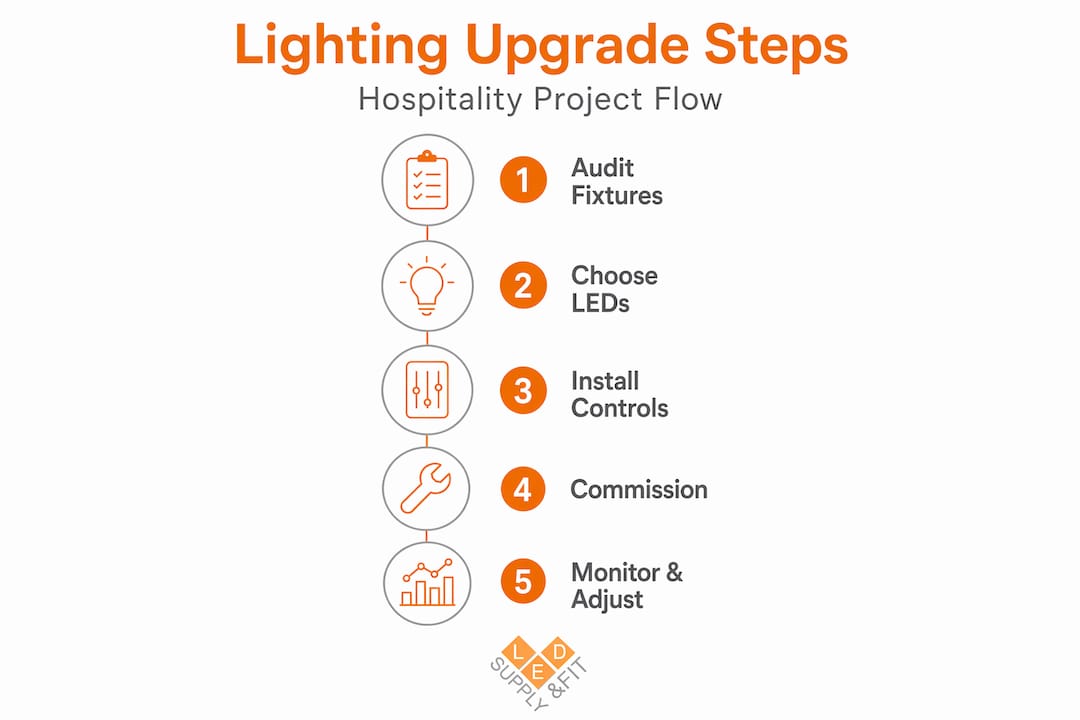
Before a single fitting gets replaced, you need a clear picture of what you are working with. A thorough audit of your existing infrastructure is non-negotiable. Walk every zone of the property, noting fixture types, lamp technologies, control capabilities, and any areas where illuminance is visibly inadequate or excessive.
Guest-facing areas and back-of-house spaces have very different requirements. A restaurant dining room needs warm, layered lighting at around 2,700 to 3,000 Kelvin to encourage relaxation and appetite. A hotel corridor needs consistent, glare-free illumination that meets safety standards without burning energy all night. Your kitchen and stores need bright, cool-white task lighting that supports hygiene and accuracy. Treating these zones identically is one of the most common planning mistakes.
Colour temperature, lumen output, and placement all feed directly into guest perception. Lighting in the office research consistently shows that poor lighting quality undermines user comfort even when physical conditions are otherwise good. The same applies in hospitality: guests cannot always articulate why a room feels unwelcoming, but mismatched colour temperature is frequently the cause.
Here is a baseline overview of what any credible optimisation project requires:
| Component | Purpose | Notes |
|---|---|---|
| LED luminaires | Replace legacy lamps | Prioritise ENERGY STAR-rated products |
| DALI or 0-10V dimming controls | Adjust output by zone | Ensure driver compatibility |
| Occupancy and PIR sensors | Detect presence and switch accordingly | Check coverage area per sensor |
| Daylight harvesting sensors | Reduce output when natural light is sufficient | Position facing windows or rooflights |
| Building management system (BMS) integration | Centralised scheduling and monitoring | Useful for multi-zone venues |
Regulatory obligations also shape your choices. UK building regulations and Part L compliance requirements push commercial operators towards measurable efficiency standards. Aligning your lighting project with sustainability targets from the outset avoids costly rework later.
Pro Tip: Document your existing energy baseline before any works begin. Photograph every zone, record wattages, and note control types. This data becomes the comparison point that proves your ROI once the project is complete.
LED technology and smart controls
The core of any modern lighting upgrade is the shift to LED technology paired with intelligent controls. LED lighting uses up to 90% less energy than incandescent equivalents and lasts up to 25 times longer, which matters enormously in venues where relamping disrupts guests and requires specialist access equipment.
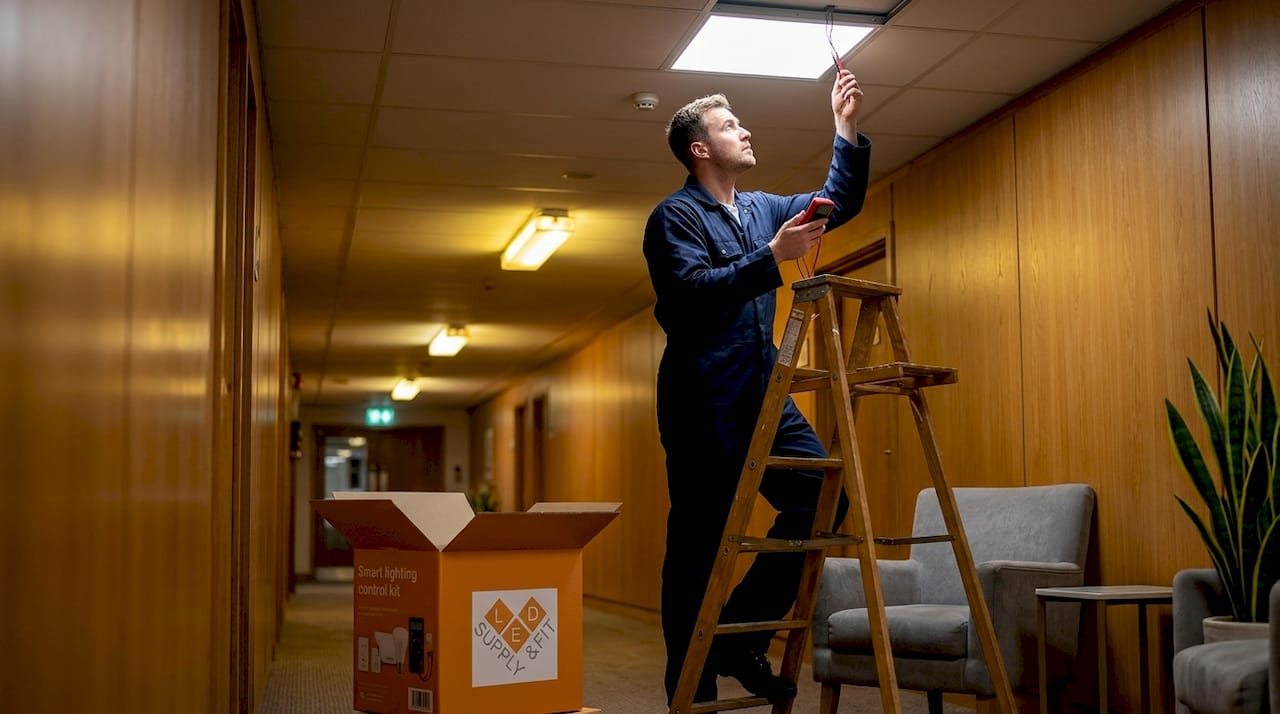
Selecting the right products is where many managers get unstuck. Not all LED lamps are equal. ENERGY STAR-certified products deliver the greatest efficiency gains and are typically compatible with dimming controls and sensors from the outset. Choosing uncertified budget alternatives frequently means discovering compatibility problems after installation.
Smart controls are where the real operational gains live:
- Presence detection using passive infrared (PIR) sensors switches off or dims lights in unoccupied rooms, corridors, and meeting spaces automatically.
- Daylight harvesting reduces artificial output when natural light is sufficient, particularly useful in breakfast areas, atriums, and lobby spaces facing south or east.
- Scheduled dimming delivers major savings in low-traffic periods. Scheduled dimming in corridors reduced weekly energy consumption by approximately 64% while maintaining an average illuminance of 100 lux at 25% dimming. That is not a marginal gain.
- Event-integrated automation ties your lighting controls directly to booking systems. Automation linked to event scheduling powers spaces up ahead of arrival and powers them down after departure, eliminating the wasted energy that accumulates when staff forget to switch off.
Sensor technology has advanced considerably. DALI-2 corridor sensors combining PIR presence detection with constant light measurement now cover up to 157 m² per unit, making them practical for large hotel corridors and open-plan dining areas without requiring excessive hardware.
Pro Tip: Place sensors to cover the full width of corridors and walkways, not just the centreline. A sensor with a narrow detection arc mounted centrally will miss guests walking close to walls, triggering false “unoccupied” readings and causing lights to dim unexpectedly. This is one of the most common comfort complaints after a controls upgrade.
Executing the project with minimal disruption
Even the best lighting design fails if the installation disrupts your guests or overwhelms your maintenance team. Phased upgrades are the standard approach for operating venues, and they work well when planned properly.
- Phase by zone. Start with back-of-house and low-occupancy areas such as plant rooms, storage, and staff corridors. This lets your team develop familiarity with the new technology before it reaches guest-facing spaces.
- Schedule works during low-occupancy periods. Early mornings, Monday to Wednesday in hotels, and the period between lunch and dinner service in restaurants are typically your best windows.
- Involve your operations team early. Facilities managers and front-of-house supervisors need to understand how the new controls work before handover. Undocumented systems get overridden within weeks.
- Commission thoroughly. Commissioning is not just switching the lights on. It means verifying every sensor’s coverage, confirming dimming curves perform as expected, and checking that scheduled scenes activate correctly.
- Run a post-commissioning snagging period. Many lighting issues only emerge post-commissioning, including glare in unexpected positions, sensor misfires, and dimming inconsistencies that are invisible during day-time testing. Allow a minimum of two weeks of live operation before signing off.
| Approach | Pros | Cons |
|---|---|---|
| Full venue replacement | Fastest ROI, single commissioning phase | High upfront cost, significant disruption |
| Phased zone-by-zone upgrade | Minimises disruption, spreads cost | Longer overall programme, mixed systems during transition |
| Controls-only retrofit | Low cost, quick wins on energy | Limited by existing lamp technology |
| Lamp and driver swap only | Moderate cost, moderate savings | Misses gains from smart controls |
Pro Tip: Ask your lighting installer for a written commissioning report, not just a verbal sign-off. This document becomes your baseline for future maintenance and proves performance to insurers, auditors, and sustainability reporting requirements.
Monitoring results and maintaining performance
Getting the project over the line is not the end. The lighting systems that deliver lasting savings are the ones actively monitored and adjusted over time.
Telemetry is your most powerful tool here. Real-time telemetry monitoring lets you track energy consumption by zone, compare against your baseline, and spot anomalies before they become expensive problems. A sudden spike in corridor energy use, for example, often signals a failed sensor that has reverted to continuous full output.
Practical steps for ongoing performance management:
- Set illuminance targets for each zone and review them seasonally, as natural light levels change significantly between winter and summer.
- Adjust occupancy schedules around genuine occupancy patterns. A hotel running at 40% in January needs different scheduling than one running at 95% in July.
- Collect guest feedback on lighting quality during routine satisfaction surveys. Specific questions about brightness and atmosphere surface problems that telemetry alone will not catch.
- Inspect and clean fixtures quarterly. Dust accumulation on LED panels can reduce lumen output by 10 to 20% over a year, silently undermining your illuminance targets.
- Update control system firmware and scene programmes in line with refurbishments, rebranding, or seasonal changes to keep the system aligned with current operational needs.
You can find a detailed breakdown of the best practices for hotel lighting on the Ledsupplyandfit website, which covers zone-specific illuminance targets and UK compliance guidance in practical terms.
My honest view on where projects succeed and fail
I have seen lighting optimisation projects that delivered exactly what they promised on paper and some that quietly disappointed within six months. The difference is almost never the product. It is the post-commissioning discipline.
Venues that assign a named person to review telemetry monthly, adjust schedules when guest flow changes, and run snagging rounds in the weeks after handover consistently outperform those that treat commissioning as the finish line. Post-commissioning lighting management is where guest experience is actually determined. I think it deserves as much planning attention as the product specification.
The other thing I would push back on is the instinct to prioritise energy savings above everything else. The lighting controls balance between comfort and savings is genuine, not marketing copy. Sensors that dim too aggressively in occupied areas, or schedules that plunge a bar into flat white light during a busy evening service, will generate complaints that cost you far more in reputation than the saved kilowatt-hours are worth. The guest experience has to come first. Efficiency follows from designing it properly.
— John
How Ledsupplyandfit can support your upgrade
If you are ready to move beyond planning and into action, Ledsupplyandfit supplies and installs LED lighting systems for hotels, restaurants, bars, and commercial properties across the UK.
From single-room retrofits to full-venue phased upgrades, the team brings supply, installation, and commissioning under one roof. You can browse the best commercial LED lighting products currently available, or explore completed client projects such as Wilson Veterinary Group and Stockton Riverside College to see the kind of results a well-executed retrofit delivers. Bulk orders qualify for trade discounts, and next-day delivery is available across the UK.
FAQ
What does optimising hospitality lighting systems actually involve?
It involves auditing existing fixtures, replacing inefficient lamps with LED alternatives, installing smart controls such as occupancy sensors and dimming systems, and monitoring performance over time to maintain energy savings and guest comfort.
How much energy can LED upgrades save in a hotel or restaurant?
LED technology uses up to 90% less energy than incandescent lamps. When combined with scheduled dimming and occupancy controls, corridor energy use alone can fall by around 64% compared to continuous full lighting.
How do smart sensors improve guest experience?
Sensor technologies combining PIR detection with constant light measurement maintain consistent illuminance automatically, so guests never experience corridors that are too bright at night or too dim during busy periods.
When should lighting controls be integrated with booking systems?
For any venue with event spaces, function rooms, or meeting areas, integration with event scheduling delivers immediate energy savings by automating power-up and power-down around actual bookings, removing dependence on staff remembering to manage the systems manually.
What is the most overlooked stage of a lighting upgrade?
Post-commissioning is consistently cited as the phase most likely to determine whether a lighting project succeeds in practice. Issues including glare, sensor errors, and dimming inconsistencies typically only surface once the venue is operating normally.