
Smart lighting for UK businesses: cut costs by £1.1M in 2026
Commercial property managers seeking energy efficiency face a compelling opportunity: smart lighting systems can deliver savings exceeding £1.1 million across multiple sites while slashing carbon emissions by thousands of tonnes. These aren’t distant projections; they’re proven results from UK businesses already reaping the benefits. Smart lighting transforms how commercial spaces consume energy, combining LED technology with intelligent controls that respond to occupancy and natural light. For property managers and business owners committed to sustainability and cost reduction, understanding smart lighting is no longer optional. It’s a strategic imperative that directly impacts your bottom line and environmental credentials.
Key takeaways
| Point | Details |
|---|---|
| Smart lighting definition | LED systems integrated with sensors, timers, and wireless controls that automatically adjust to optimise energy use |
| Financial impact | Businesses can achieve net savings over £1.1 million across multiple sites over six years |
| Carbon reduction | Smart lighting cuts emissions by thousands of tonnes, supporting net-zero targets and improving ESG scores |
| System types | Options include sensor-based, schedule-based, wireless control, and integrated building management systems |
| Implementation steps | Success requires energy audits, system selection, phased installation, staff training, and ongoing monitoring |
What is smart lighting and how does it work?
Smart lighting represents a fundamental shift from traditional illumination. These systems combine energy-efficient LED technology with sensors, wireless connectivity, and automated controls that adapt lighting levels based on real-time conditions. Unlike conventional fixtures that operate at fixed output regardless of need, smart lighting responds intelligently to occupancy, natural daylight, and programmed schedules.
The technology relies on several key components working in harmony. Motion sensors detect presence in rooms and corridors, triggering lights only when spaces are occupied. Daylight sensors measure natural illumination entering through windows, dimming artificial lights accordingly to maintain optimal brightness without waste. Wireless controls enable remote management across entire buildings, allowing facility managers to adjust settings, monitor consumption, and identify inefficiencies from centralised dashboards. Automated dimming capabilities fine-tune light output throughout the day, matching human activity patterns whilst minimising unnecessary energy draw.
These systems deliver measurable environmental benefits through reduced electricity consumption. By lighting spaces only when needed and at appropriate levels, smart systems reduce energy consumption with your lighting system by substantial margins compared to always-on traditional fixtures. This efficiency translates directly to lower carbon emissions, helping businesses meet sustainability commitments. The adoption of smart lighting contributes to improved ESG scores by reducing carbon emissions and enhancing workplace conditions.
For commercial property managers, the benefits extend beyond environmental gains:
- Dramatic reduction in energy bills through optimised consumption patterns
- Lower maintenance costs due to LED longevity and remote diagnostics
- Enhanced workplace environments with better lighting quality and control
- Improved tenant satisfaction in multi-occupancy buildings
- Compliance with increasingly stringent energy efficiency regulations
- Real-time data on usage patterns enabling further optimisation
Pro Tip: Start with high-traffic areas like corridors and car parks where motion sensors deliver immediate, visible savings before expanding to other zones.
Financial and environmental impact of smart lighting in commercial properties
The business case for smart lighting rests on concrete, verifiable outcomes from UK commercial properties. Consider Mole Valley Farmers, a cooperative that upgraded 55 sites to LED smart lighting systems. This project delivered total net savings of £1,118,694 over a six-year term whilst cutting CO2 emissions by 3,420 tonnes. These figures represent real money returned to the business and substantial progress towards their 2040 net-zero goal.
The financial impact stems from multiple sources. Energy consumption drops immediately when intelligent controls replace always-on systems. Lights operating only when needed, dimmed to appropriate levels, consume far less electricity than traditional fixtures running at full output during all operating hours. This reduction compounds over time, delivering savings that grow year after year.
Maintenance costs fall dramatically with LED smart lighting. Traditional bulbs require frequent replacement, involving labour costs and disruption to business operations. LED fixtures last decades rather than months, and smart systems provide diagnostic alerts before failures occur, enabling planned maintenance during off-peak hours. This predictability eliminates emergency callouts and reduces facility management overhead.
| Benefit Category | Impact | Timeframe |
|---|---|---|
| Energy cost reduction | 40-60% lower electricity bills | Immediate |
| Maintenance savings | 70-80% fewer replacements | 5-10 years |
| Carbon emissions | Thousands of tonnes reduced | Ongoing |
| ESG score improvement | Enhanced sustainability metrics | Annual reporting |
| Property value | Increased asset attractiveness | Long-term |
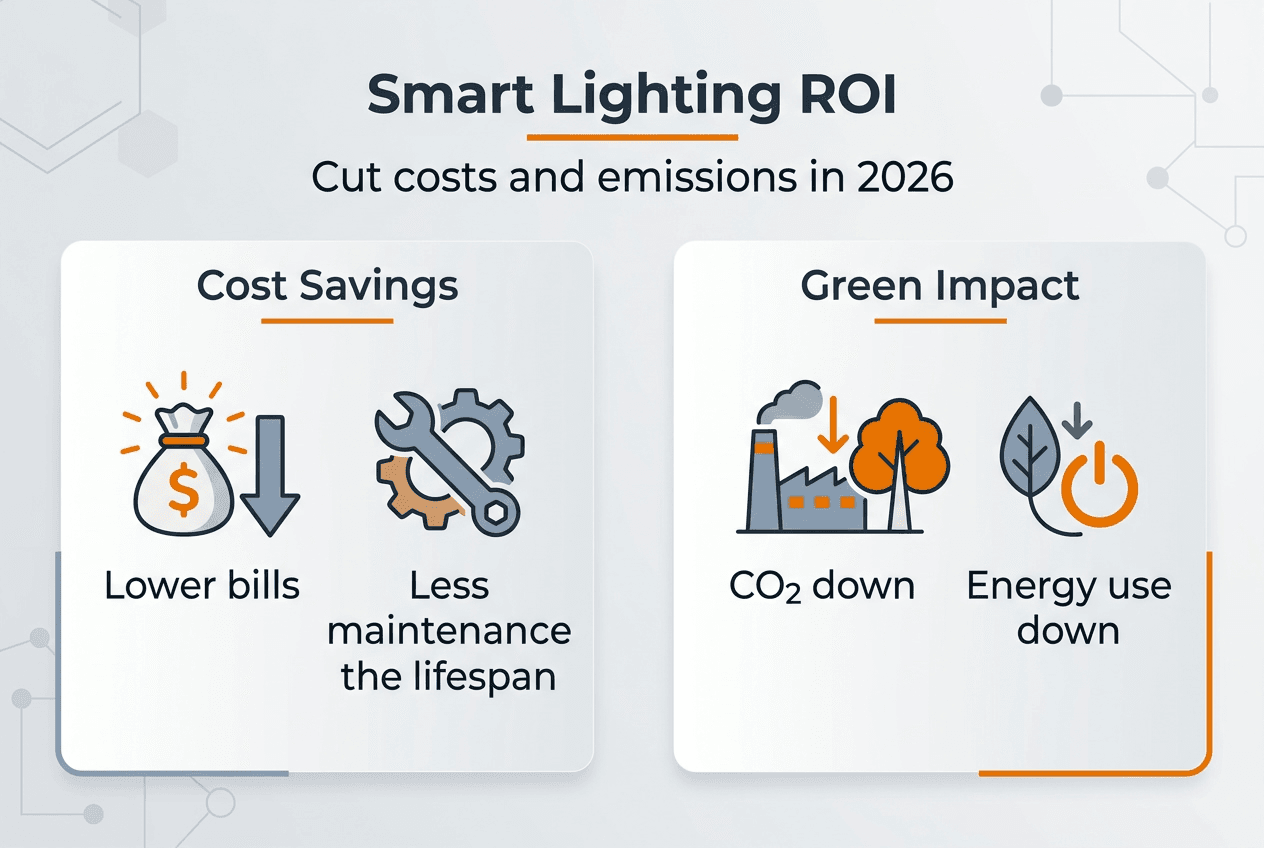
The environmental credentials prove equally compelling. Every kilowatt-hour saved translates to reduced grid demand and lower carbon emissions. For businesses with ambitious sustainability targets, smart lighting provides measurable progress towards net-zero commitments. These reductions appear in annual reports, supporting corporate responsibility narratives and stakeholder confidence.
Pro Tip: Request detailed energy consumption reports from potential suppliers showing projected savings specific to your property type and usage patterns rather than generic industry averages.
Businesses seeking to upgrade commercial lighting for cost savings find that smart systems pay for themselves through reduced operational expenses. The project at Mole Valley Farmers demonstrated that long-term, low-maintenance lighting solutions support sustainability goals whilst delivering substantial financial returns. For property managers evaluating capital investments, few upgrades offer comparable returns across financial, environmental, and operational dimensions. The energy savings with LED technology become even more pronounced when combined with intelligent controls.
Types of smart lighting systems and comparison for commercial use
Commercial properties can choose from several smart lighting configurations, each suited to different operational requirements and budgets. Understanding these options helps property managers select systems aligned with their specific needs.
Sensor-based systems represent the most autonomous approach. These installations use occupancy and daylight sensors to control lighting without human intervention. Motion detectors switch lights on when people enter spaces and off after predetermined periods of inactivity. Photocells adjust artificial lighting based on natural daylight levels, maintaining consistent illumination whilst minimising energy use. These systems excel in areas with variable occupancy like corridors, meeting rooms, and warehouses.
Schedule-based systems operate according to programmed timetables reflecting typical building usage. Lights activate at opening time, dim during low-activity periods, and switch off at closing. Whilst less responsive than sensor-based approaches, schedule systems suit properties with predictable occupancy patterns such as offices and retail spaces with consistent operating hours. They offer simpler installation and lower upfront costs compared to sensor-rich alternatives.
Wireless control systems provide manual override capabilities alongside automation. Facility managers adjust lighting remotely via smartphone apps or computer interfaces, overriding automatic settings when circumstances require. This flexibility proves valuable in mixed-use properties or spaces hosting events with varying lighting needs. The wireless infrastructure also simplifies installation, avoiding extensive rewiring.
Integrated building management systems represent the most comprehensive approach, connecting lighting controls with HVAC, security, and other building systems. This integration enables sophisticated scenarios where lighting responds to multiple inputs, optimising energy use across all building functions. Large commercial properties and corporate campuses benefit most from this holistic approach, despite higher implementation costs.
| System Type | Best For | Installation Complexity | Typical Cost | Key Advantage |
|---|---|---|---|---|
| Sensor-based | Variable occupancy areas | Moderate | Medium | Fully autonomous operation |
| Schedule-based | Predictable usage patterns | Low | Low | Simple, reliable, cost-effective |
| Wireless control | Mixed-use spaces | Low | Medium | Flexible manual override |
| Integrated BMS | Large commercial properties | High | High | Comprehensive building optimisation |
Each system type offers distinct advantages:
- Sensor-based systems maximise savings in unpredictable environments
- Schedule-based approaches suit businesses wanting straightforward automation
- Wireless controls appeal to properties requiring operational flexibility
- Integrated systems deliver peak efficiency for complex facilities
Pro Tip: Consider future scalability and compatibility with other smart building systems when choosing; starting with wireless-ready infrastructure allows gradual expansion without costly retrofits.
Property managers exploring best commercial LED lighting options 2026 should evaluate their building’s occupancy patterns, operational requirements, and budget constraints before selecting a system type. The right choice balances upfront investment against long-term operational savings and flexibility.
How to implement smart lighting in your commercial property
Successful smart lighting implementation follows a structured approach that minimises disruption whilst maximising benefits. Property managers should treat the upgrade as a strategic project requiring careful planning and execution.
-
Conduct a comprehensive energy audit and lighting assessment. Document current consumption patterns, identify inefficient fixtures, and map occupancy across your property. This baseline data reveals where smart lighting delivers greatest impact and helps quantify expected savings. Professional energy auditors can provide detailed reports highlighting priority areas.
-
Choose the appropriate smart lighting system for your property type and usage patterns. Match system capabilities to your operational requirements, considering factors like occupancy variability, natural daylight availability, and existing infrastructure. Evaluate suppliers based on product quality, installation expertise, and post-installation support rather than price alone.
-
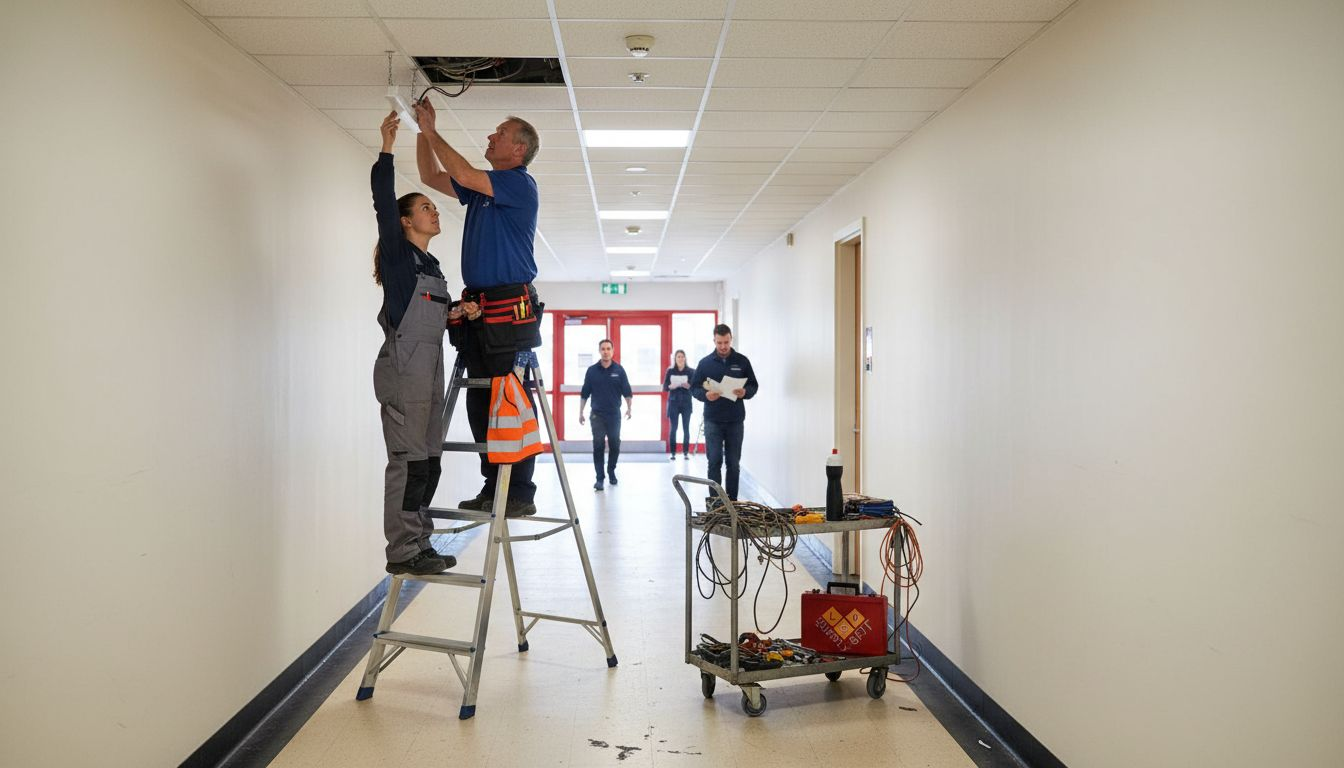
Plan a phased installation that minimises business disruption. Start with high-impact areas like car parks or corridors where sensor-based controls deliver immediate, visible savings. This approach allows staff to adapt gradually whilst demonstrating benefits that build support for wider rollout. Schedule installation work during off-peak hours or closure periods.
-
Train staff on system operation, controls, and basic maintenance procedures. Ensure facility managers understand how to adjust settings, interpret consumption data, and troubleshoot common issues. Well-trained staff maximise system benefits and identify optimisation opportunities that automated systems might miss.
-
Monitor energy consumption and savings regularly using system analytics. Track actual performance against projected savings, identifying underperforming areas requiring adjustment. Regular monitoring ensures systems continue delivering optimal results and helps justify further investment in additional zones.
Choosing qualified installation providers proves critical to project success. Look for suppliers with proven commercial experience, relevant certifications, and comprehensive warranties. Request case studies from similar property types and speak with existing customers about their experiences. The Mole Valley Farmers project demonstrated that working with experienced partners delivers long-term, low-maintenance lighting solutions supporting sustainability goals.
Maintenance requirements for smart LED systems remain minimal compared to traditional lighting, but establishing clear procedures ensures sustained performance. Schedule annual inspections to verify sensor accuracy, clean fixtures, and update software. Most issues can be resolved remotely through system diagnostics, reducing callout costs.
Property managers seeking LED lighting cost saving tips for UK businesses should prioritise proper implementation over rushing installation. Taking time to plan thoroughly, select appropriate systems, and train staff properly delivers better long-term results than hasty deployments. The ways to reduce energy consumption with lighting multiply when smart controls complement efficient LED fixtures, creating synergies that maximise both financial and environmental returns.
Explore commercial smart lighting solutions with LED Supply & Fit
Transitioning your commercial property to smart lighting requires expertise in both technology selection and professional installation. LED Supply & Fit specialises in delivering tailored smart lighting solutions for UK businesses across retail, hospitality, office, and industrial sectors. Our team understands the unique challenges commercial property managers face when balancing energy efficiency targets with operational requirements and budget constraints.

We guide you through every stage, from initial energy assessments identifying optimal upgrade opportunities to post-installation monitoring ensuring systems deliver projected savings. Our experience spans small single-site projects to large multi-location rollouts, providing scalable solutions that grow with your business. Discover the best commercial LED lighting 2026 options curated specifically for UK commercial applications.
Whether you’re exploring ways to upgrade commercial lighting for cost savings or seeking expert guidance on system selection, our team delivers solutions aligned with your sustainability ambitions and financial objectives. Request a quote for smart lighting to start your journey towards reduced energy costs and enhanced environmental performance.
Frequently asked questions
What is the difference between smart lighting and traditional LED lighting?
Traditional LED lighting provides energy-efficient illumination at fixed output levels, requiring manual switching and offering no automation capabilities. Smart lighting incorporates sensors, wireless connectivity, and automated controls that adjust light levels based on occupancy, natural daylight, and programmed schedules. This intelligence enables smart systems to optimise energy use continuously, delivering significantly greater efficiency than static LED fixtures.
How much can businesses typically save by switching to smart lighting?
Savings vary based on property size, usage patterns, and existing infrastructure, but substantial reductions are achievable. Commercial properties can realise net savings over £1.1 million across multiple sites over six years through reduced energy consumption and lower maintenance costs. Individual properties typically see 40-60% reductions in lighting-related electricity expenses, with payback periods of 2-4 years depending on system complexity. Explore LED lighting cost saving tips for strategies to maximise your returns.
Can smart lighting contribute to my business’s environmental goals?
Smart lighting delivers measurable progress towards sustainability targets through substantial carbon footprint reductions. Systems automatically minimise energy waste, cutting emissions by thousands of tonnes over their operational lifetime. The adoption of smart lighting improves ESG scores by reducing carbon emissions and enhancing workplace conditions, supporting corporate responsibility initiatives and stakeholder expectations. These environmental benefits appear in annual sustainability reports, demonstrating tangible progress towards net-zero commitments.
How long does smart lighting installation take for commercial properties?
Installation timelines depend on property size, system complexity, and whether work proceeds in phases. Small to medium properties with straightforward sensor-based systems typically complete installation within 1-2 weeks. Large multi-site projects or integrated building management systems may span several months, particularly when phased to minimise operational disruption. Professional installers work during off-peak hours or closure periods to avoid impacting business operations, ensuring minimal inconvenience throughout the upgrade process.