
Why upgrade business lighting: reduce costs by 75%
UK business owners face mounting pressure to control energy costs while maintaining quality workplace environments. LED lighting upgrades offer a proven solution, cutting energy bills by up to 75% compared to traditional lighting. Yet many decision makers still believe LED technology is too expensive or unreliable in British conditions. This guide reveals how modern LED systems deliver measurable savings, enhance employee comfort, and support environmental compliance across commercial premises.
Key takeaways
| Point | Details |
|---|---|
| Energy savings | LED lighting reduces consumption by up to 75% versus traditional bulbs. |
| Workplace benefits | Superior illumination quality improves employee comfort and safety. |
| Environmental compliance | Lower carbon emissions help UK businesses meet sustainability regulations. |
| Cost effectiveness | Typical ROI occurs within 1 to 3 years through energy and maintenance savings. |
| Myth busting | Modern LEDs perform reliably in UK climates and offer strong long term value. |
Introduction: the case for upgrading business lighting in the UK
Commercial buildings account for nearly 40% of UK electricity consumption, with lighting representing a substantial portion of that figure. Rising energy prices put continuous pressure on operating budgets, forcing facility managers to identify cost reduction opportunities without compromising operational standards.
LED technology fundamentally differs from fluorescent tubes and halogen bulbs by converting electricity to light far more efficiently. Traditional incandescent bulbs waste roughly 90% of energy as heat rather than visible light. LEDs reverse this inefficiency, producing minimal heat while delivering consistent illumination.
Business owners typically hesitate before committing to lighting upgrades in UK commercial properties due to several concerns:
- Upfront capital expenditure appears substantial compared to replacing existing bulbs
- Installation disruption may affect daily operations and customer experience
- Uncertainty about actual payback periods creates financial planning challenges
- Perceived complexity of selecting appropriate products for specific environments
These valid concerns often prevent businesses from capturing significant long term savings. Understanding the complete picture helps decision makers evaluate LED upgrades objectively rather than dismissing them based on initial cost alone.
How LED lighting delivers energy efficiency and cost savings
LED lighting can reduce energy consumption by up to 75% compared to traditional bulbs, transforming monthly utility bills for commercial premises. This dramatic reduction stems from superior electrical efficiency and directional light output that minimises wasted illumination.
The financial benefits extend well beyond lower electricity bills:
- LED bulbs typically last 50,000 hours or more, compared to 1,000 hours for incandescent and 8,000 hours for fluorescent tubes
- Reduced replacement frequency cuts labour costs and minimises workflow disruption
- Minimal heat emission lowers air conditioning demands in climate controlled spaces
- Instant on capability eliminates warm up periods, improving operational flexibility
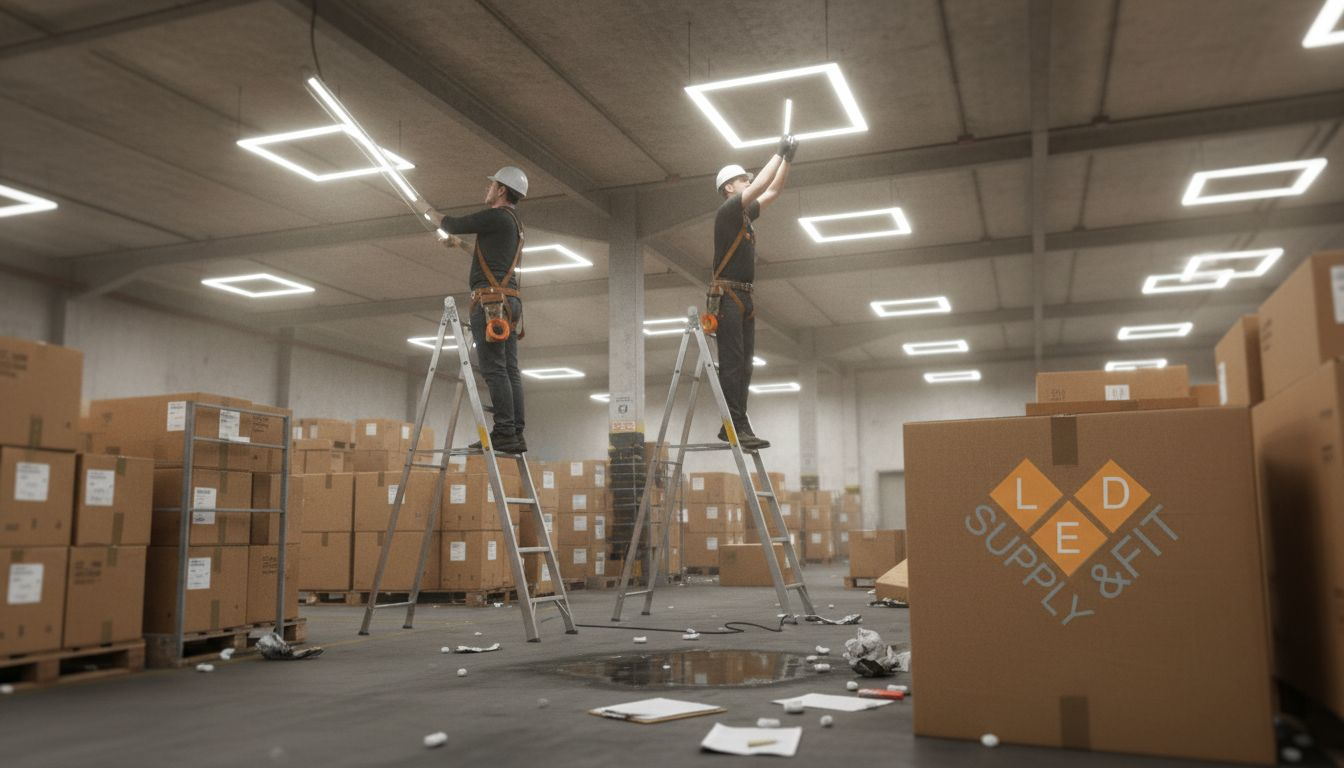
A warehouse operating 12 hours daily would need to replace traditional bulbs roughly every three months. The same facility using LEDs might not require replacement for over a decade. Maintenance teams can redirect time towards more critical tasks rather than constantly changing failed bulbs.
Pro Tip: Calculate total cost of ownership over five years rather than comparing initial purchase prices alone. Include energy consumption, replacement frequency, and labour costs for accurate LED lighting tips for businesses comparisons.
The heat reduction benefit deserves particular attention for businesses operating refrigerated spaces or server rooms. Traditional lighting generates considerable thermal load that cooling systems must counteract. Energy saving lights for UK businesses eliminate this hidden cost while maintaining required illumination levels.
Payback calculations become compelling when all factors combine. A typical office upgrading 100 fluorescent fixtures to LED equivalents might invest £8,000 upfront but save £3,500 annually through reduced energy and maintenance costs. This scenario delivers full payback within 2.3 years, with continued savings throughout the LED lifespan. Energy savings with LED compound over time as electricity prices continue rising.
Improving workplace environment and productivity with LED lighting
Lighting quality directly influences employee wellbeing and task performance. Poor illumination creates eye strain, headaches, and reduced accuracy on detail oriented work. Modern LED systems address these issues through consistent, flicker free light output.
The benefits of commercial LED lighting for workplace environments include:
- High colour rendering index (CRI) values above 80 reveal true colours, essential for design work, retail displays, and quality control tasks
- Uniform light distribution eliminates shadows and dark spots that compromise safety
- Adjustable colour temperatures support different activities, from focused concentration (cool white) to relaxed collaboration (warm white)
- Flicker elimination reduces neurological stress that contributes to fatigue and headaches
Employee comfort improves noticeably when businesses upgrade from buzzing fluorescent tubes to silent LED panels. The absence of constant low frequency noise and visible flicker creates calmer working conditions. Staff report fewer headaches and less eye strain after extended periods under LED illumination.
Safety considerations become paramount in industrial settings where poor visibility increases accident risks. Bright, consistent LED lighting ensures workers clearly see equipment, materials, and warning signs. Emergency egress routes remain properly illuminated without the warm up delays associated with some traditional lighting technologies.
Pro Tip: Prioritise LEDs with high colour rendering index ratings above 90 for tasks requiring accurate colour perception, such as graphic design, medical examination rooms, or food preparation areas.
The psychological impact of quality lighting extends beyond immediate visual comfort. Natural daylight spectrum LEDs can help regulate circadian rhythms, potentially improving alertness during working hours and sleep quality afterwards. Businesses operating early morning or evening shifts particularly benefit from lighting that supports employee biological clocks.
Environmental benefits and compliance advantages for UK businesses
Sustainability reporting requirements intensify across UK commercial sectors as government and stakeholders demand demonstrable carbon reduction progress. LED lighting upgrades provide measurable environmental improvements that strengthen ESG credentials.
Key environmental advantages include:
- Substantial carbon footprint reduction through lower electricity consumption from renewable and conventional grid sources
- Mercury free construction eliminates hazardous waste disposal concerns present with fluorescent tubes
- Longer product lifespans reduce manufacturing demand and associated emissions
- Recyclable components support circular economy principles
- Compliance support for Climate Change Agreements and Energy Savings Opportunity Scheme requirements
The UK government’s net zero commitment by 2050 creates regulatory pressure on businesses to reduce emissions across all operations. Commercial buildings face particular scrutiny given their energy intensity. LED installation benefits for UK businesses extend to simplified compliance reporting and potential access to government incentive programmes.
Corporate social responsibility initiatives gain tangible evidence through LED conversions. Annual sustainability reports can cite specific kilowatt hour reductions and carbon savings, demonstrating genuine environmental commitment rather than abstract pledges. Customers and partners increasingly evaluate suppliers based on environmental performance, making visible efficiency improvements commercially valuable beyond direct cost savings.
Some UK businesses qualify for Enhanced Capital Allowances or other tax benefits when investing in energy efficient equipment including LED lighting systems. These financial incentives effectively reduce upgrade costs while accelerating carbon reduction targets. Local authorities occasionally offer grants for small business energy efficiency improvements, making upgrades more accessible.
Common misconceptions about LED lighting upgrades
Several persistent myths discourage businesses from pursuing LED upgrades despite clear financial and operational benefits. Addressing these misconceptions helps decision makers evaluate opportunities objectively.
Common misconceptions include upfront costs and cold weather performance, both disproven by modern commercial products. The initial investment concern fails to account for total lifecycle economics. Yes, LED bulbs cost more individually than traditional alternatives, but dramatically longer lifespans and lower energy consumption reverse the equation within months.
Bulk purchasing through commercial suppliers substantially reduces per unit costs compared to retail pricing. Businesses upgrading entire facilities negotiate volume discounts that narrow the price gap with conventional lighting. Installation labour costs remain similar regardless of technology choice.
The cold weather myth stems from early LED performance issues that manufacturers resolved years ago. Contemporary commercial LEDs actually perform better in cold conditions than traditional bulbs, which lose efficiency as temperatures drop. UK climate conditions pose no reliability concerns for properly specified LED systems.
Quality concerns occasionally arise from consumer experiences with cheap LED bulbs that flicker, produce poor colour quality, or fail prematurely. Commercial grade LEDs meeting recognised certification standards deliver consistent performance and carry meaningful warranties. Specifying products from established manufacturers with track records eliminates quality risks.
Understanding true lifetime costs reveals LED value proposition clearly. A 50,000 hour LED bulb replaces 50 incandescent bulbs or six fluorescent tubes over its operational life. The cumulative replacement cost plus energy consumption dwarfs the initial LED investment, making upgrade decisions straightforward when viewed holistically.
Comparing LED lighting with traditional commercial lighting options
Objective comparison across key performance metrics clarifies why LEDs increasingly dominate commercial lighting specifications. The following table contrasts LED technology against fluorescent and halogen alternatives:
| Feature | LED | Fluorescent | Halogen |
|---|---|---|---|
| Energy efficiency | 80 to 90 lumens per watt | 60 to 70 lumens per watt | 15 to 20 lumens per watt |
| Average lifespan | 50,000+ hours | 8,000 to 10,000 hours | 2,000 to 4,000 hours |
| Heat emission | Minimal | Moderate | Substantial |
| Maintenance frequency | Very low | Moderate | High |
| Environmental impact | Low (mercury free) | Moderate (contains mercury) | Moderate |
| Initial cost | Higher | Moderate | Lower |
| Operating cost | Lowest | Moderate | Highest |
The efficiency gap becomes dramatic when calculated over realistic operational periods. Commercial LED lighting savings and durability deliver compounding benefits as traditional lighting requires multiple replacements during a single LED’s lifespan.

Halogen bulbs represent the least economical choice for commercial applications despite low purchase prices. Their inefficiency and short lifespan create continuous replacement cycles and excessive electricity consumption. Facilities still using halogen technology face the most compelling upgrade case.
Fluorescent tubes occupy middle ground with reasonable efficiency but shorter lifespans and mercury content that complicates disposal. Businesses transitioning from fluorescent to LED typically report noticeable improvements in light quality alongside cost savings. The elimination of ballast related failures further reduces maintenance demands.
Why switch to LED lighting becomes obvious when comparing total cost of ownership. Initial price differences vanish quickly against ongoing operational expenses. Businesses planning to occupy premises for more than two years achieve positive returns regardless of current lighting technology.
Case studies demonstrating real-world benefits of LED upgrades
Real world examples illustrate LED lighting benefits more convincingly than theoretical calculations. UK businesses across diverse sectors report consistent positive outcomes following upgrades.
A 15,000 square metre distribution warehouse in Yorkshire converted 400 metal halide high bay fixtures to LED equivalents. Results included:
- 70% reduction in lighting energy consumption
- £18,000 annual electricity savings
- Payback period of 2.1 years including installation costs
- Improved visibility for forklift operators reducing incident reports by 30%
- Elimination of quarterly maintenance shutdowns for bulb replacement
An accountancy firm occupying three floors in Manchester upgraded fluorescent office lighting to LED panels. Employee surveys conducted six months post installation revealed notable improvements:
- 85% of staff reported reduced eye strain and headaches
- Complaints about flickering and buzzing eliminated entirely
- Meeting room lighting better supported video conferencing with improved colour rendering
- 40% reduction in lighting energy consumption supporting corporate sustainability targets
A restaurant chain converting kitchen and dining area lighting to LEDs achieved immediate operational benefits. The reduced heat output from LED fixtures lowered kitchen temperatures by 3 degrees Celsius, decreasing air conditioning loads during summer months. Dining ambience improved through dimmable LED systems that adjusted lighting for lunch versus evening service.
These examples demonstrate consistent patterns: energy savings between 60% and 75%, payback periods under three years, and measurable improvements to working conditions. Scale varies but fundamental economics remain attractive across business sizes and sectors.
Practical steps to upgrade business lighting successfully
Successful LED implementation requires structured planning rather than ad hoc bulb replacement. Follow these steps for optimal results:
-
Conduct comprehensive lighting audit documenting current fixtures, energy consumption, and problem areas requiring improvement. Professional energy assessments identify opportunities beyond obvious inefficiencies.
-
Research LED products matching operational requirements including light output, colour temperature, dimming capabilities, and environmental ratings. How to upgrade commercial lighting specifications should address current pain points and future needs.
-
Obtain quotes from qualified electrical contractors experienced with commercial LED installations. Compare proposals including warranty terms, installation schedules, and post completion support.
-
Schedule installation during low activity periods to minimise business disruption. Phased upgrades spread costs and allow testing before full commitment.
-
Monitor performance metrics post installation including energy consumption, maintenance incidents, and subjective feedback from staff. Document savings for financial reporting and future project justification.
Pro Tip: Request total lifecycle cost estimates including installation, energy consumption over five years, and anticipated maintenance. This reveals true value better than comparing product prices alone.
The energy efficient lighting guide approach prioritises spaces with longest operating hours for maximum return. Warehouses, retail floors, and production areas operating extended shifts deliver faster payback than occasionally used spaces.
Controls integration enhances LED benefits through occupancy sensors, daylight harvesting, and scheduling systems. These technologies compound efficiency gains by ensuring lights operate only when needed. Smart lighting platforms provide usage data supporting continuous optimisation.
Explore expert LED lighting solutions for your business
Upgrading your commercial lighting system requires expertise in product selection, installation planning, and performance optimisation. Professional LED specialists ensure smooth transitions that maximise energy savings while minimising operational disruption.
LED Supply & Fit has delivered successful commercial lighting cost savings projects across UK sectors including education, healthcare, retail, and hospitality. Our clients include Stockton Riverside College, where comprehensive LED upgrades achieved 65% energy reductions, and Wilson Veterinary Group, where improved lighting quality enhanced clinical environments. We provide end to end support from initial assessments through installation and ongoing maintenance, ensuring your investment delivers promised returns.
Frequently asked questions
Is upgrading to LED lighting costly for small UK businesses?
Though LEDs carry higher initial costs than traditional bulbs, energy and maintenance savings typically achieve payback within 1 to 3 years. Small businesses benefit from lower operating costs that improve cash flow long term. Consider total lifecycle costs including replacement frequency and energy consumption for accurate budgeting.
Will LED lighting work effectively in cold UK environments?
Yes, modern commercial LEDs perform reliably across typical UK temperature ranges. Contemporary products actually perform better in cold conditions than traditional lighting technologies. Concerns about cold weather sensitivity reflect outdated information from early LED generations.
How long does it typically take to see return on investment from LED upgrades?
Most UK businesses experience ROI within 1 to 3 years after upgrading to LED lighting. Actual timelines depend on current lighting technology, operating hours, electricity costs, and maintenance savings. Facilities with extended operating hours achieve faster payback.
What are the maintenance benefits of switching to LED lighting?
LEDs have much longer lifespans, often exceeding 50,000 hours, reducing replacement frequency and associated labour costs substantially. Lower heat output decreases wear on fixtures and surrounding materials. Maintenance teams can focus on critical tasks rather than continuous bulb replacement.
Are LED lighting upgrades environmentally beneficial for UK businesses?
Yes, LED upgrades significantly cut carbon emissions by lowering energy consumption, supporting compliance with UK sustainability regulations. They eliminate mercury present in fluorescent tubes, reducing hazardous waste. Longer lifespans decrease manufacturing demand and associated environmental impacts, strengthening ESG reporting.