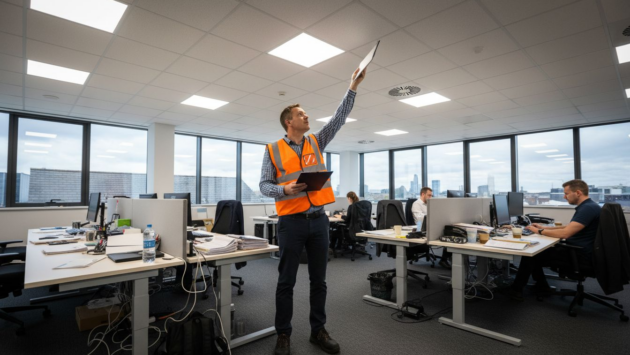
Innovative LED lighting trends for energy savings in 2026
TL;DR:
- LED technology in 2026 offers increased efficiency, longer lifespan, and advanced smart features.
- Smart controls can reduce building energy costs by up to 83 percent through automation and automation.
- Upgrading to sustainable LED lighting ensures compliance, cost savings, and environmental benefits.
If you think all LED lighting is broadly the same, 2026 is about to change your mind. The gap between last-generation LEDs and today’s solutions has widened dramatically, with chip efficiency, smart integration, and sustainability features advancing faster than most property managers realise. For UK businesses facing rising energy bills and tightening compliance requirements, these aren’t incremental improvements. They represent a genuine opportunity to cut costs, reduce risk, and future-proof your premises in ways that simply weren’t possible even two years ago.
Key Takeaways
| Point | Details |
|---|---|
| Latest LED tech advantages | 2026’s LEDs deliver much higher energy savings and improved reliability compared to older lighting. |
| Controls drive savings | Smart controls and automation multiply efficiency gains for UK commercial properties. |
| Sustainability equals compliance | Eco-friendly lighting helps cut costs while ensuring regulatory compliance. |
| Practical upgrades work fast | Structured upgrades return cost savings rapidly, even for recently retrofitted sites. |
How LED lighting technology is evolving in 2026
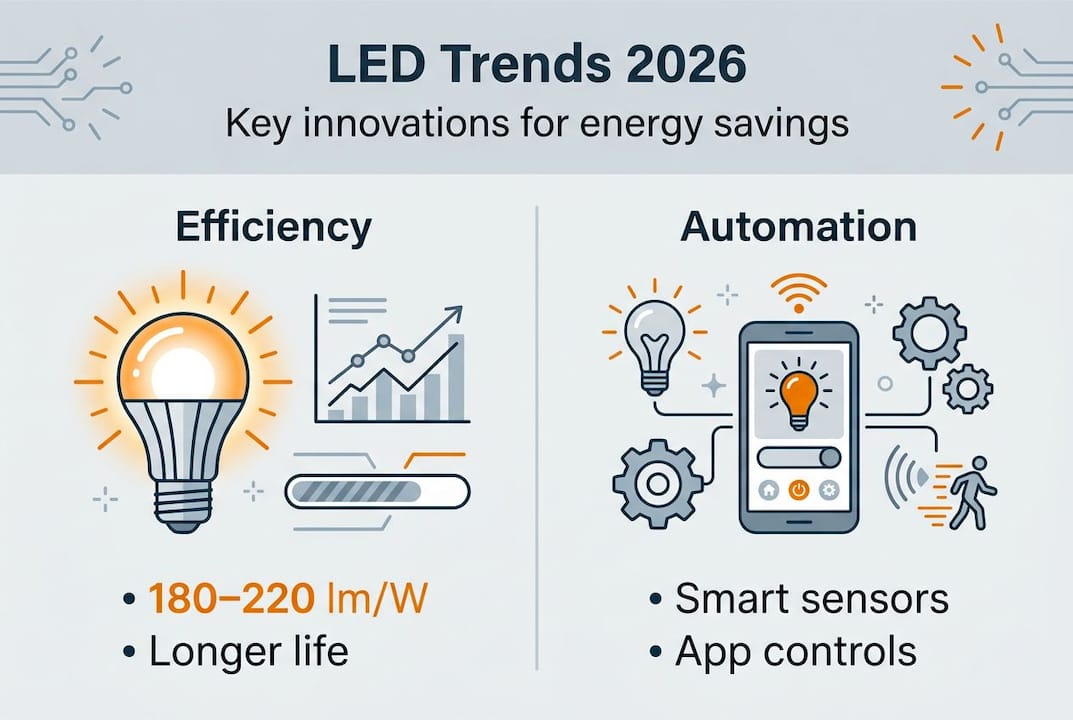
The most significant shift in 2026 isn’t just brighter bulbs. It’s the fusion of high-efficiency chips with intelligent systems that respond to real conditions in real time. Modern LED drivers now operate at efficiencies above 200 lumens per watt, a figure that would have seemed ambitious in 2022. Paired with tunable colour temperatures and integrated sensors, today’s commercial fixtures do far more than illuminate a space.
| Feature | Pre-2023 LED | 2026 LED |
|---|---|---|
| Efficacy (lm/W) | 100-130 | 180-220 |
| Lifespan (hours) | 30,000-50,000 | 60,000-100,000 |
| Smart integration | Basic dimming | AI, sensors, remote management |
| Energy saving vs. fluorescent | Up to 50% | Up to 75% |
Businesses can achieve up to 75% savings on commercial energy costs with next-generation LED solutions. That figure isn’t theoretical. It reflects real-world deployments in offices, warehouses, and retail environments across the UK.
The LED installation advantages for commercial clients in 2026 include:
- Dramatically lower electricity bills from higher-efficacy chips
- Reduced maintenance costs thanks to lifespans exceeding 60,000 hours
- Compliance readiness as newer products align with updated UK and EU standards
- Better occupant wellbeing through tunable white light and flicker-free output
- Scalability from single-room retrofits to full multi-site rollouts
Understanding the energy savings with LED technology available today is the first step toward making a sound investment rather than simply replacing like-for-like.
Smart lighting controls and automation for UK businesses
Better light sources are only part of the story. Control systems are where the largest savings are unlocked, and 2026 has brought genuinely practical automation within reach of businesses of all sizes.

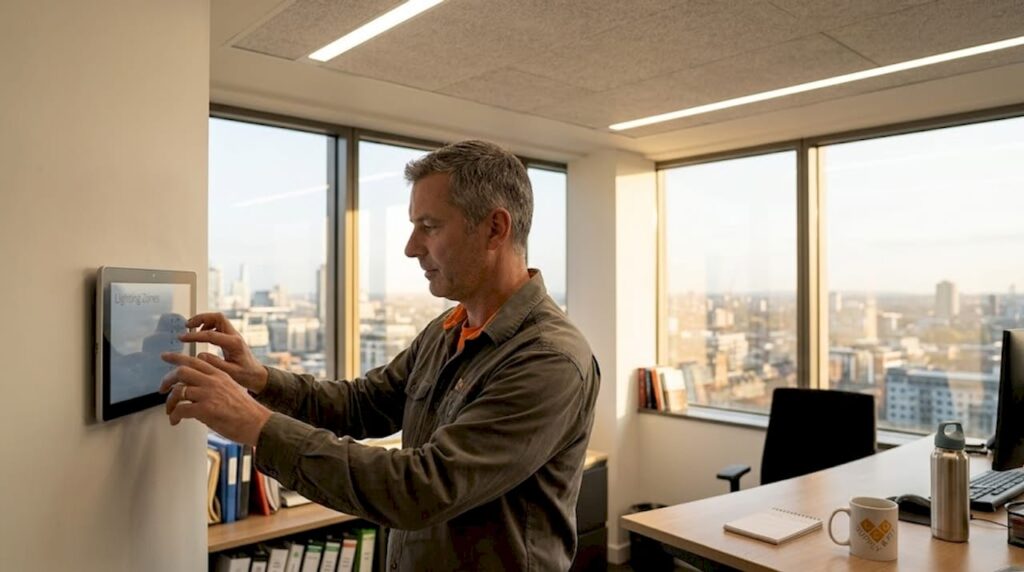
Modern lighting controls range from simple occupancy sensors and daylight harvesting systems to fully networked platforms managed via cloud dashboards. AI-driven scheduling now learns usage patterns across your building and adjusts output automatically, without anyone touching a switch. Remote management means your facilities team can monitor and adjust every zone from a single screen.
The lighting controls explained data is striking: smart controls can reduce building energy costs by up to 83%. For a large office or warehouse, that translates to thousands of pounds annually.
Key benefits of adopting smart controls in 2026:
- Maximum energy reduction through occupancy-based and daylight-responsive dimming
- Lower administration burden with automated scheduling and remote fault alerts
- Future-proofing as systems integrate with broader building management platforms
- Demonstrable ESG credentials for reporting and tenant attraction
The lighting control savings available to UK firms are also drawing attention at industry events focused on energy efficiency in buildings, where smart integration is consistently highlighted as the highest-return intervention.
Pro Tip: Don’t automate a poorly designed system. Before investing in controls, audit your fixture placement and zoning. Sensors installed in the wrong locations, or zones that are too large, will undermine ROI. Get the physical layout right first, then layer in intelligence.
Sustainable lighting trends: compliance and cost advantages
With technology and controls in place, sustainability adds further advantages. The regulatory landscape in 2026 has tightened, with both UK and EU frameworks pushing commercial properties toward lower-carbon, longer-lasting lighting solutions. Staying ahead of these requirements isn’t just good practice. It protects you from retrofit costs imposed by future legislation.
“Sustainable lighting choices help businesses stay compliant with modern regulations and reduce operational spend.”
| Criteria | Traditional lighting | Sustainable LED (2026) |
|---|---|---|
| Energy consumption | High | Up to 75% lower |
| Average lifespan | 8,000-15,000 hours | 60,000-100,000 hours |
| Compliance (UK/EU 2026) | Often non-compliant | Fully aligned |
| Disposal/recycling | Hazardous (mercury) | Low-hazard, recyclable |
| Carbon footprint | High | Significantly reduced |
For businesses exploring sustainable options for commercial properties, the business case is now compelling on multiple fronts. Sector events such as BePositive 2026 are showcasing how sustainability and profitability increasingly align.
Steps to assess and upgrade for compliance:
- Audit current fittings against 2026 UK Ecodesign and EU Energy Labelling requirements
- Identify non-compliant fixtures and prioritise replacement by energy consumption
- Select LED products with verified efficacy ratings and appropriate certifications
- Document upgrades for ESG reporting and potential ESOS (Energy Savings Opportunity Scheme) submissions
- Schedule periodic reviews to stay ahead of future regulatory updates
Practical steps: upgrading your lighting for 2026
Ready to act? Here’s the practical path to reaping the rewards. The good news is that smarter LED lighting delivers rapid returns in both new builds and older commercial buildings, so your site’s age is not a barrier.
- Commission a professional lighting audit to map current energy use, identify inefficiencies, and establish a baseline
- Set clear objectives whether that’s a target percentage reduction in energy bills, compliance with specific standards, or improved light quality
- Design a zone-by-zone upgrade plan that prioritises high-usage areas such as warehouses, open-plan offices, and car parks for fastest payback
- Select products with verified performance data, not just marketing claims. Check lumen output, colour rendering index (CRI), and warranty terms
- Integrate controls from the outset rather than retrofitting them later, which adds cost and complexity
- Track results post-installation and compare against your baseline to validate ROI
Pro Tip: When negotiating with suppliers, ask specifically about bulk pricing and trade account terms. Suppliers like us offer significant discounts on larger orders, and locking in pricing across a phased rollout protects your budget. Always ask for itemised quotes so you can compare total cost of ownership, not just unit price.
Focusing on how to reduce energy consumption systematically, rather than making ad hoc replacements, is what separates businesses that see transformative savings from those that see modest ones.
Our take: why most UK businesses miss out on lighting savings
Here’s the uncomfortable truth we see repeatedly: most businesses that don’t achieve strong returns from LED upgrades made one of two mistakes. They chose the cheapest fixture without considering fixture suitability for the application, or they upgraded the hardware without addressing controls. Both errors are avoidable.
The myth that all LEDs are equivalent is persistent and costly. A low-cost fitting in a high-use warehouse will degrade quickly, delivering poor light quality and requiring early replacement. The real-world LED savings data consistently shows that businesses focusing on total cost of ownership, rather than upfront product price, achieve the best outcomes. Maintenance savings, reduced lamp replacements, and lower energy bills compound over time. That’s where the real money is.
Unlock the power of modern LED lighting with expert help
If you’re ready to move from insight to action, we’re here to make it straightforward.
At LED Supply and Fit, we supply and install top commercial LED lighting solutions tailored to your premises, whether you manage a single retail unit or a portfolio of commercial properties. Our team understands compliance requirements, can advise on the best controls for your building type, and offers bulk pricing for larger projects. Explore our energy efficiency solutions or get a quote today to see what’s achievable for your business.
Frequently asked questions
Which LED lighting innovations offer the fastest payback for UK businesses in 2026?
Next-generation smart LED systems with occupancy sensors and automated controls deliver the quickest returns, often within 18 to 24 months, because smart controls reduce building energy costs by up to 83%.
How can I ensure my business stays compliant with new lighting regulations in 2026?
Work with suppliers who understand current UK and EU standards, prioritise certified sustainable fittings, and review your compliance position annually. Sustainable lighting choices directly support regulatory alignment and reduce operational spend.
Is it worth upgrading if we retrofitted LEDs just a few years ago?
2026 LED technology offers efficiency levels and smart features that frequently outperform pre-2023 retrofits, meaning further savings are very likely. Businesses can achieve up to 75% savings on energy costs with next-generation solutions.
What is the first step to upgrading to smarter, greener lighting?
Book a professional audit to assess your current system and identify where the greatest savings lie. Smart LED retrofits deliver rapid returns in both new and existing commercial buildings, making the audit investment worthwhile.