The role of daylight sensors in commercial lighting
TL;DR:
- Daylight sensors automatically adjust artificial lighting based on natural light levels, significantly reducing energy costs in commercial spaces. Proper sensor placement and professional commissioning are essential to maximize savings and occupant comfort. Integrating daylight sensors with building automation enhances overall efficiency and supports sustainable regulatory compliance.
Daylight sensors are devices that detect natural light levels and automatically adjust artificial lighting to maintain consistent illumination across commercial spaces. Also known as photosensors or daylight harvesting controls, these devices sit at the heart of any serious energy management strategy for offices, retail units, warehouses, and educational facilities. Daylight harvesting systems can reduce lighting energy costs by 20 to 60%, with businesses achieving an average annual saving of 24%. That figure represents a meaningful reduction in operating costs for any property manager running a large commercial estate. Brands such as Lutron have built entire product lines around this technology, and the case for adoption in 2026 has never been stronger.
How do daylight sensors work in commercial buildings?
Photosensors detect natural light intensity and send signals to a controller, which then dims or switches off electric lighting to maintain a pre-set illumination level. The controller acts as the brain of the system, sitting between the sensor and your dimmable LED fixtures. When natural light rises, the controller reduces artificial output. When cloud cover rolls in, it compensates by increasing it.
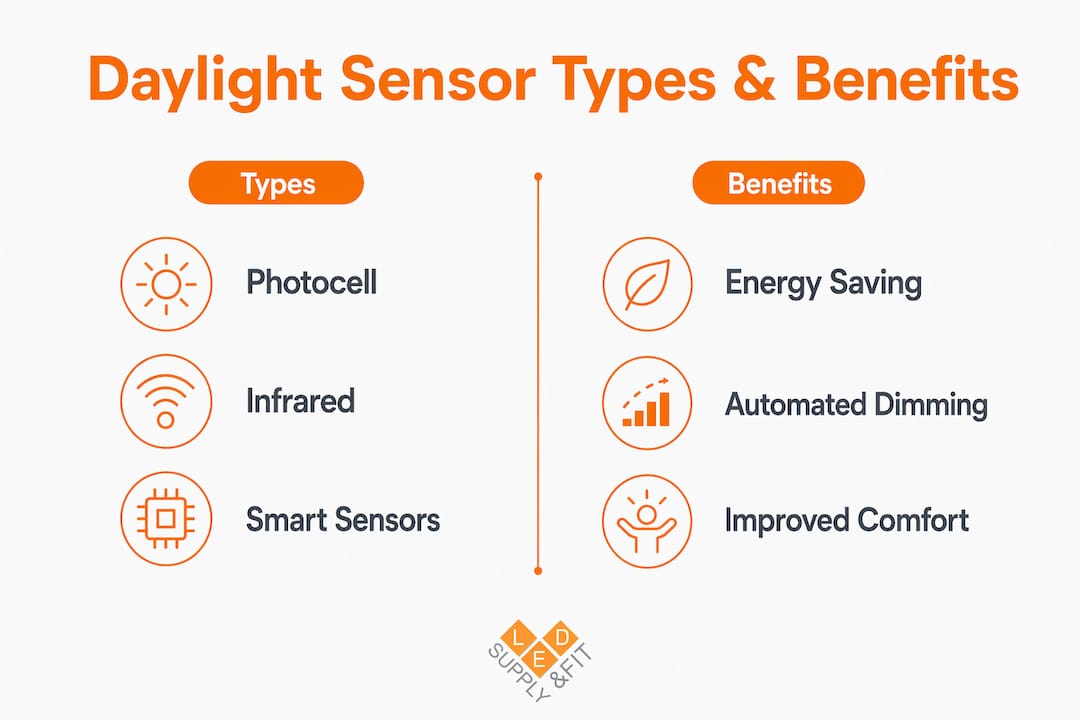
Daylight sensors come in several types, including photocell sensors, infrared sensors, and smart sensors. Photocell sensors are the most common in commercial settings, measuring lux levels directly. Smart sensors add occupancy detection and connectivity to building management systems, making them the preferred choice for larger estates.
Open-loop systems measure external daylight only, while closed-loop systems measure the combined total of daylight and artificial light within the space itself. Open-loop configurations are simpler and less expensive to install, but closed-loop systems deliver greater precision because they account for reflections, furniture layout, and internal obstructions. For offices and retail environments where consistent task lighting matters, closed-loop is the more reliable option.
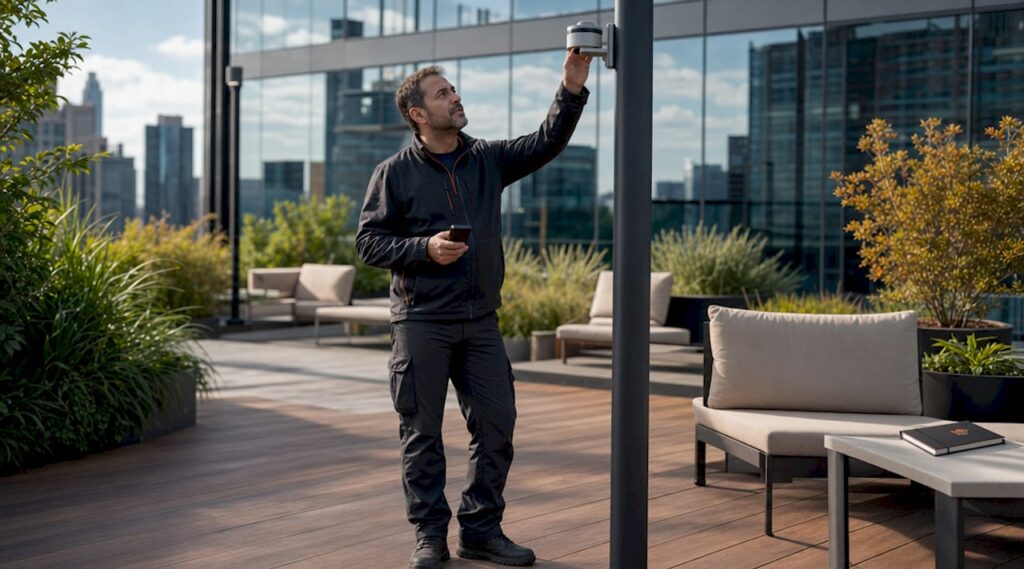
Sensor placement determines how accurately the system reads ambient conditions. A sensor positioned near a window will read higher lux values than one mounted centrally on the ceiling, skewing the controller’s response and wasting the potential savings the system was installed to deliver.
- Photocell sensors: measure ambient lux and trigger dimming or switching
- Infrared sensors: detect occupancy and heat signatures, often combined with daylight control
- Smart sensors: integrate with building automation platforms such as DALI or KNX for centralised management
- Open-loop systems: respond to exterior light levels, simpler to commission
- Closed-loop systems: respond to interior light levels, more accurate for task-critical environments
Pro Tip: When specifying a system for a south-facing open-plan office, choose a closed-loop sensor with a wide-angle lens. South-facing glazing creates significant variation in internal lux throughout the day, and only a closed-loop system will compensate accurately enough to prevent occupant complaints.
What are the major benefits of installing daylight sensors?
The financial case for daylight sensor technology is straightforward. Reducing the hours your LED fittings operate at full output extends their lifespan considerably, lowering both energy spend and replacement frequency. Combine that with lighting controls that boost energy savings and the return on investment becomes compelling within two to three years for most commercial properties.
The benefits extend well beyond the electricity bill:
- Energy cost reduction: Savings of 20 to 60% on lighting-related energy costs, with a documented average of 24% annually across commercial installations.
- Extended fixture lifespan: Dimmed LEDs run cooler and degrade more slowly, reducing the frequency of lamp replacements and associated maintenance visits.
- Occupant wellbeing: Natural lighting balance reduces eye strain and fatigue, which translates directly into improved concentration and productivity for staff working in the space.
- Regulatory compliance: UK building regulations and BREEAM assessments increasingly require or reward automated lighting controls. Daylight sensors help meet Part L of the Building Regulations without significant structural changes.
- Reduced carbon footprint: Lower energy consumption means a smaller carbon output, supporting sustainability reporting requirements for larger organisations.
“Daylight harvesting not only saves energy but also enhances occupant wellbeing by reducing eye strain and fatigue, which can boost productivity in commercial environments.” — Black Rhino Electric
Integration with automated window treatments can push these benefits further still. Motorised blinds working in tandem with daylight sensors manage glare while maximising usable natural light, a combination that is particularly effective in south-facing meeting rooms and open-plan offices. For property managers looking to reduce lighting costs across multiple tenanted units, this layered approach delivers the strongest results.
What challenges do property managers face with daylight sensor systems?
Daylight sensor systems underperform when they are poorly specified or installed without professional commissioning. The most common failure point is sensor placement. Desktop-mounted sensors cause a 24% penalty on potential energy savings compared to ceiling-mounted alternatives, because they read localised lux values rather than the aggregate light level across the working plane. That single placement error can wipe out a significant portion of the savings the system was designed to deliver.
Other frequent challenges include:
- Calibration drift: Sensors require periodic recalibration, particularly after repaints, furniture rearrangements, or changes to window treatments that alter internal reflectance values.
- Flicker and instability: Misconfigured control loops cause artificial lighting to hunt between dim and bright states, which occupants find distracting and which accelerates driver wear in LED fittings.
- Occupant overrides: Staff who find the automated response too aggressive will override the system manually. Without a managed override protocol, this defeats the purpose of installation entirely.
- Compatibility gaps: Older fluorescent ballasts and non-dimmable LED drivers cannot respond to the analogue or DALI signals that most daylight controllers output. A full compatibility audit before specification avoids costly retrofits.
- Variable weather accuracy: Sensors adjust lighting in response to cloud cover, but rapid changes on overcast days can create visible fluctuations if the controller’s response time is set too fast.
Pro Tip: Set a minimum dimming threshold of 20 to 30% on your controller rather than allowing the system to switch off entirely during bright periods. Occupants accept gradual dimming far better than abrupt transitions, and it protects against the discomfort of sudden darkness when cloud cover returns.
How can property managers implement daylight sensors effectively?
Effective implementation begins with a lighting zone audit. Map each area of your building by its proximity to glazing, its function, and its occupancy pattern. A warehouse loading bay has entirely different requirements from a hotel reception or a college classroom, and the sensor specification should reflect that.
The table below summarises the key decisions you will face when selecting a system:
| Factor | Open-loop system | Closed-loop system |
|---|---|---|
| Measurement point | External daylight only | Interior combined light level |
| Installation complexity | Lower | Higher |
| Accuracy | Moderate | High |
| Best suited to | Perimeter zones, car parks | Offices, classrooms, retail |
| Cost | Lower upfront | Higher upfront, better ROI |
| Commissioning requirement | Standard | Professional calibration required |
Once you have selected the system type, integration with your existing LED infrastructure is the next priority. Smarter LED lighting solutions that support DALI or 0 to 10V dimming protocols are compatible with the majority of commercial daylight controllers on the market. If your current fittings lack dimming capability, a phased LED upgrade alongside sensor installation delivers the best combined outcome.
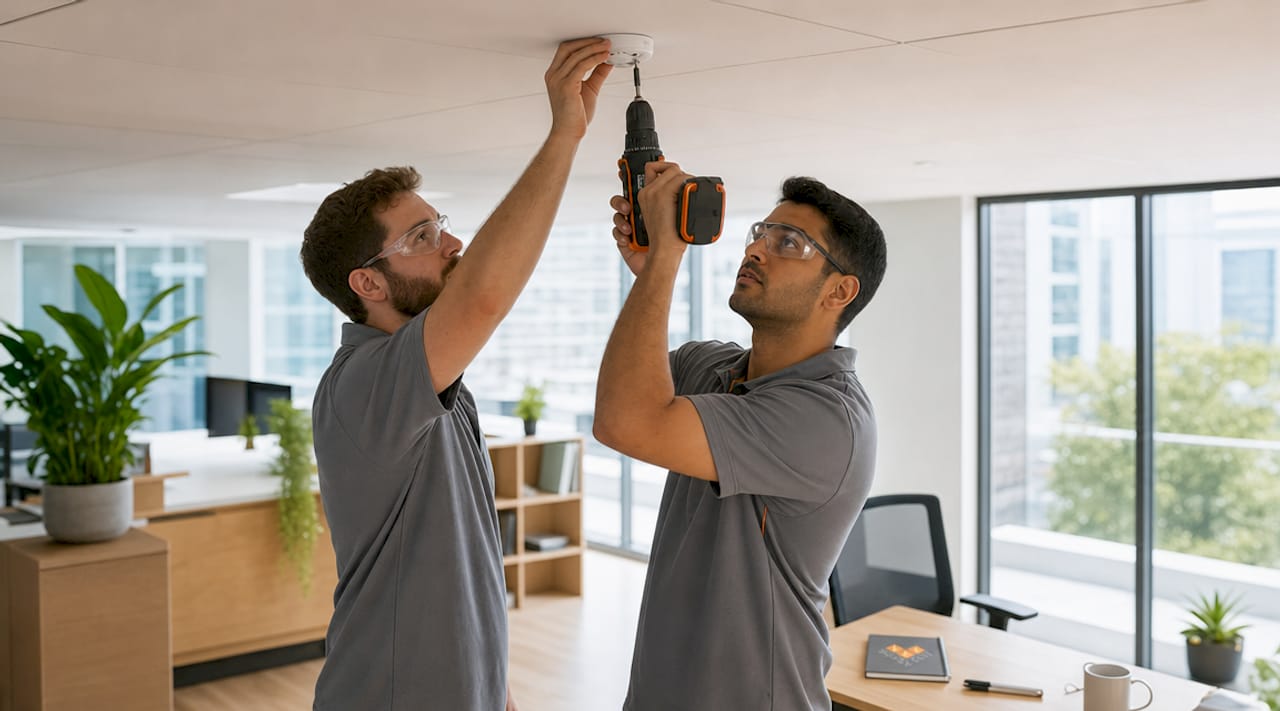
Professional commissioning is critical to avoid flicker, occupant overrides, and underperformance. A qualified installer will set lux targets for each zone, calibrate the sensor response curves, and test the system under both overcast and bright conditions before sign-off. Ongoing maintenance should include an annual sensor clean, a lux level check, and a review of any manual overrides logged by the building management system.
Why sensor placement matters more than the sensor itself
After working with commercial lighting installations across offices, educational buildings, and retail environments, the pattern is consistent. The specification of the sensor matters far less than where it ends up on the ceiling. I have seen high-quality Lutron systems deliver mediocre results because the installer positioned sensors within two metres of a rooflight, and I have seen budget photocells outperform them simply because they were placed correctly at the centre of the working zone.
The second thing I would stress is occupant communication. Automated lighting that dims without warning feels unsettling to people who do not understand why it is happening. A brief briefing to staff at the point of commissioning, explaining what the system does and how to use the override correctly, reduces complaints dramatically and protects the energy savings you have invested in.
The future direction of daylight sensor technology points firmly towards integration with full building automation systems. Sensors that share data with HVAC controls, occupancy management platforms, and smart metering give property managers a genuinely unified picture of building performance. That level of integration is already achievable with current technology. The barrier is rarely technical. It is the absence of a professional partner who understands both the lighting and the broader building systems.
— John
Upgrade your commercial lighting with Ledsupplyandfit
Ledsupplyandfit specialises in LED lighting supply and installation for commercial properties across the UK, including offices, warehouses, retail units, and educational facilities. The team has delivered tailored lighting solutions for clients including Wilson Veterinary Group and Stockton Riverside College, both of which required careful integration of lighting controls with existing building infrastructure.

If you are planning a lighting upgrade that incorporates daylight sensing, Ledsupplyandfit can assess your property, specify the right sensor type and control system for each zone, and handle installation and commissioning from start to finish. Contact the team directly through ledsupplyandfit.co.uk to discuss your requirements and receive a tailored quote.
FAQ
What is the role of daylight sensors in commercial buildings?
Daylight sensors detect natural light levels and automatically adjust artificial lighting to maintain consistent illumination, reducing energy consumption by 20 to 60% while supporting occupant comfort.
What is the difference between open-loop and closed-loop daylight sensors?
Open-loop systems measure external daylight only, while closed-loop systems measure the combined interior light level. Closed-loop systems are more accurate and better suited to offices and classrooms where precise task lighting is required.
How much energy can daylight sensors save?
Businesses using daylight harvesting systems achieve an average annual energy saving of 24%, with some installations reaching up to 60% reduction in lighting-related energy costs depending on glazing area and occupancy patterns.
Why does sensor placement affect performance so significantly?
Sensors placed on desktops rather than ceilings can reduce potential energy savings by 24%, because they read localised lux values rather than the aggregate light level across the full working plane.
Do daylight sensors work with existing LED fittings?
Daylight sensors are compatible with LED fittings that support DALI or 0 to 10V dimming protocols. Fittings without dimming capability will need upgrading before a daylight harvesting system can operate correctly.