Why consider lighting demonstrations for your business
TL;DR:
- Lighting demonstrations provide real-world insights into lighting solutions, helping property managers make confident, evidence-based decisions. They enhance visibility, reduce energy costs, and demonstrate compliance with environmental standards, influencing stakeholder confidence and customer experience. Proper planning and recurring evaluations ensure lighting strategies remain current, effective, and aligned with evolving regulations and technological advancements.
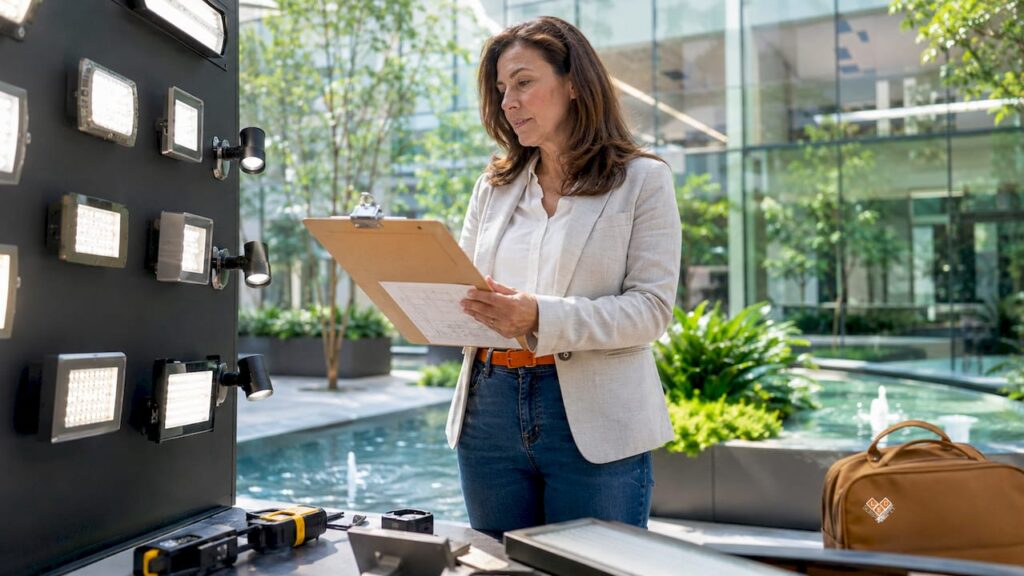
Lighting demonstrations are live or simulated showcases of lighting solutions that allow commercial property managers and business owners to experience real-world performance before committing to an investment. Understanding why consider lighting demonstrations is the first step towards making confident, evidence-based decisions about your premises. Rather than relying on product catalogues or sales pitches, a demonstration places you inside the actual lighting environment, letting you assess colour temperature, energy draw, ambience, and safety in context. Ledsupplyandfit provides exactly this kind of hands-on experience, and the value it delivers goes well beyond aesthetics.
Why consider lighting demonstrations for commercial decisions
The core reason to request a lighting demonstration is simple: immersive real-world demos increase stakeholder confidence and purchasing decisions more effectively than traditional sales methods. When you see a programmable LED system operating at full capacity in a space similar to your own, the decision calculus changes entirely. You move from theoretical cost projections to observable proof.
The benefits of lighting demos extend across several dimensions that matter directly to commercial operators:
- Improved visibility across workspaces, retail floors, and hospitality areas without glare or dark spots
- Reduced energy bills through direct comparison of LED versus legacy fluorescent or halogen systems
- Enhanced ambience that supports brand identity and customer comfort
- Sustainability credentials that satisfy increasingly strict procurement and planning requirements
- Compliance evidence for safety, wildlife protection, and energy efficiency standards
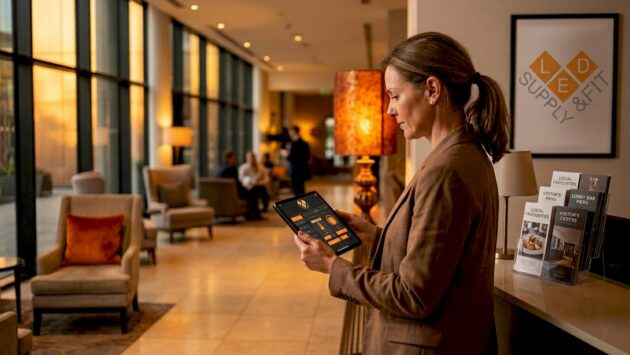
Lighting design influences visitor behaviour by setting tone, guiding movement, and creating zones of interest. This is not a soft benefit. For a hotel lobby, a restaurant dining room, or a gym floor, the difference between correct and incorrect lighting directly affects customer retention and spend. Demonstrations make that difference visible before you sign a purchase order.
Pro Tip: When attending or hosting a demo, bring photographs of your actual space and ask the supplier to replicate your ceiling height, surface colours, and occupancy patterns. Generic showroom conditions rarely match a warehouse or a veterinary clinic.
Which demonstration formats and technologies suit your property?
The importance of lighting demonstrations increases when you understand how varied the formats and technologies actually are. Not every demo is equal, and the format you choose should match your property type and decision-making stage.
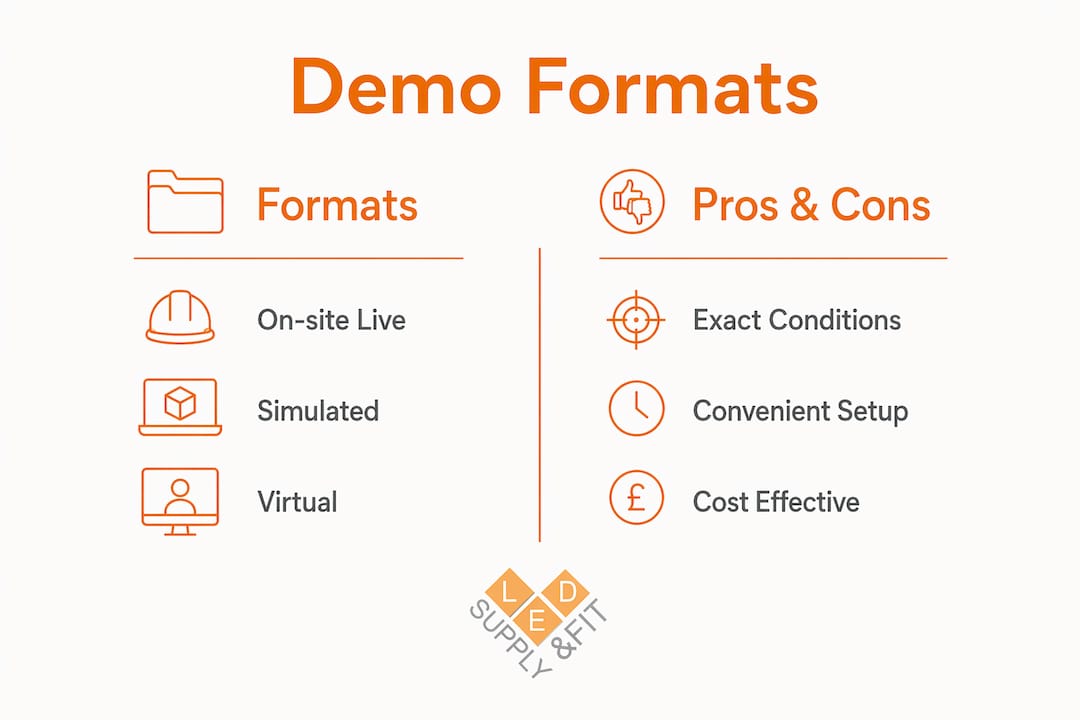
| Format | Pros | Cons | Best suited for |
|---|---|---|---|
| On-site live demo | Exact environmental conditions | Requires scheduling and setup | Offices, warehouses, retail |
| Trade show staged demo | Multiple products in one visit | Generic environment, not your space | Initial product shortlisting |
| Virtual/interactive simulation | No disruption to operations | Less tactile, screen-dependent | Early planning, remote sites |
On the technology side, the comparison between legacy and modern systems is stark. Traditional fluorescent tubes typically consume 36W to 58W per fitting and carry a lifespan of around 10,000 hours. LED equivalents consume 9W to 18W and last up to 50,000 hours, with no warm-up delay and far better colour rendering. Programmable LED systems go further still, offering real-time control of beam direction, colour temperature, and intensity during the demonstration itself.
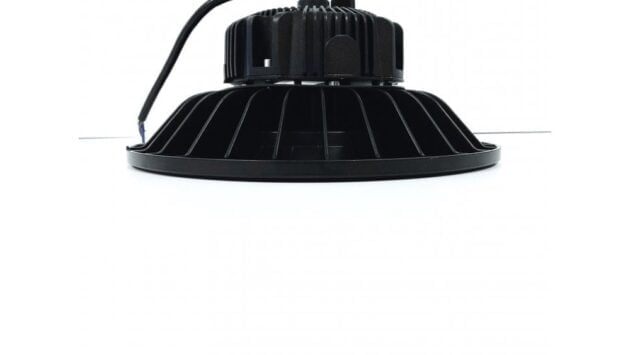
Layered lighting techniques combining ambient, accent, and task sources create dynamic visual environments that single-source installations cannot replicate. For a bar or restaurant, this means demonstrating how uplighting and track lighting interact with your interior finishes. For a gym or warehouse, it means showing how high-bay LEDs eliminate shadow zones across large floor areas. The demonstration format you choose should reflect the complexity of the decision you are making.
What are the environmental and regulatory advantages?
The lighting demonstration advantages extend beyond operational savings into compliance territory that is becoming harder to ignore. Local authorities across the UK are adopting Dark Skies planning policies that enforce lighting designs protecting wildlife and reducing light pollution while maintaining safety standards. A demonstration lets you verify that your chosen solution meets these requirements before installation.
Balanced lighting designs reduce emissions and support occupant wellbeing simultaneously. For commercial property managers operating under sustainability reporting obligations or seeking planning permission for new developments, a documented demonstration provides evidence that your lighting strategy aligns with current standards. This is particularly relevant for premises near protected habitats, residential areas, or sites subject to environmental impact assessments.
Pro Tip: Ask your supplier to provide a lux level report and a colour rendering index (CRI) reading during the demonstration. These two figures are the ones planning officers and sustainability auditors most commonly request.
Ledsupplyandfit’s sustainable LED options are selected specifically to meet these dual requirements, combining low energy draw with appropriate spectral output for both human and ecological environments. Demonstrations allow you to validate this before committing to a full installation.
How to plan and execute an effective lighting demonstration
Organising a demonstration that delivers measurable insight requires more preparation than simply booking a supplier visit. Follow this sequence to get the most from the process:
- Define your objectives. Are you primarily evaluating energy savings, ambience, safety compliance, or brand impact? Each objective changes what you measure during the demo.
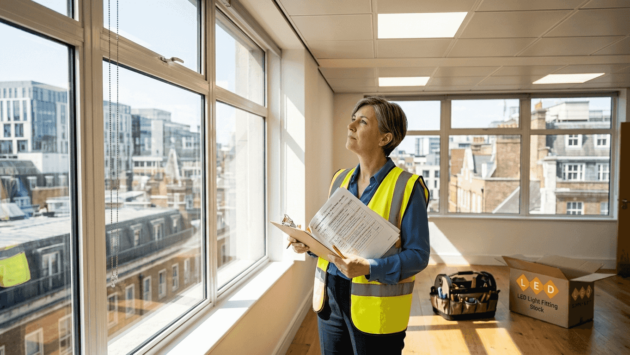
- Select representative zones. Choose two or three areas of your premises that reflect different use cases, such as a reception area, a back-of-house corridor, and a primary workspace.
- Involve the right stakeholders. Facilities managers, finance leads, and brand or marketing contacts should all attend. Each will notice different things.
- Request before-and-after lux readings. Quantified data from your existing installation versus the proposed LED system gives you a defensible business case.
- Gather structured feedback. Use a short scoring sheet covering brightness, colour quality, glare, and overall impression. Subjective reactions are valid data when collected consistently.
- Review energy projections. Ask the supplier to calculate projected annual savings based on your actual operating hours and current tariff. Ledsupplyandfit’s energy savings calculator can support this step.
Effective demonstrations solve real problems rather than simply showcasing products. The best ones create environments where stakeholders can test the lighting under realistic conditions, including occupancy levels, daylight interaction, and emergency scenarios.
What I have learned from watching demos change minds
I have watched lighting demonstrations shift the position of sceptical finance directors more reliably than any spreadsheet. The moment someone walks into a space lit with a well-specified LED system after spending years under flickering fluorescents, the conversation changes. The numbers stop being abstract.
What surprises me most is how often businesses underestimate the psychological dimension. Warm tones promote comfort and approachability while cooler hues convey precision and focus. These effects register within seconds and directly influence how customers and staff experience your premises. A demonstration makes this tangible in a way that no brochure can.
The most common mistake I see is treating a demonstration as a formality rather than a diagnostic tool. Businesses invite a supplier, watch the lights go on, and nod approvingly without asking hard questions about dimming behaviour, maintenance access, or driver lifespan. The demonstration is your opportunity to stress-test the product. Use it that way.
My advice for 2026 is to treat lighting demonstrations as a recurring practice, not a one-off procurement step. As your premises evolve and regulations tighten, returning to the demonstration process keeps your lighting strategy current and defensible.
— John
How Ledsupplyandfit supports your lighting demonstration
Ledsupplyandfit works with commercial clients across the UK to deliver on-site lighting demonstrations tailored to specific premises and objectives. From retail and hospitality to education and healthcare, the team has completed projects including Stockton Riverside College and Wilson Veterinary Group, where demonstrations directly informed the final installation specification.
Every demonstration includes energy savings projections, compliance checks, and product comparisons drawn from Ledsupplyandfit’s full catalogue of commercial LED solutions. Whether you are upgrading a single floor or a multi-site estate, the process starts with seeing the difference for yourself. Contact Ledsupplyandfit to arrange a consultation and on-site demonstration for your premises.
FAQ
What is a lighting demonstration?
A lighting demonstration is a live or simulated showcase of lighting products installed in a real or representative environment, allowing commercial buyers to assess performance, energy use, and aesthetic impact before purchasing.
How do lighting demos influence purchasing decisions?
Immersive demonstrations increase stakeholder confidence by providing direct, observable evidence of product performance, making them more persuasive than static displays or written specifications.
What should I look for during a commercial lighting demo?
Prioritise lux levels, colour rendering index, glare control, dimming behaviour, and projected energy savings based on your actual operating hours and current electricity tariff.
How do lighting demonstrations support regulatory compliance?
Demonstrations allow you to verify that a proposed lighting solution meets Dark Skies policies, energy efficiency standards, and safety requirements before committing to installation, reducing the risk of costly post-installation changes.
How often should a business conduct lighting demonstrations?
Demonstrations are most valuable at the point of a major upgrade, but revisiting the process every two to three years keeps your lighting strategy aligned with evolving regulations and advancing LED technology.