Sustainable lighting solutions: top LED options for UK businesses
Balancing sustainability, cost, and light quality in a commercial property is harder than it looks. Choose the wrong system and you’re locked into high energy bills, frequent maintenance callouts, and a carbon footprint that undermines any green credentials you’re building. LED lighting reduces energy consumption by 50 to 85% compared to traditional fluorescent or incandescent systems, making it one of the most impactful upgrades a facility manager can make. This guide walks you through how to evaluate your options, reviews the leading sustainable LED solutions available in 2026, and helps you match the right technology to your premises.
Key Takeaways
| Point | Details |
|---|---|
| LEDs maximise energy savings | Switching to LEDs can slash your business lighting energy use by up to 85%. |
| Options suit every facility | There are modular, smart, retrofit, and specialist solutions for all types of UK commercial properties. |
| Rapid payback potential | LED upgrades often pay for themselves in 1 to 5 years thanks to energy and maintenance savings. |
| Smarter controls boost ROI | Sensor-driven and networked LED systems provide extra savings and operational flexibility. |
| Sustainability means circularity | Choosing repairable and non-toxic lighting further reduces your facility’s environmental impact. |
How to evaluate sustainable lighting solutions
Before you commit to any upgrade, a structured evaluation process saves you from costly mistakes. Here’s a practical framework to work through before purchasing or specifying any system.
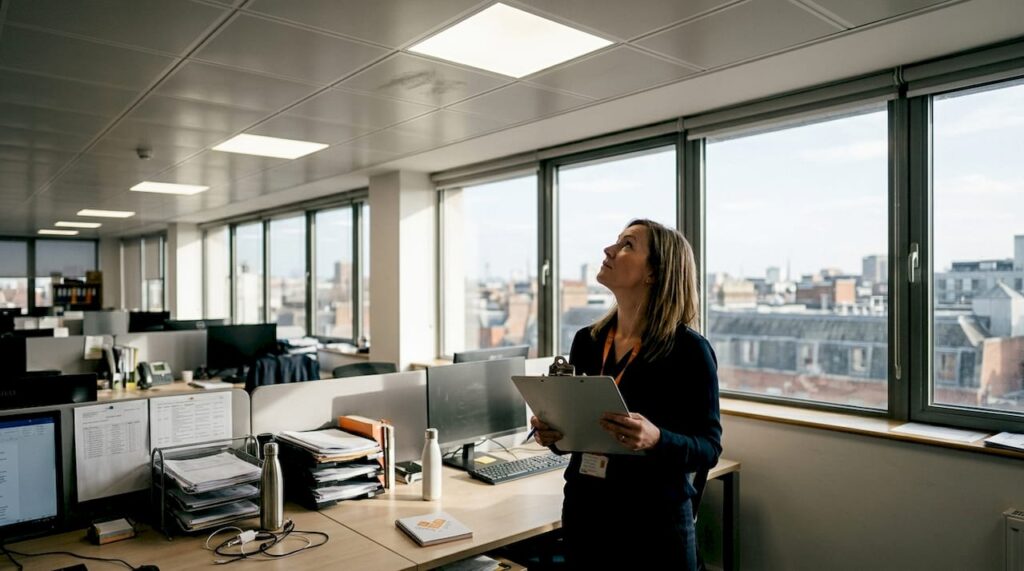
- Conduct a site assessment. Map your existing fittings, measure floor areas, and note ceiling heights. This tells you what you’re replacing and what performance you need.
- Audit energy consumption. Pull your current electricity bills and calculate how much your lighting contributes. This baseline figure is essential for calculating payback.
- Check compliance requirements. Uniformity and glare standards per CIBSE and EN12464-1 are critical. Over-lighting wastes energy just as much as under-lighting causes safety issues.
- Assess maintenance demands. How often are lamps currently replaced? What does that cost in labour and disruption? Factor this into your total cost of ownership.
- Calculate payback period. Divide the upfront cost by annual savings. Most LED upgrades pay back within one to five years, often sooner in high-usage environments.
- Prioritise quality and repairability. Look for modular LED designs that reduce e-waste and can be repaired rather than replaced entirely.
Sustainability and quality genuinely go hand in hand here. A cheap fitting that fails in two years is neither sustainable nor economical. Understanding the benefits of LED installation before you start helps you set realistic expectations and build a stronger business case internally.
Pro Tip: Before rolling out across your entire estate, run a pilot in one area. Involve the people who work in that space. Their feedback on glare, colour temperature, and brightness often reveals issues that a specification sheet won’t flag.
If you’re still weighing up whether an upgrade is worth it at all, the case for why upgrading to LED in UK commercial properties is compelling, particularly given rising energy costs and tightening environmental reporting requirements.
Sustainable lighting solution #1: High-efficiency LED panels
LED panels are the workhorse of commercial sustainable lighting. They deliver consistent, uniform illumination across large areas without the harsh glare associated with older troffer or fluorescent systems.
Where they work best:
- Open-plan offices and co-working spaces
- Healthcare facilities and consulting rooms
- Classrooms and educational buildings
- Retail back-of-house and administrative areas
The energy saving impact of switching from fluorescent panels to modern LED equivalents is significant. You’re typically looking at a 50 to 70% reduction in wattage for the same or better lumen output.
Statistic to note: LEDs offer lifespans of 25,000 to 50,000+ hours, reducing maintenance costs by up to 70%. In a busy office or healthcare setting, that means years without a single lamp replacement.
Reduced maintenance is often the hidden financial win. In sensitive environments like hospitals or schools, every maintenance visit causes disruption. Fewer callouts means less operational friction and lower labour costs over time.
Pro Tip: When specifying panels for offices, opt for a colour temperature of 4000K (cool white). It supports alertness and concentration without the harsh blue tones of 6500K, which can cause eye fatigue over long shifts.
Choose modular panel designs where individual components such as drivers and diffusers can be replaced independently. This extends the product’s useful life considerably and reduces the volume of waste sent to landfill.
Sustainable lighting solution #2: Smart LED controls and wireless sensors
Fitting efficient LED panels is a strong start. Pairing them with smart controls is where the real savings compound. Smart systems ensure lights are only on when and where they’re actually needed.
Core components of a smart LED control system:
- Occupancy sensors: Detect movement and switch lights off in empty rooms or zones automatically
- Daylight harvesting: Dim artificial lighting in response to natural light levels, maintaining consistent lux without wasting energy
- Time scheduling: Programme lighting to match your operational hours precisely, avoiding the common problem of lights running through the night
- Zone control: Manage different areas independently, so a busy reception doesn’t dictate lighting levels in a quiet archive room
Payback periods for LED upgrades typically range from one to five years, and smart controls often push that timeline toward the shorter end by squeezing additional savings from an already efficient system.
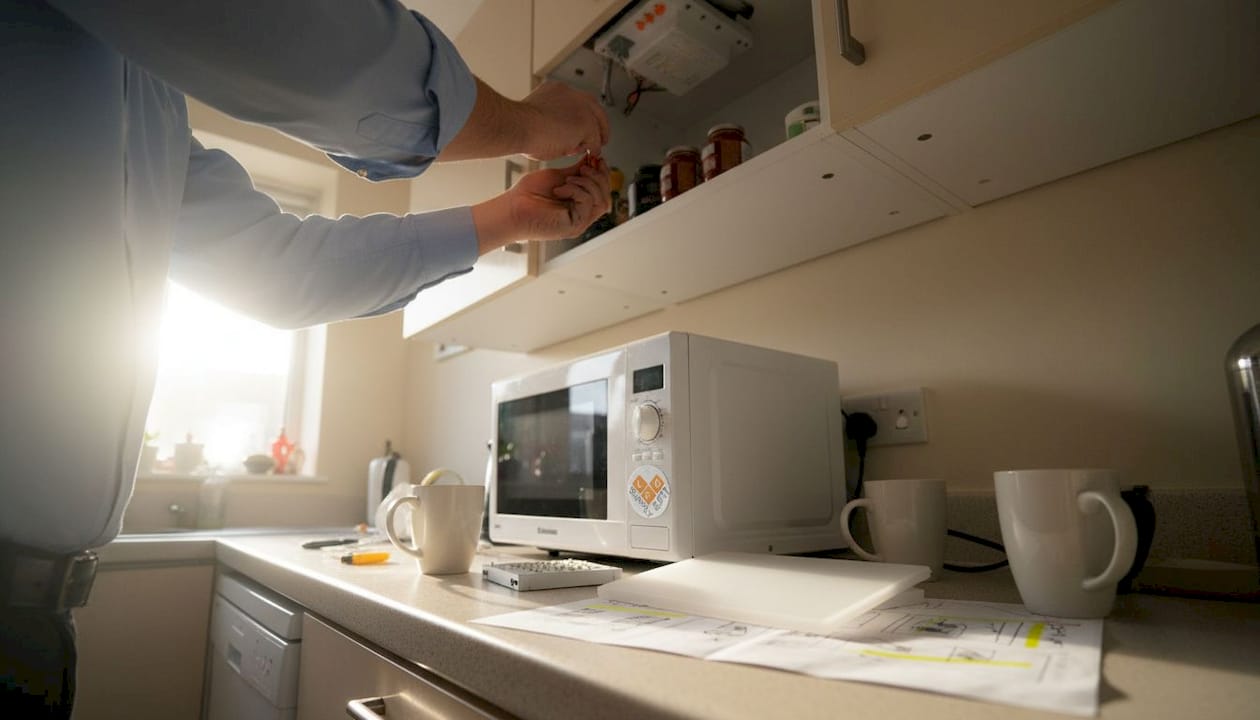
Retrofitting wireless controls is now far more straightforward than it was even three years ago. Many systems use DALI-2 or Bluetooth mesh protocols, meaning no new cabling is required in most cases. This makes them viable for listed buildings or tenanted spaces where structural changes are restricted.
Pro Tip: If you’re pursuing BREEAM or ISO 50001 certification for your building, smart lighting controls contribute directly to the energy management criteria. Document your system’s performance data from day one.
Explore the range of energy saving lighting technologies available for commercial premises to understand which control protocols suit your building management system.
Sustainable lighting solution #3: Retrofit LED tubes and modular fittings
Not every business can afford a full fixture replacement programme. Retrofit LED tubes and modular fittings offer a practical, lower-cost route to significant energy savings without the disruption of a complete overhaul.
Key advantages of retrofit solutions:
- Drop straight into existing fluorescent battens and troffers, no new wiring required in most cases
- Lower upfront cost compared to full fixture replacement
- Minimal disruption to operations, ideal for 24/7 facilities
- Reduced immediate e-waste since existing housings are reused
- Suitable for phased rollouts across large multi-site estates
“Repairable modular LEDs reduce e-waste; containing no mercury, they are far simpler and safer to dispose of than fluorescent tubes, which require specialist handling.”
This point about mercury is worth emphasising. Every fluorescent tube your business replaces with an LED equivalent removes a hazardous material from your waste stream. For businesses with environmental reporting obligations, that’s a measurable and documentable improvement.
The sustainable lighting benefits of retrofit solutions extend beyond energy savings. Reusing existing infrastructure reduces the embodied carbon associated with manufacturing and disposing of new fittings, which matters if you’re working toward net zero targets.
For large estates, a phased retrofit approach also allows you to spread capital expenditure across multiple financial years, making budget approval considerably easier.
Sustainable lighting solution #4: Specialist and ATEX-rated LED options
Some facilities face lighting challenges that standard commercial products simply cannot address. Specialist LEDs fill these gaps safely and efficiently.
Scenarios where specialist LEDs are essential:
- Hazardous environments: ATEX-rated LEDs are certified safe for use in areas where flammable gases, vapours, or dust may be present, such as chemical storage, fuel depots, and certain manufacturing zones
- Food production and healthcare: Fittings with IP65 or IP69K ratings and antimicrobial coatings maintain hygiene standards without compromising light output
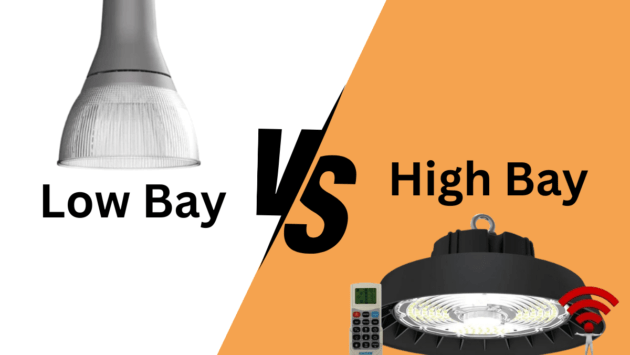
- High-bay and remote installations: Warehouses, sports halls, and distribution centres benefit from long-life LEDs that minimise the need for access equipment during maintenance
- 24/7 operations: ROI is faster in continuous operations like warehouses and logistics hubs. A site-specific audit factors in maintenance savings, heat reduction, and energy costs to give you an accurate payback figure.
The cost-saving LED strategies for specialist environments are often more compelling than for standard offices, precisely because the baseline energy and maintenance costs are so much higher. A real-world project example illustrates how even leisure and hospitality venues with complex lighting requirements achieve strong returns from a well-specified LED upgrade.
Side-by-side comparison: top sustainable lighting options
Having examined each solution in detail, compare them at a glance with the table below.
| Solution | Typical upfront cost | Payback period | Lifespan | Best application | Key sustainability benefit |
|---|---|---|---|---|---|
| High-efficiency LED panels | Medium | 2 to 4 years | 25,000 to 50,000 hrs | Offices, healthcare, education | Low energy, long life, modular |
| Smart LED controls and sensors | Low to medium | 1 to 3 years | System-dependent | Any commercial space | Eliminates wasted energy |
| Retrofit LED tubes and modular fittings | Low | 1 to 3 years | 20,000 to 40,000 hrs | Existing fluorescent installations | Reuses infrastructure, no mercury |
| Specialist and ATEX-rated LEDs | Medium to high | 1 to 4 years | 30,000 to 60,000 hrs | Industrial, hazardous, food, sports | Safe disposal, reduced maintenance |
The table makes clear that no single solution fits every scenario. Smart controls deliver the fastest payback in most cases, but only when paired with quality LED fittings. Specialist products carry higher upfront costs yet often recoup them quickest in demanding environments.
How to choose the right lighting solution for your business
With the comparison above in mind, here’s a practical checklist to narrow your shortlist.
- Define your operational hours. A 24/7 warehouse has very different priorities from a nine-to-five office. Higher usage hours accelerate payback and shift the priority toward longevity.
- Identify any compliance or certification requirements. ATEX zones, food hygiene standards, and BREEAM targets all constrain your product choices before cost even enters the conversation.
- Set a realistic budget and payback target. Most finance teams want to see payback within three years. Work backwards from that figure to determine how much you can invest per fitting.
- Assess your existing infrastructure. Retrofit solutions suit buildings where rewiring is impractical. New builds or major refurbishments justify specifying integrated smart systems from the outset.
- Factor in maintenance costs. A fitting that costs 20% more but lasts twice as long and requires no maintenance callouts is almost always the better financial decision.
- Consult a lighting professional. A proper audit considers energy saving considerations specific to your site, including ceiling heights, occupancy patterns, and natural light availability.
The right answer is rarely the cheapest product in the catalogue. It’s the solution that delivers the lowest total cost of ownership across its operational life while meeting your compliance and sustainability obligations.
Connect with UK LED lighting experts for tailored solutions
Knowing which solution fits your premises on paper is one thing. Getting it specified, supplied, and installed correctly is where the real value is secured. At LED Supply & Fit, we work with facility managers and business owners across the UK to deliver lighting upgrades that perform exactly as promised.
From initial audit through to installation and commissioning, our team ensures your chosen solution meets compliance requirements, maximises energy savings, and delivers a return on investment you can report with confidence. Explore our best commercial LED options or read more about the rationale for sustainable lighting in UK commercial properties. When you’re ready to move forward, request a free business lighting quote and we’ll put together a tailored recommendation for your site.
Frequently asked questions
How much energy can I save by switching to LED lighting?
LED lighting cuts energy consumption by 50 to 85% compared to older fluorescent or incandescent systems in commercial buildings. The exact saving depends on your current setup and how the new system is controlled.
How quickly do LED upgrades typically pay for themselves?
Payback periods typically range from one to five years, depending on usage hours, energy tariffs, and whether smart controls are included. High-usage environments such as warehouses often see payback in under two years.
Are there sustainable LED options for hazardous or specialist environments?
Yes. ATEX-rated LEDs and specialist modular products are designed for hazardous, hygiene-critical, or industrial settings. Site-specific audits account for maintenance savings and heat reduction to give you an accurate return on investment figure.
How do modular LEDs help reduce environmental impact?
Modular and repairable LEDs cut e-waste and contain no toxic mercury, making both disposal and future upgrades significantly more sustainable than traditional fluorescent alternatives.