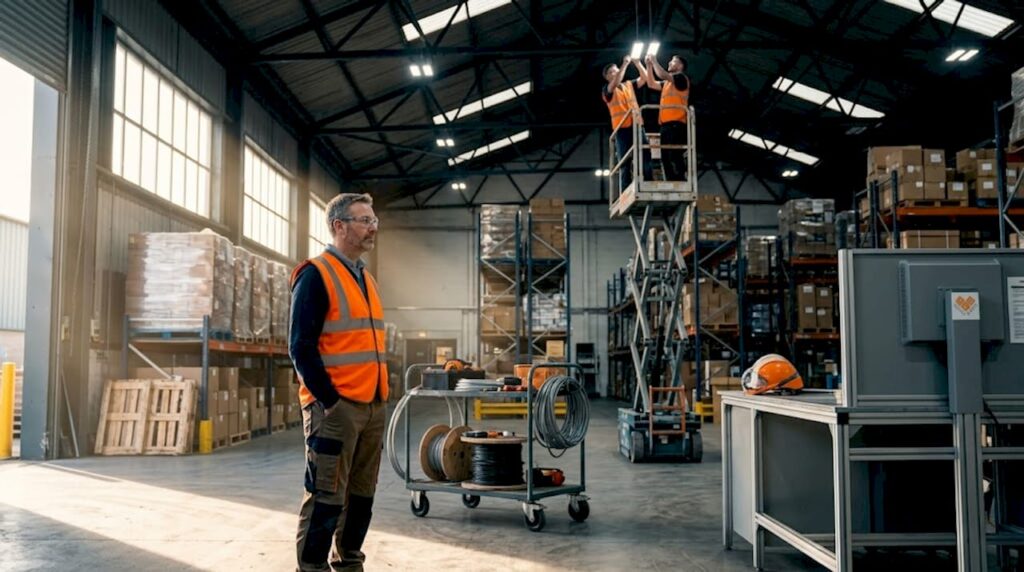
Industrial LED lighting examples: 8 types explained
TL;DR:
- Selecting the appropriate industrial LED lighting involves matching fixture types to specific environments, hazards, and task requirements.
- Proper specification and integration of smart controls significantly enhance energy savings and operational efficiency.
Choosing the right lighting for an industrial facility is rarely straightforward. With so many industrial LED lighting examples on the market, ranging from explosion-proof fixtures to smart high bays, facility managers and contractors often spend more time second-guessing than deciding. Get it wrong and you face shortened fixture lifespans, inflated energy bills, and potential safety failures. This article walks through eight real-world examples of industrial lighting, covering what each type does best, where it belongs, and what you should weigh before specifying it.
1. High bay LED fixtures for warehouses and factories
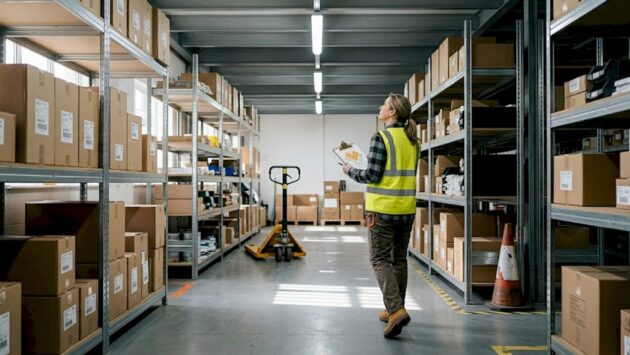
High bay LED fixtures are the backbone of LED lighting for factories and large warehouses. They are designed for ceilings above six metres and deliver broad, powerful downward illumination across wide floor areas.
The efficiency gains here are substantial. Modern linear LED high bays can reduce energy consumption by up to 63% compared to metal halide equivalents, whilst simultaneously doubling illumination levels. That is not a marginal improvement. It is a transformation.
- UFO high bays: Circular, compact units ideal for general warehouse bays
- Linear high bays: Elongated fixtures suited to racking aisles and production lines
- Smart high bays: Include PIR occupancy sensors that dim automatically after inactivity to cut waste further
Pro Tip: If your facility runs multiple shifts, the energy savings from smart PIR-integrated high bays compound quickly. Specify them from the outset rather than retrofitting sensors later.
2. Low bay LED fixtures for smaller industrial spaces
Low bay fixtures cover ceilings between three and six metres, making them the practical choice for workshops, small manufacturing units, and mezzanine levels. They deliver focused, uniform light without the glare associated with oversized high bay units in lower spaces.
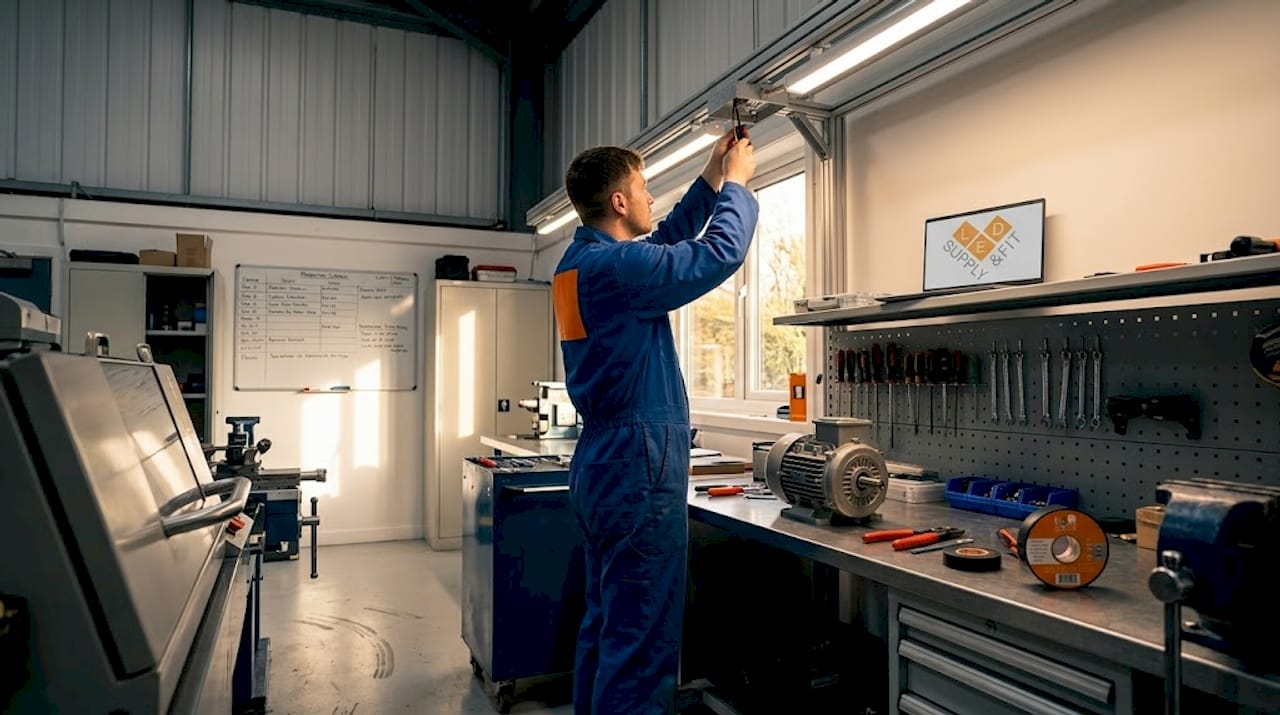
The distinction matters more than many facility managers realise. High bay lights suit ceilings above 20 feet; fitting them in lower spaces wastes energy and creates uncomfortable hotspots. Low bay LEDs are typically available as round industrial bulkheads, rectangular battens, or panel-style fittings, and they integrate well with standard switching and basic controls.
3. Tri-proof LED lights for wet and dusty environments
Tri-proof fittings are named for their resistance to three threats: water, dust, and impact. They are sealed units, typically rated IP65 or above, built for environments where standard fixtures would fail within months.
Food processing halls, car wash facilities, cold stores, and agricultural buildings all fall into this category. The business case is simple: selecting the wrong LED type in harsh environments drastically shortens lifespan and inflates maintenance costs. A tri-proof fitting in the right environment will routinely last 50,000 hours or more without degradation.
Key advantages include:
- Corrosion-resistant polycarbonate housing that survives chemical cleaning
- Reduced maintenance cycles due to sealed construction
- Compatibility with emergency battery packs for compliance in food and pharmaceutical facilities
- Available in single and twin-tube formats to match lumen output requirements
4. Explosion-proof LED lights for hazardous zones
This is where specification becomes a safety obligation, not just a preference. Explosion-proof LED fixtures, often referred to as ATEX-rated in the UK and European markets, are mandatory in environments where flammable gases, vapours, or dust are present.
Chemical plants, petrochemical refineries, grain stores, and spray paint booths all fall under this requirement. Choosing explosion-proof LED fixtures in these zones is non-negotiable. Using a standard fitting, regardless of how energy-efficient it appears on paper, creates a genuine ignition risk and will breach insurance and compliance requirements instantly.
ATEX-rated units are constructed to contain any internal arc or spark, preventing it from igniting the surrounding atmosphere. Ledsupplyandfit stocks ATEX-rated hazardous environment lighting with full compliance documentation, which matters enormously during facility audits.
5. LED strip lights for task and indirect illumination
LED strip lights might seem like a retail or hospitality product, but their uses in industry are well established. On production lines, they provide close-proximity task lighting where overhead fixtures create shadows. Under conveyor housings, they illuminate exactly where operatives need to see without flooding surrounding areas.
Their flexibility is the key advantage. Strips can be cut to length, mounted in extrusion channels, and directed precisely. They work particularly well in:
- Machine tool interiors and CNC enclosures
- Underneath shelving in picking and packing areas
- Stairwells and emergency egress routes requiring low-level guidance lighting
- Quality control inspection stations needing consistent, shadow-free light
Pro Tip: For any LED strip installation near insulation, always verify the IC (insulation contact) rating of your driver and housing. Overlooking this is a common installation error that creates a fire risk.
6. Recessed troffer lights for industrial offices and cleanrooms
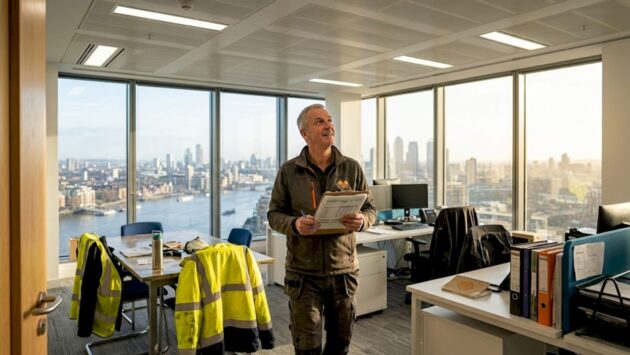
Not every area of an industrial facility needs rugged, high-output fixtures. Offices adjacent to factory floors, on-site laboratories, and cleanroom environments need controlled, glare-free general illumination. Recessed troffer lights deliver exactly this.
Troffer lights suit cleanrooms, offices, and labs because they sit flush within drop-tile ceilings and distribute light evenly without visible hotspots. Modern LED troffers replace outdated fluorescent equivalents directly, using the same grid aperture, which keeps retrofit costs low.
The critical specification point is the IC rating. If the ceiling void above the drop tile contains insulation, an IC-rated fitting is required. Fitting a non-IC unit in an insulated void is a fire risk and a building regulations failure.
7. LED floodlights for perimeter security and yard areas
Outside the building, the lighting specification shifts towards durability and security integration. LED floodlights are the standard solution for loading bays, perimeter fencing, exterior building façades, and delivery yards.
Outdoor industrial floodlights require high IP and IK ratings to withstand rain, frost, and physical impact from vehicles or machinery. Look for IP65 minimum and IK08 or above for any fitting exposed to potential knock damage. Integration with CCTV systems is increasingly standard. Floodlights positioned to align with camera fields of view improve image quality overnight and reduce false motion alerts caused by lighting failure.
The energy savings from LED upgrades are particularly strong in exterior applications where older sodium or metal halide floodlights were left burning through long winter nights on fixed timers.
8. LED streetlights for on-site roads and car parks
Larger industrial sites, distribution parks, and manufacturing campuses often have their own internal road networks and car parking areas. These require dedicated street lighting rather than repurposed floodlights.
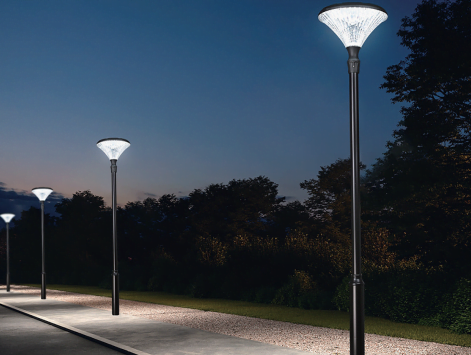
LED streetlights designed for commercial and industrial use offer directional optics that concentrate light onto the road surface rather than scattering it upwards. This reduces light pollution, meets planning requirements in many local authority zones, and cuts energy use compared to older high-pressure sodium columns. Compatibility with smart controls, including photocell switching and part-night dimming, means warehouse LED upgrades pay back faster on sites where running hours are long.
Comparison of key industrial LED lighting types
| Fixture type | Best environment | Typical IP rating | Relative energy efficiency | Lifespan (hours) |
|---|---|---|---|---|
| High bay LED | Warehouse, factory | IP20–IP65 | Very high | 50,000–100,000 |
| Low bay LED | Workshop, mezzanine | IP20–IP44 | High | 40,000–80,000 |
| Tri-proof LED | Food processing, cold store | IP65–IP69K | High | 50,000+ |
| Explosion-proof (ATEX) | Chemical plant, refinery | IP65–IP68 | Moderate to high | 40,000–60,000 |
| LED strip light | Task zones, machinery | IP20–IP67 | High | 30,000–50,000 |
| Recessed troffer | Office, cleanroom, lab | IP20–IP44 | High | 50,000+ |
| LED floodlight | Perimeter, yard, façade | IP65–IP67 | Very high | 50,000–75,000 |
| LED streetlight | Car park, site roads | IP65–IP66 | Very high | 50,000–80,000 |
Situational recommendation: facilities with hazardous atmospheres must prioritise ATEX compliance above all other criteria. For high-volume warehouses, the combination of high bay LEDs and PIR controls delivers the strongest return. Offices and labs within industrial buildings benefit most from troffers, which LED upgrades can cut by up to 65% in overall energy cost.
What I have learned from specifying industrial LED lighting
I have reviewed a lot of industrial lighting projects over the years, and the mistakes I see repeated most often have nothing to do with choosing the wrong wattage. They come down to two things: underestimating the environment and treating smart controls as an optional extra.
Facilities that specify a standard LED fitting in a food production area because it costs less than the tri-proof alternative will replace it within 18 months. The maths never works in their favour. Fixture selection for the specific environment consistently delivers better long-term value than chasing the cheapest unit.
The other thing I would push back on is the idea that smart controls are a luxury. Smart controls integration is as important as the fixture itself when it comes to maximising your ROI. On a large site, lights burning at full output in empty bays for hours add up fast. Building in occupancy sensing at the design stage costs a fraction of what retrofitting adds later.
My honest advice: do a proper lighting audit of your site before specifying anything. Map your zones, identify your environmental risks, and match the fixture to the job rather than the budget alone.
— John
Ready to upgrade your industrial lighting?
If this article has clarified which fixtures suit your facility, the next step is straightforward. Ledsupplyandfit supplies and installs the full range of industrial LED lighting types discussed here, including ATEX-rated explosion-proof units, tri-proof battens, and smart high bay systems with PIR controls.
Clients across the UK have seen energy cost reductions of up to 65% following LED upgrades, with facilities running long hours seeing the fastest payback. Take a look at the Wilson Veterinary Group case study to see how a full lighting upgrade translates into real operational savings. Ledsupplyandfit also offers bulk pricing, next-day delivery, and direct consultation from its Darlington base. Explore the best commercial LED fixtures or get in touch to discuss your project.
FAQ
What are the main industrial LED lighting types?
The main types include high bay and low bay fixtures, tri-proof LEDs, explosion-proof (ATEX) fittings, LED strip lights, recessed troffers, floodlights, and streetlights. Each suits a specific ceiling height, environment, or task.
How much energy can industrial LED lighting save?
Modern high bay LEDs can reduce energy consumption by up to 63% compared to traditional metal halide fittings, with smart controls pushing savings further through automatic dimming during inactivity.
When is explosion-proof LED lighting required?
Explosion-proof or ATEX-rated lighting is required in any area classified as hazardous under DSEAR regulations, including chemical plants, refineries, grain stores, and spray booths where flammable gases or dust are present.
What IP rating do I need for a food production facility?
A minimum of IP65 is recommended for food production environments. IP69K is preferable where high-pressure washdowns are routine, as it provides the highest protection against water ingress.
Are smart controls worth adding to industrial LED fixtures?
Yes. PIR occupancy sensors and automated dimming significantly improve ROI by eliminating waste in areas with variable occupancy. Specifying controls during the initial installation is far more cost-effective than retrofitting them later.