
LED lighting cost saving tips for UK businesses in 2026
Commercial property lighting costs drain budgets, but they don’t have to. Nearly 40% of electricity in some UK commercial buildings powers lighting alone. LED lighting technology slashes this expense by up to 85%, delivering rapid returns and carbon reductions. This article reveals practical, proven strategies UK businesses can deploy in 2026 to maximise LED lighting savings while enhancing workspace quality and minimising disruption.
Key takeaways
| Point | Details |
|---|---|
| Energy reduction | LED lighting cuts electricity consumption by 50-85% versus traditional lighting |
| Smart controls boost | Occupancy sensors and daylight harvesting add 20-40% to overall savings |
| Proven ROI | UK case studies show payback periods of 4-6 years with net savings exceeding £1 million |
| Planning minimises disruption | Proper scheduling and phased installation keep operations running smoothly |
Setting criteria for cost effective LED lighting upgrades
Before you commit to any LED lighting upgrade, establish clear benchmarks. Understanding where your property stands helps you measure progress and justify investment.
Start by auditing current lighting usage. Nearly 40% of electricity in some UK commercial buildings goes to lighting, so quantify your baseline consumption. Document fixture types, operating hours, and maintenance frequency. This data reveals which areas offer the biggest savings potential.

Set energy efficiency goals aligned with your operational budget and sustainability commitments. Many UK businesses target 50-70% lighting energy reductions. Match these targets to available capital and expected payback periods, typically three to six years for LED lighting upgrades.
Evaluate LED lighting durability alongside purchase price. Quality LED fixtures last 50,000-100,000 hours versus 1,000-2,000 for incandescent bulbs. Factor in reduced maintenance labour and replacement costs when calculating true lifecycle value.
Consider how lighting quality affects employee wellbeing and productivity. Poor lighting strains eyes and dampens morale. LED lighting with adjustable colour temperatures and flicker-free operation creates comfortable workspaces that support focus and reduce fatigue.
Research eligibility for government grants and funding schemes. The UK offers various energy saving lights for UK business support programmes, including Salix Finance interest-free loans and Enhanced Capital Allowances that accelerate tax relief. Meeting these criteria can significantly improve project economics.
Pro Tip: Conduct a professional lighting audit before upgrading. Independent assessments identify inefficiencies you might miss and provide documentation for grant applications.
Top LED lighting options to cut costs in commercial buildings
Choosing the right LED lighting type determines your savings potential. Different fixtures suit different spaces and budgets.
LED panels dominate office and retail environments. These slim, uniform fixtures replace fluorescent troffers and provide even, glare-free illumination. LEDs use substantially less electricity than traditional lighting, reducing consumption by 50-85%. Panels install directly into suspended ceilings with minimal structural work, making them ideal for occupied spaces.
LED strips offer flexible solutions for accent lighting, shelving, and signage. Their low profile and cuttable design allow creative installations that enhance product displays whilst consuming minimal power. Strips work brilliantly in hospitality venues, retail shops, and warehouse aisles where directional lighting guides customers or workers.
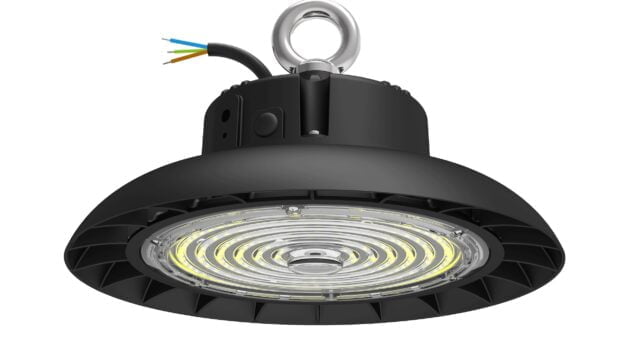
LED downlights excel in high-ceiling environments like warehouses, gyms, and hotel lobbies. Modern LED high-bays deliver focused illumination from heights of 6-12 metres whilst using 65-75% less energy than metal halide equivalents. Their instant-on capability eliminates the warm-up delays that frustrate operations.
Maintenance advantages separate LED lighting from legacy options. Traditional fluorescent tubes require replacement every 8,000-15,000 hours. Quality LED fixtures run 50,000-100,000 hours before dimming below optimal levels. This longevity slashes labour costs for changing bulbs, especially in difficult-to-reach locations.
Employee wellbeing improves with proper LED lighting selection. Adjustable colour temperature lets you match lighting to tasks and times of day. Cooler white light (4000-5000K) promotes alertness during morning shifts. Warmer tones (2700-3000K) create relaxed atmospheres in break rooms and client-facing areas. LED panels benefits UK 2026 data shows measurable improvements in workplace satisfaction.
Pro Tip: Choose LED fixtures with high Colour Rendering Index (CRI) scores above 80 for spaces where accurate colour perception matters, like retail showrooms and design studios.
Boost savings with smart lighting controls and scheduling
LED lighting delivers impressive savings alone, but smart controls multiply the benefits. These systems eliminate waste by matching lighting to actual needs.
Occupancy sensors detect presence and automatically switch lights on or off. Install them in conference rooms, toilets, storage areas, and corridors where spaces sit empty for extended periods. Sensors prevent the common scenario of lights burning unnecessarily overnight or during lunch breaks. Smart lighting controls can increase overall energy savings by 20-40% beyond LED lighting baseline reductions.
Daylight harvesting systems use photocells to measure natural light levels and dim artificial lighting accordingly. Spaces near windows benefit most from this technology. As morning sunlight floods in, the system gradually reduces electrical lighting output, maintaining consistent illumination whilst slashing energy use. Overcast days trigger automatic increases to compensate.
Scheduling gives you granular control over when and how brightly lights operate. Programme different lighting levels for opening hours, cleaning shifts, and security patrols. Retail shops might run full brightness during peak shopping hours but dim to 30% overnight for safety lighting. This flexibility prevents over-illumination whilst meeting operational requirements.
Installation of Ex-Or by Honeywell sensors leads to up to 70% energy use reduction in offices. Hospitals, schools, and commercial properties achieve similar results when combining LED lighting upgrades with intelligent controls.
Dimming capabilities extend LED lighting lifespan whilst reducing energy consumption. Running LED fixtures at 70-80% capacity rather than maximum output adds thousands of operating hours before replacement becomes necessary. This simple adjustment compounds long-term savings.
Smart control benefits comparison
| Control type | Energy savings | Best applications | Typical payback |
|---|---|---|---|
| Occupancy sensors | 20-30% | Toilets, corridors, meeting rooms | 2-3 years |
| Daylight harvesting | 15-40% | Perimeter offices, retail, atriums | 3-4 years |
| Scheduling systems | 10-25% | Warehouses, car parks, 24/7 facilities | 2-3 years |
| Dimming controls | 5-20% | Offices, hospitality, multi-use spaces | 3-5 years |
Pro Tip: Prioritise occupancy sensors in spaces with irregular usage patterns. These deliver the fastest payback by eliminating the most obvious waste.
Integrate energy savings with LED controls into your building management system for centralised monitoring and reporting. Real-time data reveals consumption patterns and identifies opportunities for further optimisation.
Comparing real world LED upgrade results across UK businesses
Theoretical savings mean little without proof. These documented UK case studies demonstrate the tangible returns LED lighting delivers.
Mole Valley Farmers transformed their national retail chain with comprehensive LED lighting upgrades. The agricultural retailer achieved over £1.1 million net savings and reduced CO2 by 3420 tonnes over six years. Their phased rollout across multiple locations proved LED lighting works at scale without disrupting daily operations. The project supported their 2040 net zero target whilst delivering immediate financial benefits.
Rygor Mercedes-Benz upgraded their Wiltshire dealership with LED lighting and smart controls throughout showrooms, workshops, and offices. The investment reduced operational costs by £95,000 and cut 980 tonnes of CO2 during the contract term. Improved lighting quality enhanced vehicle presentation in showrooms whilst workshop mechanics benefited from clearer, more accurate colour rendering.
Addenbrooke’s Hospital in Cambridge installed LED lighting with occupancy sensors across clinical and administrative areas. The NHS trust saves £15,000 annually, achieved a 53% carbon footprint reduction, and secured ROI within 4.32 years. Healthcare environments require reliable, high-quality lighting around the clock, making the maintenance reduction particularly valuable.
UK LED lighting upgrade outcomes
| Organisation | Annual savings | CO2 reduction | Payback period | Key benefits |
|---|---|---|---|---|
| Mole Valley Farmers | £183,000+ | 570 tonnes/year | 4.5 years | Net zero progress, multi-site consistency |
| Rygor Mercedes-Benz | £95,000 (contract) | 980 tonnes (contract) | ~5 years | Enhanced showroom presentation, workshop clarity |
| Addenbrooke’s Hospital | £15,000 | 53% reduction | 4.32 years | Improved patient environment, lower maintenance |
These results share common success factors. Each organisation conducted thorough planning before implementation, selected appropriate LED fixtures for their specific environments, and integrated smart controls to maximise savings. None experienced significant operational disruption during installation, proving that careful scheduling protects business continuity.
Employee and customer feedback features prominently in these case studies. Better lighting quality improved workplace satisfaction and reduced eye strain complaints. Retail environments reported enhanced product visibility, whilst healthcare settings noted positive impacts on patient comfort.
LED installation benefits UK businesses 2026 data continues accumulating as more organisations complete upgrades and measure long-term performance. The consistency of positive outcomes across diverse sectors validates LED lighting as a reliable cost reduction strategy.
Why choose LED Supply & Fit for your LED lighting upgrade?
Transforming your commercial lighting requires expertise that bridges product knowledge and practical installation experience. LED Supply & Fit brings both to every project, ensuring your upgrade delivers maximum savings with minimum disruption.
Every commercial property presents unique challenges. 
We design tailored LED lighting solutions for offices, warehouses, retail shops, hotels, restaurants, and gyms across the UK. Our planning process evaluates your current lighting, operational patterns, and budget constraints to recommend fixtures and controls that optimise your specific situation. Trade accounts receive bulk discounts on large orders, improving project economics for multi-site upgrades.
Our maintenance services protect your investment long after installation. We provide ongoing support ensuring LED fixtures perform at peak efficiency throughout their operational life. When issues arise, our Darlington-based team responds quickly to minimise downtime.
Explore our comprehensive LED lighting tips to save costs and upgrade commercial lighting cost savings guides for deeper insights. Contact LED Supply & Fit to discuss how we can help your business achieve the savings documented in our case studies.
Frequently asked questions
What grants or funding can help with LED lighting upgrades?
UK businesses can access Salix Finance interest-free loans for energy-efficient equipment including LED lighting. Enhanced Capital Allowances let you claim 100% first-year tax relief on qualifying LED products. Some local authorities offer additional grants for small businesses. Check eligibility criteria carefully, as programmes often require energy audits and minimum efficiency standards.
How much do LED lighting maintenance costs typically run?
LED fixtures require minimal maintenance compared to traditional lighting. Quality products last 50,000-100,000 hours before replacement, versus 1,000-2,000 hours for incandescent or 8,000-15,000 for fluorescent. Annual maintenance costs drop by 60-80% after LED upgrades. Many suppliers offer service programmes covering periodic inspections and emergency repairs.
Can LED lighting installation proceed without disrupting operations?
Yes, with proper planning. Most commercial LED lighting upgrades install during evenings, weekends, or in phases that keep portions of your property operational. Experienced installers complete typical office spaces in hours rather than days. Warehouses and retail spaces often upgrade section by section, maintaining business continuity throughout the project.
What warranty and lifespan should I expect from commercial LED lighting?
Reputable manufacturers offer 3-5 year warranties on commercial LED fixtures. Actual lifespan typically reaches 50,000-100,000 hours depending on quality and operating conditions. At 12 hours daily operation, a 50,000-hour LED lasts over 11 years. Choose products with proven track records and local support for warranty claims.
How do smart controls integrate with existing building systems?
Modern LED lighting control systems use standard protocols that connect to most building management platforms. Wireless options install without extensive rewiring. Your facilities team can monitor and adjust lighting remotely through web interfaces or mobile apps. Integration provides valuable energy consumption data for reporting and continuous optimisation. Visit our LED lighting frequently asked questions for additional technical details.