Enhance hospitality venues with efficient LED lighting
TL;DR:
- Proper lighting significantly influences guest experience, behavior, and revenue in hospitality settings.
- Layered LED lighting enhances ambiance, safety, and brand perception while offering substantial energy savings.
- Investing in high-quality, human-centric lighting provides long-term financial, environmental, and reputational benefits.
Lighting is one of the most underestimated levers in hospitality management. Most venue owners focus on menus, décor, and staffing, yet overlook the single environmental factor that shapes every guest’s first impression. Optimal lighting increases spending by up to 18% and extends how long guests stay. Get it right and you influence behaviour, comfort, and revenue simultaneously. Get it wrong and even the best food or service cannot fully compensate.
Key Takeaways
| Point | Details |
|---|---|
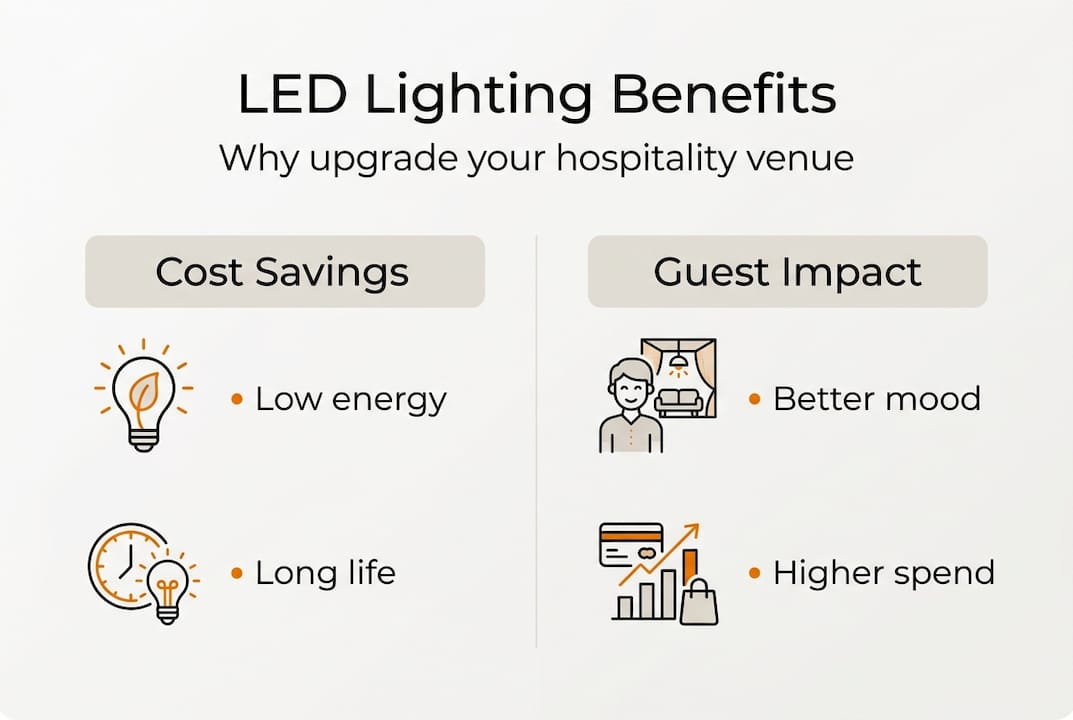
| Lighting drives profit | Smart lighting increases guest spend and repeat business far beyond aesthetic appeal. |
| Layering is essential | Using ambient, task, and accent lighting together creates the best experience and safety. |
| LEDs cut costs fast | UK case studies prove LEDs can pay for themselves in six months or less through energy savings. |
| Quality tops price | High-CRI LED products give warmth and comfort, outperforming cheap, inefficient options. |
Why lighting matters in hospitality environments
Lighting does far more than illuminate a room. It sets the emotional tone the moment a guest walks through the door, signalling whether a space feels welcoming, premium, or tired. That first impression drives repeat visits more reliably than almost any other single factor.
The financial evidence is striking. Studies confirm that dim light enhances taste perception and encourages guests to linger, which directly translates to higher spend per cover. This is not a marginal effect. It is measurable, repeatable, and actionable.
Beyond revenue, lighting serves critical functional roles:
- Safety: Adequate task lighting in kitchens, corridors, and stairwells reduces accident risk and meets legal obligations.
- Staff productivity: Well-lit back-of-house areas reduce errors and fatigue during long shifts.
- Accessibility: Consistent illumination supports guests with visual impairments and meets inclusive design expectations.
- Brand consistency: Colour temperature and intensity communicate your brand values without a single word.
“Lighting is the single most powerful tool a hospitality designer has. It can make a modest space feel luxurious or a grand space feel cold.”
Exploring lighting for hospitality venues in detail reveals just how many revenue and cost levers are tied to a single design decision. Whether you manage a boutique hotel or a busy bar, the principles apply equally. Understanding restaurant ambiance with LEDs shows how modern technology makes these outcomes achievable at realistic budgets.
The essentials of layered lighting: Ambient, task, and accent
Layered lighting is the professional standard for hospitality venues, combining three distinct types to achieve both atmosphere and practicality.
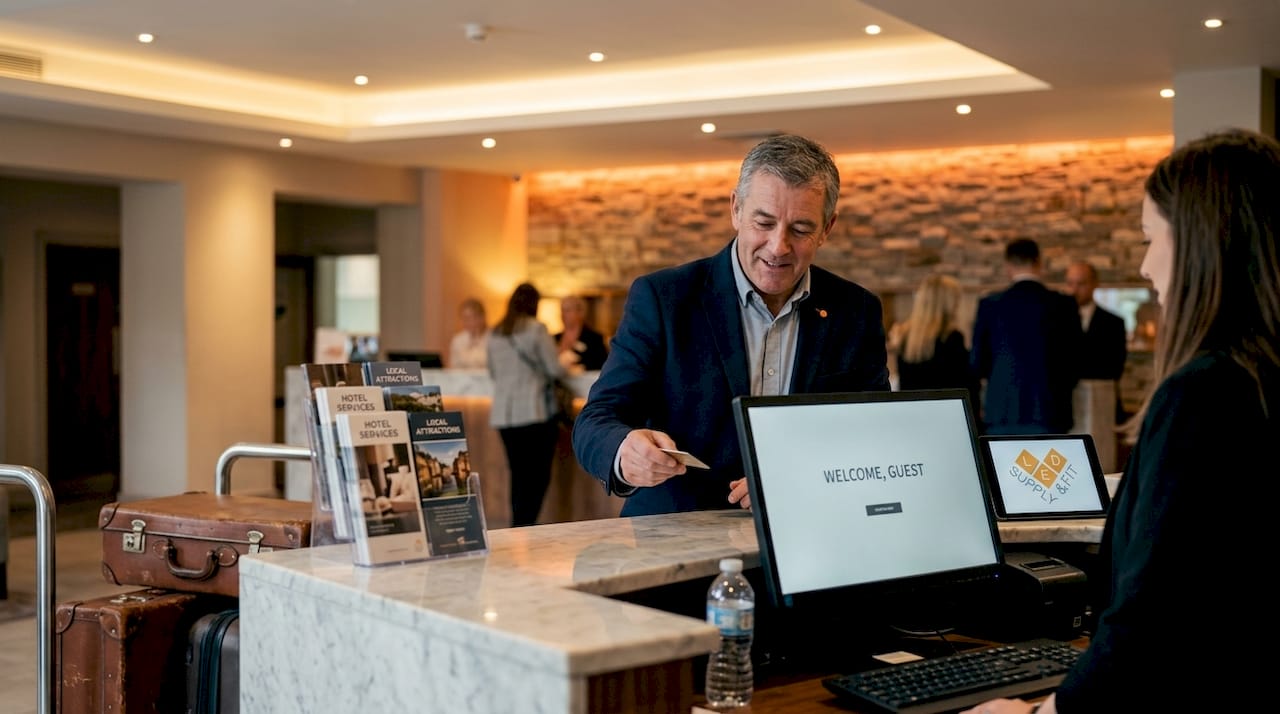
Ambient lighting provides the general wash of light across a space. It sets the overall mood and brightness level. Task lighting focuses on specific work areas, such as bar counters, reception desks, and kitchen prep surfaces, where precision and safety matter. Accent lighting draws attention to focal points: artwork, architectural features, or a signature cocktail display.
Building a layered scheme for a typical UK hospitality space follows a clear sequence:
- Establish ambient levels using ceiling-mounted or recessed LED panels set to a warm colour temperature (2700K to 3000K).
- Add task lighting at all functional zones, ensuring compliance with illuminance targets under BS EN 12464-1.
- Layer accent lighting using directional spotlights or LED strip lighting to highlight features and create visual depth.
- Install dimmer controls so staff can adjust the atmosphere from busy lunch service to intimate evening dining.
- Review and test the scheme at different times of day before committing to final fixture positions.
| Layer | Purpose | Recommended LED type |
|---|---|---|
| Ambient | General mood and visibility | Recessed panels, downlights |
| Task | Safety and precision | Spotlights, under-cabinet strips |
| Accent | Focal points and brand identity | Directional spots, LED strips |
Pro Tip: Always prioritise a CRI (Colour Rendering Index) above 90 for your main ambient sources. This ensures food, skin tones, and interiors look their best under your lighting rather than washed out or artificial.
For a deeper look at restaurant lighting layers and how to sequence a full design, the process is more straightforward than most managers expect. Hotel lighting solutions follow the same layered logic but with additional considerations for guest room comfort and corridor safety.
Business benefits: Energy savings, ROI, and sustainability
The financial case for LED retrofits in UK hospitality is compelling. Travelodge retrofitted 388 hotels with LEDs, saving 20.2 GWh annually, while Holiday Inn case studies show full return on investment in as little as one to four months. These are not outliers. They reflect what properly specified LED systems routinely deliver.
Key financial and environmental benefits include:
- Energy reduction of 20 to 70% compared to legacy halogen or fluorescent systems.
- Lifespan of 50,000 hours or more, dramatically cutting maintenance and replacement costs.
- Lower carbon footprint, supporting sustainability reporting and green accreditation schemes.
- Reduced heat output, which lowers air conditioning demand in summer months.
| Metric | Traditional lighting | LED equivalent |
|---|---|---|
| Energy use (per fitting) | 50W halogen | 7W LED |
| Annual running cost (8hrs/day) | ~£14.60 | ~£2.04 |
| Lifespan | 1,000 hours | 50,000+ hours |
| CO₂ reduction | Baseline | Up to 70% less |
Understanding lighting efficiency for hotels goes beyond swapping bulbs. It involves auditing your current setup, calculating actual energy savings with LED across all zones, and phasing the upgrade to manage capital outlay. Practical cost-saving lighting strategies can help you prioritise the highest-impact areas first, typically kitchens, function rooms, and public corridors.
Best practices for human-centric, high-quality lighting
Human-centric lighting aligned with BS EN 12464-1 boosts staff and guest wellbeing, and modern high-CRI LEDs have completely removed the old myth that energy-efficient lighting means cold, clinical spaces. BS EN 12464-1 is the British standard governing workplace and public space illumination, covering recommended lux levels, glare limits, and colour rendering requirements.
Do:
- Mix natural daylight with LED sources to maintain a biologically healthy environment. Lighting effects on wellbeing are well documented, particularly around circadian rhythm support.
- Prioritise CRI above 90 for dining and reception areas.
- Use tunable white LEDs to shift colour temperature from energising daylight tones at breakfast to warm, relaxing hues in the evening.
- Avoid glare by using diffused fittings or indirect bounce lighting in guest-facing zones.
Don’t:
- Ignore maintenance schedules. Lumen depreciation over time means poorly maintained LEDs gradually underperform without obvious failure.
- Assume the cheapest fitting will deliver acceptable results. Bargain LEDs often have poor CRI, short lifespans, and inconsistent colour matching.
“Cheap lighting costs more in the long run. Poor colour rendering, frequent replacements, and unhappy guests are expensive problems.”
Pro Tip: Specify fittings with a MacAdam Step 2 or lower colour consistency rating. This ensures all your LEDs in a single space appear the same colour, avoiding the patchy, mismatched look that undermines premium venues.
Staying current with LED lighting trends for hospitality and understanding hotel lighting standards in full will help you specify confidently and avoid costly mistakes.
A new perspective: Why lighting is your competitive edge
Most venue operators treat lighting as a facilities issue, something to fix when a bulb fails. That mindset leaves serious money on the table. The venues that consistently earn strong reviews and repeat business are those where guests feel something without knowing why. Lighting is usually the invisible reason.
Customised, thoughtfully designed lighting ties directly to better online reviews, higher average spend, and measurably improved staff morale. We have seen venues transform their reputation simply by revisiting their lighting scheme. Lighting’s impact on guest experience is not soft or anecdotal. It is quantifiable.
Savvy operators no longer ask “what is the cheapest option?” They ask “what return will this deliver?” That shift in thinking is what separates standout venues from those that struggle to fill seats.
Transform your hospitality space with the latest LED solutions
If this article has prompted you to look critically at your venue’s lighting, you are already ahead of most competitors. The next step is straightforward.
At LED Supply and Fit, we offer a full range of commercial LED lighting options designed specifically for UK hospitality environments, from intimate restaurants to large hotel chains. Our sustainable LED lighting solutions combine energy efficiency with premium aesthetics. Whether you need a full retrofit or targeted upgrades, our team at LED Supply and Fit is ready to help you specify, supply, and install the right system for your venue.
Frequently asked questions
How much can UK hospitality venues save by switching to LED lighting?
Savings commonly reach 20 to 70% on lighting energy use, with payback periods under six months for many venues depending on current usage and the scale of the retrofit.
Do LED lights really improve guest satisfaction in hotels and restaurants?
Yes. Optimal lighting increases spending by up to 18% and extends dwell time, while also enhancing the perceived quality of food and service through better colour rendering.
What lighting standards should UK hospitality venues follow?
BS EN 12464-1 is the principal British standard for workplace and hospitality lighting, covering recommended lux levels, glare control, and colour rendering to support health, safety, and visual comfort.
Do high-CRI LEDs really offer better results than cheap LED options?
Absolutely. High-CRI LEDs above 90 deliver warmth, colour accuracy, and visual comfort that cheap alternatives simply cannot match, making them essential for any guest-facing hospitality environment.
Recommended
- 7 Key LED Lighting Trends 2026 for UK Hospitality Facilities
- LED lighting for UK hospitality: save costs, delight guests
- How to Improve Lighting Efficiency for UK Hotels
- Top hotel lighting solutions for energy savings and guest comfort
- Wedding lighting options: Enhance your dream venue
- 7 Best Object Lighting Tips for Restaurants – Dekoja.net