LED lighting for UK hospitality: save costs, delight guests
TL;DR:
- Switching to LED lighting reduces energy consumption by 65-80% and lowers maintenance costs.
- High-quality LEDs create warm, inviting atmospheres and can be controlled for guest comfort.
- Smart controls and phased upgrades maximize savings and minimize operational disruption.
Switching to LED lighting cuts energy consumption by 65-80% compared to halogen and fluorescent sources, yet many UK hospitality owners still hesitate, worried about upfront costs or whether LEDs can match the warmth guests expect. Those concerns are now firmly outdated. Modern LEDs deliver exceptional light quality, pay for themselves faster than most operators realise, and give you precise control over the atmosphere in every room. This guide covers the real business case, guest experience design, compliance essentials, and practical tips to help you make a confident decision.
Key Takeaways
| Point | Details |
|---|---|
| Rapid cost savings | LEDs slash energy use by up to 80% and typically pay for themselves in under two years. |
| Enhanced guest experience | Modern LED systems now match or exceed traditional lighting for comfort, adjusting to mood and space. |
| Easy compliance and safety | The right LED upgrades help hospitality venues meet UK regulations and improve fire and electrical safety. |
| Smart controls boost efficiency | Adding occupancy sensors and dimmers delivers up to 30% further savings in busy venues. |
Why LED is changing the hospitality sector
The shift to LED across UK hospitality is not just a trend. It is a structural change driven by hard economics and tightening environmental expectations. Traditional halogen and fluorescent fittings waste the majority of their energy as heat. LEDs convert up to 90% of energy directly into light, making them fundamentally more efficient at the physics level.
For a busy hotel or restaurant running lights across dozens of rooms and public spaces, that efficiency gap is enormous. Energy consumption drops by 65-80% after switching, which translates directly into lower electricity bills every single month. Beyond running costs, LED lifespans of 25,000 to 50,000 hours mean far fewer replacements and far less disruption to your guests.
“The real cost of traditional lighting is not just the energy bill. It is the maintenance call-outs, the lamp stock, and the room taken offline every time a fitting fails.”
Two persistent myths still hold some operators back. First, that LEDs are expensive to install. While the unit cost is higher than a basic halogen bulb, the total cost of ownership over three to five years is dramatically lower. Second, that LEDs produce cold, clinical light. That was true of early commercial LEDs, but today’s products offer a full range of colour temperatures and high colour rendering, making them indistinguishable from the warm glow guests associate with quality hospitality.
Key reasons hospitality businesses are making the switch:
- Energy reduction with LED upgrades of 65-80% versus traditional sources
- Lifespans up to 50,000 hours, reducing maintenance significantly
- Lower carbon footprint supporting your sustainability commitments
- No UV or infrared emissions, protecting furnishings and artwork
- Commercial energy cost savings that compound year on year
The business case: cost savings, ROI, and payback time
Understanding potential cost savings and ROI motivates many operators, but what do these numbers look like in practice? Real-world results from UK hotel groups make a compelling argument. LED upgrades achieved ROI in under two years for properties including Holiday Inn and Ramada Coventry, with annual savings running into tens of thousands of pounds per site.
| Metric | Traditional lighting | LED lighting |
|---|---|---|
| Energy use | Baseline | 65-80% lower |
| Average lifespan | 1,000-2,000 hours | 25,000-50,000 hours |
| Typical payback period | N/A | 12-24 months |
| Maintenance call-outs | Frequent | Rare |
| Smart control compatibility | Limited | Full |
Smart controls push savings even further. Occupancy sensors, daylight dimming, and programmable scenes can add a further 30% reduction on top of the baseline LED efficiency gain. For a mid-sized hotel, that could mean an additional £5,000 to £15,000 saved annually depending on your current tariff.
To calculate your own ROI, follow these steps:
- Record your current annual lighting energy spend.
- Estimate your new spend at 25-35% of the current figure.
- Get a supply and installation quote for your premises.
- Divide the installation cost by annual savings to get your payback period.
- Factor in reduced maintenance and lamp replacement costs for a fuller picture.
Pro Tip: Stage your LED installation room type by room type, starting with the highest-usage areas like lobbies, corridors, and kitchens. This approach, covered in detail when improving lighting efficiency, maximises early savings while keeping guest disruption to a minimum.
Design for comfort: LED lighting and the guest experience
Once the business case is clear, the next focus for hoteliers is guest satisfaction, where LED design plays a pivotal role. The idea that LEDs cannot create a warm, inviting atmosphere is one of the most persistent and damaging myths in the sector. High-quality LEDs with a colour rendering index above 90 reproduce colours accurately and create environments that feel genuinely comfortable rather than institutional.
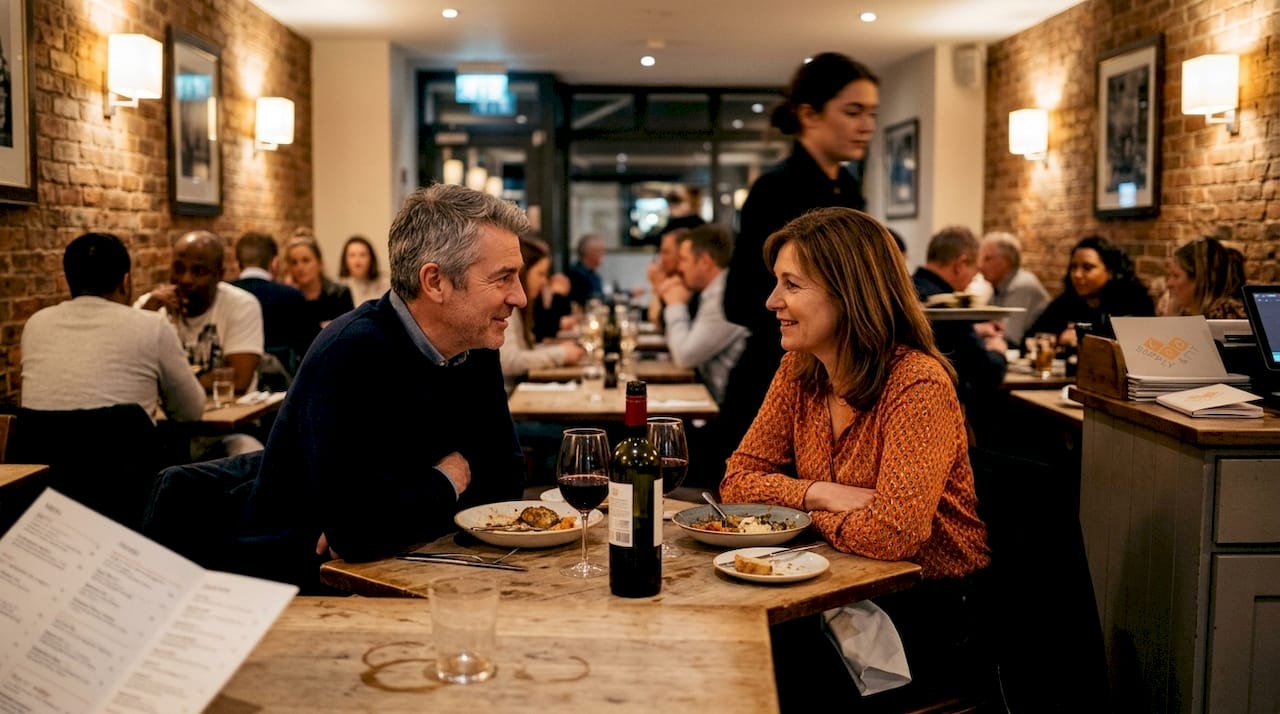
Colour temperature is your primary design tool. Warm white LEDs in the 2,700 to 3,000K range suit bedrooms, restaurants, and bar areas where you want guests to feel relaxed. Cooler whites in the 4,000 to 5,000K range work better in business centres, fitness suites, and back-of-house workspaces where alertness matters. Tunable fittings let you shift between these settings throughout the day, supporting human-centric lighting benefits that align with guests’ natural rhythms.
| Lighting type | Colour temp | Best use | CRI |
|---|---|---|---|
| Warm white LED | 2,700-3,000K | Bedrooms, restaurants | >90 |
| Neutral white LED | 3,500-4,000K | Receptions, corridors | >85 |
| Cool white LED | 4,000-5,000K | Offices, gyms | >80 |
| Halogen (old) | 2,700K fixed | All areas | ~100 |
| Fluorescent (old) | 3,500-6,500K | Back-of-house | 60-85 |
Layered lighting design combines ambient, task, and accent sources to create depth and flexibility. A bedroom might use warm downlights for general illumination, bedside reading lamps on dimmers, and subtle accent lighting behind a headboard. This approach, central to lighting solutions for guest comfort, gives guests control and creates the sense of a thoughtfully designed space.
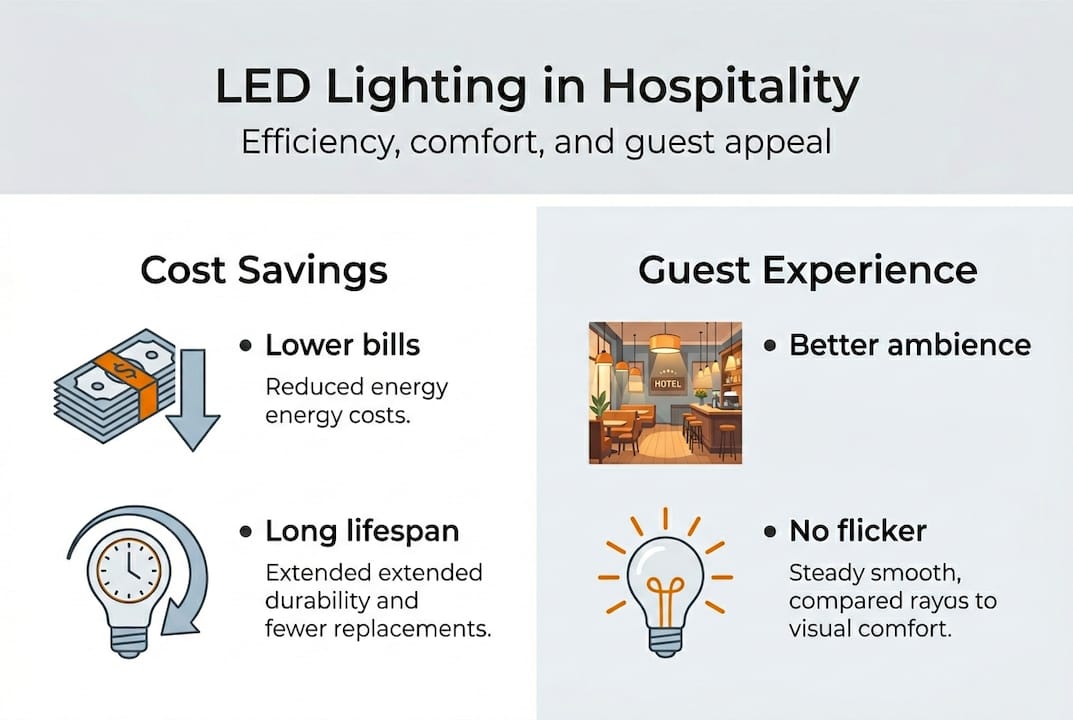
Flicker-free LEDs also matter more than most owners realise. Cheap fittings with poor drivers can produce invisible flicker that causes headaches and eye strain over time, quietly damaging your guest reviews without an obvious cause.
Technical essentials: compliance, smart controls, and edge cases
Having covered guest-pleasing design, it is vital to understand compliance and specialist requirements before jumping into an LED project. UK hospitality venues must meet several overlapping standards, and getting this wrong can create liability issues or fail building inspections.
Key compliance steps for your LED project:
- Confirm light levels meet BS EN 12464-1 standards for the relevant space type.
- Ensure all electrical installation work complies with BS 7671 wiring regulations.
- Check your project meets Part L of the Building Regulations for energy efficiency.
- Specify IP44 or IP65 rated fittings for bathrooms, kitchens, and wet areas.
- Use ATEX-rated fittings in any classified hazardous zones such as cellar gas storage areas.
Smart controls deserve a dedicated conversation with your installer. Occupancy sensors, daylight harvesting, and scene-setting dimmers are now straightforward to integrate and the latest LED trends for hospitality show that smart controls add 15-30% savings beyond the base LED efficiency gain.
Edge cases to plan for:
- Commercial kitchens: IP65 rated fittings are non-negotiable for steam and washdown resistance
- Outdoor areas: IP66 or higher for car parks, entrances, and terraces
- Hazardous zones: ATEX certification required; standard LEDs are not acceptable
- Listed buildings: Consult your local authority before specifying recessed fittings
Pro Tip: Review LED solutions explained before finalising your specification. Phasing upgrades across quarters rather than doing everything at once protects revenue and keeps your compliance documentation manageable.
Our perspective: what most hospitality owners overlook about LEDs
Most of the guidance in this article is grounded in industry data, but here is our honest take on what truly separates successful LED upgrades from disappointing ones.
The biggest oversight we see is treating lighting as a utility rather than an experience tool. Lighting rhythm, meaning how light shifts in intensity and warmth across the day, directly influences guest mood, dwell time, and even spending in food and beverage areas. Owners who invest in tunable, layered systems consistently report better reviews and higher ancillary revenue.
The second mistake is cutting corners on installation. Cheap fittings with poor drivers fail early, flicker, and undermine the very atmosphere you are trying to create. The real-world LED deployment tips consistently point to staged, expert-led projects outperforming rushed, piecemeal upgrades. DIY might look cheaper on a spreadsheet, but a poorly specified system that needs replacing in three years costs far more than getting it right the first time.
Ready to upgrade? How we can help your business shine
If you are inspired to revisit your lighting strategy, the next step is straightforward. At Ledsupplyandfit.co.uk, we work with UK hospitality venues of all sizes, from independent B&Bs to large hotel groups, providing supply, installation, and compliance advice under one roof.
Explore our full range of best commercial LED options or get guidance on lighting design and compliance for your specific venue type. Whether you need bulk procurement pricing or a tailored installation plan, our team is ready to help. Visit ledsupplyandfit.co.uk to request a quote or speak to a specialist today.
Frequently asked questions
What is the typical ROI period for LED upgrades in UK hotels?
Most UK hotels see payback from LED upgrades in under one to two years, driven by energy savings and significantly reduced maintenance costs.
Are smart controls worth it for hospitality venues?
Absolutely. Smart controls add 15-30% savings on top of standard LED efficiency, making them one of the highest-return additions to any lighting upgrade.
What are the main compliance requirements for UK hospitality lighting?
You must meet BS EN 12464-1 for light quality, Part L for energy efficiency, BS 7671 for electrical safety, and use IP or ATEX rated fittings wherever moisture or hazardous conditions apply.
Can LEDs really improve the guest experience over halogen or fluorescent lighting?
Yes. High-CRI, tunable LEDs produce more comfortable, human-centric light than traditional sources, supporting better sleep, mood, and overall guest satisfaction.
Is it possible to upgrade lighting without disrupting guests?
Phased LED installations allow you to upgrade one area at a time, keeping disruption minimal and ensuring the business continues to operate normally throughout the project.