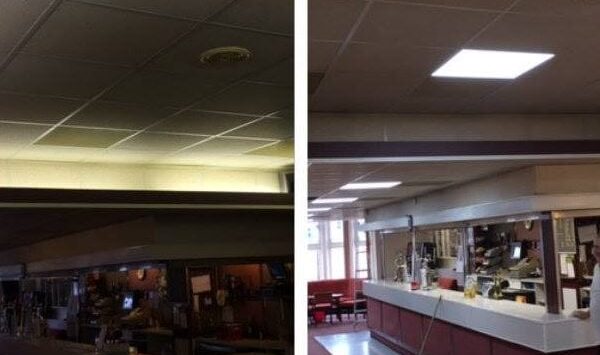
What is warehouse lighting: guide to efficient solutions 2026
Many property managers underestimate warehouse lighting, viewing it as a basic necessity rather than a strategic investment. Modern lighting solutions deliver far more than illumination. They reduce energy costs by 40 to 60%, enhance worker safety, and support sustainability goals. This guide explains what warehouse lighting entails, explores energy efficient LED options, and provides practical advice for cost effective upgrades. You’ll discover how the right lighting transforms operational efficiency while cutting expenses. Whether you’re planning a new installation or upgrading existing systems, understanding warehouse lighting fundamentals helps you make informed decisions that benefit your bottom line and your team.
Key takeaways
| Point | Details |
|---|---|
| Specialised systems | Warehouse lighting involves tailored solutions designed for large commercial spaces with high ceilings and variable activity zones. |
| Energy efficiency | LED lighting reduces energy consumption and maintenance costs whilst providing superior illumination quality. |
| Safety and productivity | Proper lighting directly impacts worker safety, reduces errors, and enhances operational efficiency. |
| Strategic planning | Successful upgrades require lighting audits, compliance checks, and phased installation to minimise disruption. |
| Financial benefits | Modern lighting systems deliver 40 to 60% energy cost reductions with strong return on investment timelines. |
Understanding warehouse lighting and its importance
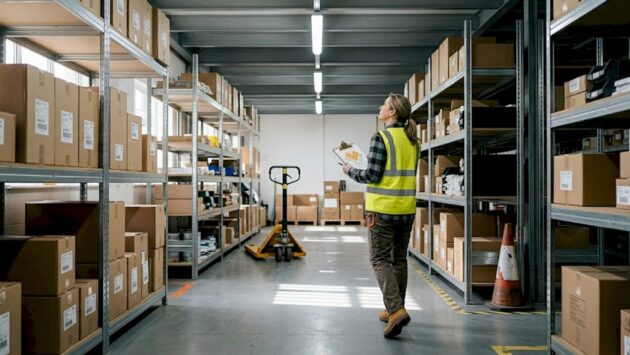
Warehouse lighting provides adequate illumination tailored for large, high ceiling spaces to ensure safety and efficiency. Unlike standard commercial lighting, warehouse systems must address unique challenges including vast floor areas, towering storage racks, and diverse work zones. Each area requires specific lighting levels based on activities performed there. Picking zones need brighter illumination than general storage areas, whilst loading docks demand robust fixtures that withstand temperature fluctuations and physical impacts.
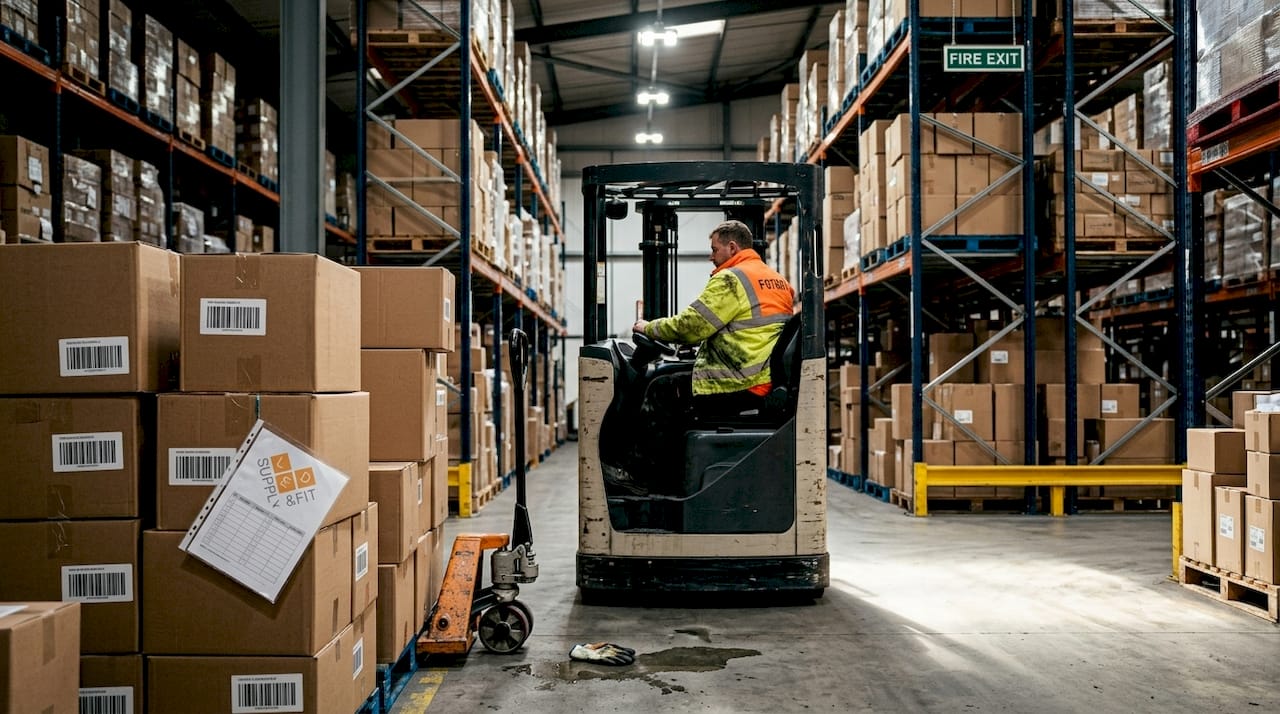
The primary functions of warehouse lighting extend beyond simple visibility. Proper illumination prevents accidents by ensuring workers can navigate safely around equipment, identify hazards, and read labels accurately. Productivity increases when employees work in well lit environments because eye strain decreases and focus improves. Energy efficiency has become equally important as businesses seek to reduce operational costs and meet environmental targets. Modern systems balance these three priorities through intelligent design and technology selection.
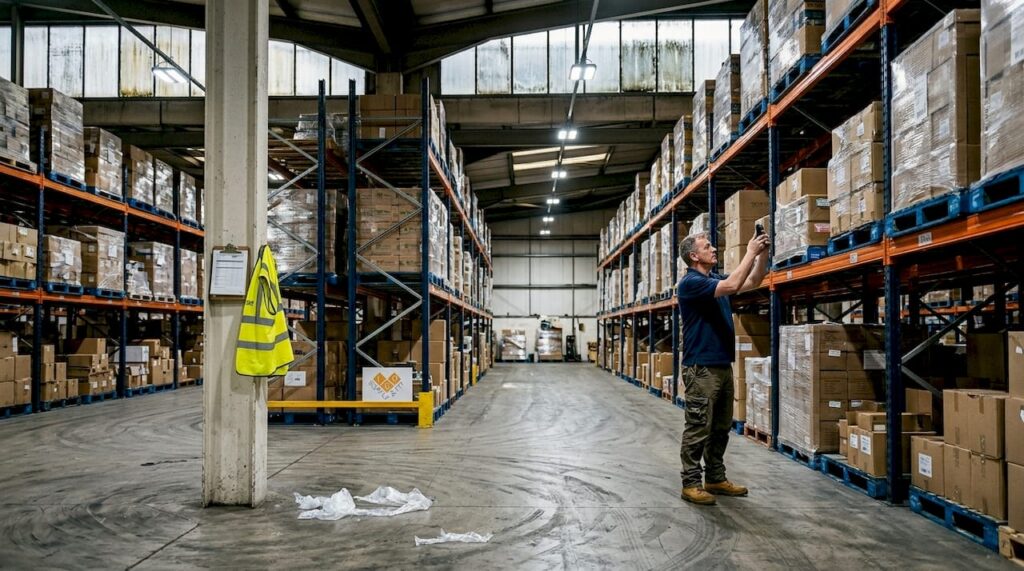
Warehouses present distinct lighting challenges that standard solutions cannot address effectively. High ceilings, often reaching 10 to 15 metres, require fixtures with powerful output and precise beam angles to deliver adequate light at floor level. Large open spaces create potential for uneven illumination and dark spots that compromise safety. Variable activity zones mean lighting needs differ dramatically across the facility. Temperature extremes in loading areas and dust accumulation in storage sections demand robust, sealed fixtures that maintain performance under harsh conditions.
Many property managers hold misconceptions about warehouse lighting that lead to poor decisions. Some believe any high output fixture will suffice, ignoring the importance of colour rendering, uniformity, and energy efficiency. Others assume older lighting systems work adequately simply because they still function, not recognising the hidden costs of excessive energy consumption and frequent maintenance. A common mistake involves installing identical lighting throughout the facility rather than tailoring solutions to specific zones and tasks.
Lighting quality directly affects worker comfort and error rates in measurable ways. Poor illumination causes eye fatigue, headaches, and reduced concentration over shift durations. Studies consistently show that inadequate lighting increases picking errors, slows task completion, and contributes to workplace accidents. Conversely, well designed lighting systems improve morale, reduce mistakes, and support faster, safer operations. The investment in quality warehouse lighting pays dividends through enhanced productivity and fewer incidents.
Key considerations for warehouse lighting include:
- Illumination levels appropriate for specific tasks and zones
- Uniformity ratios that prevent stark contrasts and shadows
- Colour rendering index values that enable accurate identification
- Fixture durability and ingress protection ratings
- Energy consumption and total cost of ownership
- Maintenance accessibility and replacement cycles
Energy efficient lighting solutions for warehouses
LED technology has revolutionised warehouse lighting by delivering exceptional energy efficiency, extended lifespan, and minimal maintenance requirements. LED lighting reduces energy consumption by up to 50% compared to traditional fluorescent or high pressure sodium lights. Modern LED fixtures produce more lumens per watt, directing light precisely where needed rather than wasting output through omnidirectional dispersion. The solid state design eliminates fragile components that fail in traditional bulbs, resulting in operational lifespans exceeding 50,000 hours. This longevity dramatically reduces replacement frequency and associated labour costs.
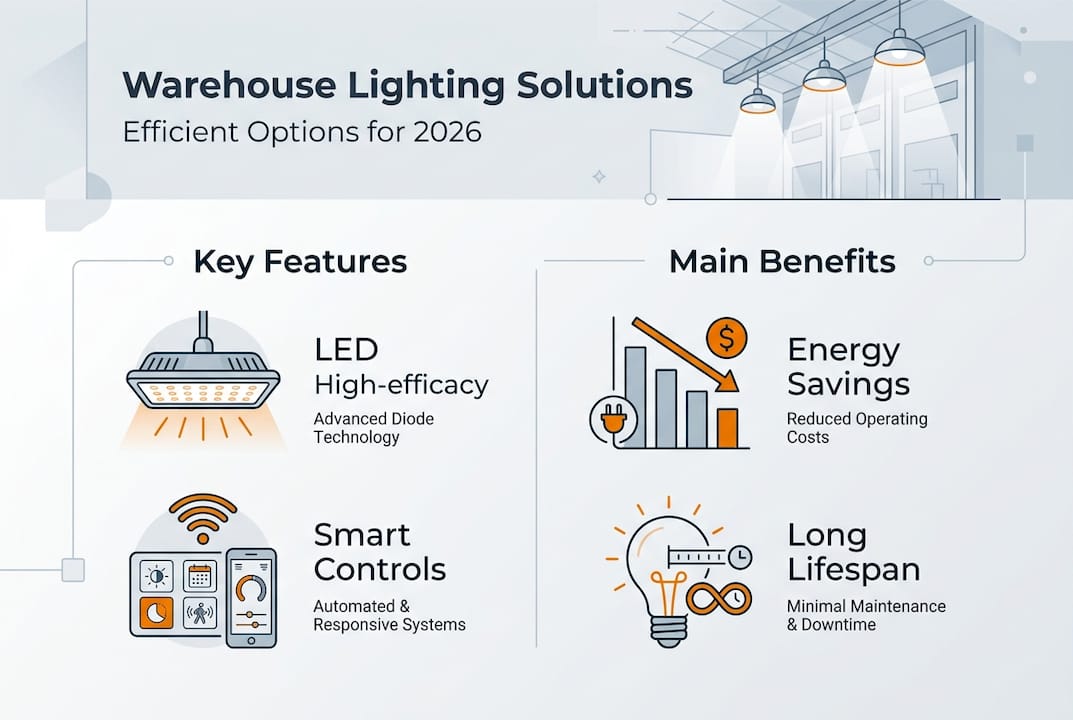
LED fixtures generate significantly less heat than conventional lighting, reducing cooling loads in temperature controlled warehouses. The instant on capability eliminates warm up periods required by sodium vapour lamps, providing immediate full brightness when needed. Dimming compatibility allows facilities to adjust lighting levels based on occupancy and natural daylight availability. Quality LED systems maintain consistent colour temperature and output throughout their lifespan, avoiding the gradual degradation that plagues older technologies.
| Lighting Type | Initial Cost | Lifespan (Hours) | Energy Use | Maintenance |
|---|---|---|---|---|
| LED | Higher | 50,000 to 100,000 | Very Low | Minimal |
| Fluorescent | Moderate | 10,000 to 20,000 | Moderate | Regular |
| Sodium Vapour | Lower | 15,000 to 24,000 | High | Frequent |
| Metal Halide | Moderate | 10,000 to 20,000 | High | Regular |
Beyond basic LED fixtures, advanced lighting solutions incorporate smart controls that maximise efficiency and functionality. Motion sensors detect activity in specific zones, dimming or switching off lights in unoccupied areas to eliminate wasted energy. Daylight harvesting systems use photocells to measure natural light levels and automatically adjust artificial lighting output accordingly. This integration reduces energy consumption during daylight hours whilst maintaining consistent illumination levels. Networked lighting management platforms enable facility managers to monitor performance, schedule operations, and identify maintenance needs remotely.
Pro Tip: Combining LED lighting with automated controls maximises savings and lighting quality by ensuring illumination matches actual needs throughout the day. Start with high traffic areas to demonstrate value before expanding coverage.
Additional energy efficient options worth considering include:
- Occupancy sensors for infrequently used storage zones
- Programmable timers aligned with shift schedules
- Zoned switching that allows independent area control
- Emergency lighting integration for safety compliance
- Wireless control systems that avoid costly rewiring
Environmental benefits extend beyond energy savings to encompass reduced carbon emissions and improved sustainability credentials. LED fixtures contain no mercury or hazardous materials, simplifying disposal and recycling. Lower energy consumption directly translates to decreased greenhouse gas emissions from power generation. Many businesses find that warehouse lighting upgrades support corporate sustainability goals whilst delivering immediate financial returns. The combination of environmental responsibility and cost reduction makes LED technology the clear choice for forward thinking property managers.
Key considerations for warehouse lighting installation and upgrades
Proper installation planning and phased upgrades are critical to balancing upfront costs with long term savings and avoiding operational disruption. Successful projects follow a structured approach that addresses technical requirements, budget constraints, and business continuity needs. The complexity of warehouse environments demands careful coordination between lighting designers, electrical contractors, and facility management teams.
Follow these steps for installing or upgrading warehouse lighting:
- Conduct a comprehensive lighting audit to assess current performance, identify deficiencies, and establish baseline energy consumption for comparison.
- Define lighting requirements for each zone based on tasks performed, safety standards, and operational needs specific to your facility.
- Select appropriate fixtures considering mounting heights, beam angles, ingress protection ratings, and compatibility with existing infrastructure.
- Develop a phased implementation plan that prioritises high impact areas whilst minimising disruption to daily operations and cash flow.
- Coordinate installation scheduling during low activity periods or planned shutdowns to reduce interference with warehouse functions.
- Commission the system properly with testing, adjustment, and staff training to ensure optimal performance from day one.
- Establish a maintenance schedule that includes regular cleaning, performance monitoring, and proactive component replacement.
Several critical factors influence the success of warehouse lighting projects. Layout planning determines fixture placement, spacing, and aiming angles to achieve uniform illumination without dark spots or excessive brightness. Brightness levels must meet or exceed recommendations for specific tasks, typically ranging from 200 lux for general storage to 500 lux for detailed picking operations. Uniformity ratios ensure smooth transitions between areas, preventing the eye strain caused by dramatic contrasts. Energy ratings and efficiency metrics guide product selection to maximise long term savings.
Compliance with UK regulations and standards cannot be overlooked during planning and installation. Health and Safety Executive guidelines specify minimum illumination levels for various workplace activities. Building regulations address electrical safety, emergency lighting, and energy efficiency requirements. British Standards provide technical specifications for lighting design, installation practices, and performance testing. Working with qualified professionals ensures your installation meets all legal obligations whilst optimising performance and safety.
Pro Tip: Conduct a lighting audit before upgrades to tailor solutions precisely to your facility’s unique needs, avoiding generic approaches that waste money on unnecessary fixtures or inadequate coverage.
Scheduling and coordination become particularly important in operational warehouses where downtime directly impacts revenue. Phased installations allow businesses to spread costs over multiple budget cycles whilst demonstrating value before committing to facility wide upgrades. Night shifts or weekend work may be necessary in 24 hour operations, requiring careful contractor selection and supervision. Clear communication with warehouse staff about timing, access requirements, and temporary lighting arrangements prevents confusion and maintains safety throughout the project.
Safety precautions during installation protect both workers and existing operations. Proper isolation of electrical circuits, use of appropriate access equipment, and coordination with material handling activities prevent accidents. Post installation maintenance guidance should cover cleaning schedules, lamp replacement procedures if applicable, and performance monitoring protocols. Many modern LED systems require minimal intervention, but establishing clear responsibilities ensures long term reliability. LED lighting tips for businesses often emphasise the importance of proper commissioning and ongoing care to realise full lifecycle benefits.
Benefits of upgrading to efficient warehouse lighting in 2026
Financial savings represent the most immediate and measurable benefit of modern warehouse lighting upgrades. Businesses upgrading to LED warehouse lighting see average energy cost reductions of 40 to 60%, translating to thousands of pounds annually for typical facilities. Reduced maintenance costs compound these savings as LED fixtures eliminate frequent bulb replacements and associated labour expenses. Bulk discount opportunities from suppliers make large scale upgrades more affordable, whilst improved lighting often qualifies for enhanced insurance rates due to better safety conditions. The combination of lower operating costs and reduced maintenance creates compelling return on investment timelines.
Improved safety and productivity deliver value that extends beyond simple cost reduction. Proper illumination reduces workplace accidents by enabling workers to identify hazards, navigate safely, and operate equipment with confidence. Studies indicate that upgraded lighting can decrease incident rates by 20 to 30% in warehouse environments. Productivity improvements result from reduced eye strain, better visibility for detailed tasks, and enhanced worker morale. Picking accuracy increases, processing times decrease, and quality control improves when employees work in well lit conditions. These operational benefits often justify lighting investments even before considering energy savings.
Environmental impact considerations have become increasingly important for UK businesses facing pressure to reduce carbon footprints and demonstrate sustainability commitment. Lower energy consumption from LED lighting directly decreases greenhouse gas emissions associated with electricity generation. A typical warehouse upgrade can eliminate 50 to 100 tonnes of CO2 emissions annually, supporting corporate environmental goals and potentially qualifying for green certifications. Reduced waste from fewer bulb replacements and the absence of hazardous materials in LED fixtures further enhance environmental credentials.
“Businesses upgrading to LED warehouse lighting see average energy cost reductions of 40 to 60%, with most installations achieving full payback within 2 to 4 years through combined energy and maintenance savings.”
Typical savings and ROI timelines for UK warehouses:
| Warehouse Size | Annual Energy Savings | Maintenance Savings | Total Annual Benefit | Payback Period |
|---|---|---|---|---|
| Small (5,000 sq ft) | £2,000 to £4,000 | £500 to £1,000 | £2,500 to £5,000 | 2 to 3 years |
| Medium (20,000 sq ft) | £8,000 to £15,000 | £2,000 to £4,000 | £10,000 to £19,000 | 2.5 to 3.5 years |
| Large (50,000 sq ft) | £20,000 to £40,000 | £5,000 to £10,000 | £25,000 to £50,000 | 2 to 4 years |
| Very Large (100,000+ sq ft) | £45,000 to £90,000 | £12,000 to £25,000 | £57,000 to £115,000 | 2 to 3.5 years |
Additional benefits that enhance the value proposition include:
- Enhanced property value through modern infrastructure
- Improved tenant satisfaction in multi occupancy facilities
- Better compliance with evolving energy regulations
- Reduced peak demand charges through lower power consumption
- Increased flexibility for future layout changes with modular lighting
The business case for warehouse lighting upgrades in 2026 has never been stronger. Rising energy costs amplify savings from efficient lighting, whilst improving technology delivers better performance at lower prices. Government focus on commercial energy efficiency may introduce additional incentives or requirements that favour early adopters. Property managers who upgrade commercial lighting now position their facilities for long term competitiveness whilst immediately reducing operational expenses. The combination of financial returns, operational improvements, and environmental benefits makes lighting upgrades one of the most cost effective facility improvements available.
Upgrade your warehouse lighting with LED Supply & Fit
Transforming your warehouse lighting delivers immediate cost savings and operational improvements that justify the investment. LED Supply & Fit specialises in energy efficient lighting solutions tailored for UK commercial properties, combining quality products with expert installation services. Our team understands the unique requirements of warehouse environments and designs systems that maximise efficiency whilst meeting safety standards.

We’ve helped businesses across the UK achieve substantial energy reductions through professional lighting upgrades. Wilson Veterinary Group benefited from our comprehensive approach to commercial lighting, whilst Utility Alliance experienced the reliability and performance of properly designed LED systems. These partnerships demonstrate our commitment to delivering solutions that work in real world conditions. Our offerings include complete lighting assessments, product selection guidance, professional installation, and ongoing support to ensure your system performs optimally throughout its lifespan. Bulk discounts on large orders make facility wide upgrades more affordable, and our Darlington location enables direct consultation and rapid project execution. Contact LED Supply & Fit early in your planning process to maximise savings and leverage our expertise for your warehouse lighting project.
Frequently asked questions
What is the difference between LED and traditional warehouse lighting?
LED lighting uses semiconductor technology that converts electricity directly into light with minimal heat waste, whilst traditional options like fluorescent and sodium vapour rely on gas discharge processes that consume more energy. LEDs last 50,000 to 100,000 hours compared to 10,000 to 24,000 hours for conventional lighting, dramatically reducing replacement frequency and maintenance costs. The superior energy efficiency of LEDs translates to 40 to 60% lower operating costs whilst providing better light quality and instant illumination without warm up delays.
How much can I save by switching to energy efficient warehouse lighting?
Upgrading to LED lighting can reduce energy costs by 40 to 60% in warehouses, with actual savings depending on facility size, operating hours, and current system efficiency. A medium sized warehouse typically saves £10,000 to £19,000 annually through combined energy and maintenance reductions. Most installations achieve full payback within 2 to 4 years, after which all savings contribute directly to improved profitability. Additional benefits include reduced cooling costs and potential insurance premium reductions due to enhanced safety.
What should I consider when planning a warehouse lighting upgrade?
Successful upgrades require careful consideration of lighting layout, brightness levels appropriate for different zones, uniformity ratios, compliance with UK regulations, installation timing, and budget allocation. Conduct a professional lighting audit to identify current deficiencies and establish performance baselines for comparison. Consult qualified lighting designers and electrical contractors who understand warehouse environments and can tailor solutions to your specific operational needs. Phased implementation allows you to spread costs whilst demonstrating value before committing to facility wide upgrades.
Are there any government incentives for upgrading warehouse lighting?
UK government schemes and local authorities occasionally offer grants, tax relief, or enhanced capital allowances for energy efficient upgrades including LED lighting installations. The availability and terms of these programmes change regularly, so check the government’s business energy efficiency resources or consult with energy advisors to explore current opportunities. Some utility companies also provide incentives or rebates for commercial customers who reduce energy consumption through lighting upgrades. Professional lighting suppliers often maintain current information about available incentives and can assist with application processes to maximise your financial benefits.