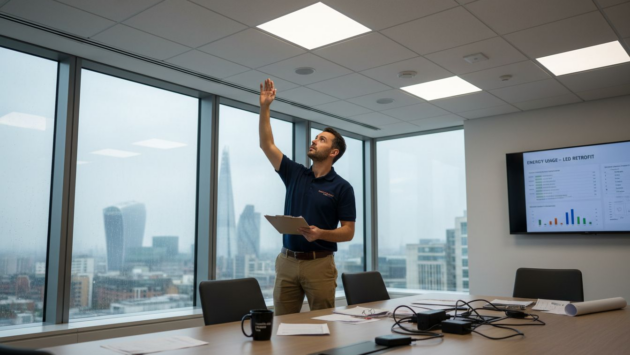
Top hotel lighting solutions for energy savings and guest comfort
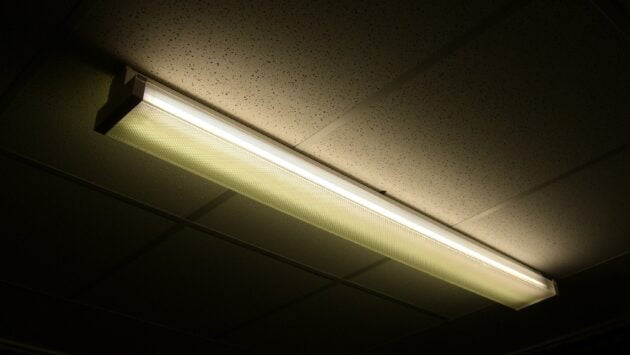
Outdated lighting is quietly draining your hotel’s budget and undermining the guest experience you’ve worked hard to build. Lighting accounts for a significant share of a hotel’s total energy bill, yet many properties are still running on inefficient halogens or fluorescent fittings that cost far more to run than they should. LED upgrades cut energy use by up to 75% compared to traditional bulbs, with lifespans reaching 25,000 to 50,000 hours. This guide walks you through the essential LED solutions for every hotel area, a clear comparison of options, real UK case studies, and the practical steps to make the right choice for your property.
Key Takeaways
| Point | Details |
|---|---|
| LEDs cut costs fast | Switching to LED lighting saves up to 75% on hotel energy bills with payback often under one year. |
| Pick the right fittings | Choose panel lights for public areas, downlights for rooms, and IP65/ATEX-rated for kitchens or hazardous spaces. |
| Add controls and optimisation | Combining LEDs with smart controls and voltage optimisation boosts savings by another 15-25%. |
| Regulations matter | Ensure all solutions meet UK standards for light quality, emergency safety and energy performance. |
How to evaluate hotel lighting solutions
Before examining the top LED solutions, it’s critical to understand what truly matters when upgrading hotel lighting. Not all LED products are equal, and choosing the wrong fitting for a space can mean poor ambience, non-compliance, or savings that never materialise.
The key criteria to assess are:
- Energy savings: Look for lumens per watt (efficacy) and verify projected savings with metering after installation.
- Ambience and colour quality: A Colour Rendering Index (CRI) above 90 is essential for dining and guest areas where food and skin tones must look their best. Warm white at 2700K suits bedrooms and restaurants perfectly.
- Regulatory compliance: UK hotels must meet Part L of the Building Regulations for energy efficiency, BS EN 12464-1 for illuminance and glare control, and BS 5266 for emergency lighting. These are not optional.
- Controls compatibility: Dimmable fittings, occupancy sensors, and daylight harvesting systems can add a further 15 to 25% in savings on top of the LED baseline.
Layered lighting is the professional standard. Ambient lighting sets the overall tone, task lighting supports specific activities like reading or check-in, and accent lighting highlights architectural features or artwork. Understanding this framework, covered in detail in our hotel lighting solutions explained guide, helps you specify the right product for each zone rather than applying a one-size-fits-all approach.
Pro Tip: Prioritise high-traffic areas such as reception, corridors, and dining rooms first. These spaces run the longest hours and deliver the fastest payback. Always verify savings with sub-metering after installation rather than relying solely on manufacturer estimates.
Essential LED lighting types for every hotel area
With selection criteria established, let’s break down the LED solutions best suited to each area of your hotel.
Different spaces have genuinely different requirements. A guest bedroom needs warmth and dimming capability. A commercial kitchen needs robust, moisture-resistant fittings that meet food safety standards. Getting this wrong is costly.
- LED panel lights: Ideal for reception areas, conference rooms, and lobbies. They deliver uniform, glare-free illumination and are available in a range of colour temperatures. Brands such as Philips and Integral offer reliable options with long warranties.
- Dimmable LED downlights: The go-to choice for guest rooms and corridors. Warm CCT (2700K) creates a relaxing atmosphere, and dimming capability lets guests control their own comfort. Bell and Integral both produce quality dimmable GU10 and fixed downlight options.
- LED batten fittings: Essential for back-of-house areas including kitchens, laundries, and storage. IP65-rated battens resist dust and moisture, making them compliant and durable in demanding environments. ATEX-rated fittings are required in any area where flammable vapours may be present.
- Decorative and feature LEDs: Bars, restaurants, and spa areas benefit from filament-style LEDs or colour-tuneable fittings that support scene-setting and brand identity.
As noted in LED trends for UK hotels, human-centric lighting is gaining traction in 2026. This approach adjusts colour temperature throughout the day to support guest wellbeing, improving sleep quality and reducing fatigue.
“The right lighting specification isn’t just about watts saved. It’s about creating an environment where guests feel comfortable, rested, and well looked after. That directly influences reviews and repeat bookings.”
| Hotel area | Fixture type | Typical wattage | Key features | IP rating |
|---|---|---|---|---|
| Reception | LED panel | 30 to 40W | Glare-free, uniform | IP20 |
| Guest rooms | Dimmable downlight | 5 to 10W | Warm CCT, dimmable | IP20 |
| Corridors | LED downlight | 7 to 12W | Motion sensor compatible | IP20 |
| Dining | Decorative/downlight | 5 to 8W | CRI >90, dimmable | IP20 |
| Kitchen/BOH | LED batten | 18 to 36W | IP65, moisture resistant | IP65 |
| Hazardous areas | ATEX batten | 20 to 40W | Explosion-rated | IP66+ |
Pro Tip: Always specify dimmable fittings at 2700K for guest-facing areas. The difference in perceived quality between a warm, dimmable room and a flat, bright one is immediately noticeable to guests and shows up in your reviews.
Smart controls and voltage optimisation: advanced savings
Beyond individual light fittings, maximising hotel energy efficiency means integrating smart technology alongside your LED upgrade.
LEDs alone deliver impressive savings. But pairing them with the right controls and infrastructure upgrades pushes those savings significantly further. Occupancy sensors and daylight harvesting add 15 to 25% on top of the LED baseline, while voltage optimisation contributes a further 8 to 15% by reducing the voltage supplied to your building to the optimal level for your equipment.
The smart controls worth considering include:
- Occupancy sensors: Automatically switch off lights in unoccupied rooms, corridors, and meeting spaces. Payback is rapid in hotels where guests frequently leave lights on.
- Daylight harvesting: Sensors detect natural light levels and dim artificial lighting accordingly, reducing unnecessary energy use near windows and skylights.
- Scene controls and dimmers: Allow staff to set pre-programmed lighting scenes for different times of day or events, improving both efficiency and guest experience.
- Centralised building management systems (BMS): Larger hotels benefit from integrating lighting controls into a BMS for full visibility and scheduling across the property.
Voltage optimisation is often overlooked but delivers consistent savings across all electrical equipment, not just lighting. For a hotel running 24 hours a day, the cumulative effect is substantial. You can read more about energy management in hospitality to understand how lighting fits into a broader efficiency strategy.
Pro Tip: Upgrade your lighting and controls at the same time rather than in separate phases. The combined ROI calculation is far stronger, and you avoid the disruption of returning to already-upgraded areas.
Comparison table: top LED solutions for each hotel space
To simplify decision-making, compare the options at a glance with this summary table.
The figures below are based on real UK hotel case studies and typical commercial LED performance data. ROI periods assume average UK commercial electricity rates and standard operating hours.
| Hotel space | Fixture type | Energy saving vs halogen | Lifespan | Dimming | Compliance note | Est. ROI |
|---|---|---|---|---|---|---|
| Reception | LED panel | Up to 70% | 50,000 hrs | Optional | Part L, BS EN 12464-1 | 1 to 2 years |
| Guest rooms | Dimmable downlight | Up to 75% | 25,000 hrs | Yes | Part L | Under 1 year |
| Corridors | LED downlight + sensor | Up to 80% | 30,000 hrs | Yes | BS 5266 (emergency) | Under 1 year |
| Dining | CRI >90 downlight | Up to 75% | 25,000 hrs | Yes | BS EN 12464-1 | 1 to 2 years |
| Kitchen/BOH | IP65 LED batten | Up to 65% | 40,000 hrs | No | IP65, food safety | 1 to 2 years |
For a broader view of cost-saving LED strategies across commercial properties, the principles translate directly to hotel operations at any scale.
UK case studies and proven ROI from LED upgrades
To back up the numbers, here’s what real UK hotels achieved after switching to the right LED solutions.
Case studies matter because they cut through the marketing and show what’s actually achievable. Two well-documented UK examples illustrate the scale of savings on offer.
Holiday Inn LED upgrade
A Holiday Inn project replaced 35W halogen MR16 lamps with 5W LED equivalents across guest rooms and public areas. The ROI was achieved in under one year, with no compromise to light quality. The project was phased to avoid disrupting guests, with work carried out room by room during lower occupancy periods.
Ramada Coventry
The Ramada Coventry LED upgrade delivered £13,321 in annual electricity savings from lighting alone. The project covered public areas, corridors, and back-of-house spaces, with IP65 fittings specified for kitchen and service areas.
“£13,321 saved annually on electricity. That’s not a projection. That’s what the Ramada Coventry achieved after a full LED upgrade.”
Key lessons from both projects:
- Phased installation minimises guest disruption and allows budgets to be spread across financial years.
- IP65 fittings in kitchens and BOH areas are non-negotiable for longevity and compliance.
- The biggest savings come from replacing the highest-wattage legacy fittings first, particularly halogens.
- Combining LED upgrades with sensor controls accelerates payback further.
For more detail on what UK commercial properties are achieving, our guide on hotel LED upgrade results covers the data in depth. You can also find practical cost saving tips from hotels that apply directly to your operation. External hotel energy savings data confirms that lighting upgrades consistently rank as the highest-ROI energy investment available to hotel operators.
Ready to upgrade your hotel lighting?
If the case studies and comparisons above have confirmed what you already suspected, the next step is straightforward. At LED Supply and Fit, we supply and install the full range of LED solutions covered in this guide, from dimmable downlights for guest rooms to IP65 battens and ATEX-rated fittings for kitchens and hazardous areas.
We work with hotel operators across the UK on projects of all sizes, offering bulk pricing, next-day delivery, and full installation support. Whether you’re upgrading a single floor or an entire property, we can help you specify the right products, meet UK compliance requirements, and achieve the fastest possible payback. Visit ledsupplyandfit.co.uk to browse our hotel lighting range, request a quote, or speak to our team about a site survey.
Frequently asked questions
What are the key benefits of switching to LED lighting in hotels?
LEDs reduce energy use by up to 75% and last up to 50,000 hours, significantly cutting both running costs and maintenance callouts compared to halogens or fluorescents.
How long does it take to achieve ROI on a hotel LED lighting upgrade?
Many UK hotels report payback in under one year. The Holiday Inn replacement of 35W halogens with 5W LEDs achieved ROI within 12 months, and the Ramada Coventry saved £13,321 annually from its upgrade.
Which hotel areas should be prioritised for LED upgrades?
Start with reception, corridors, and dining areas as these run the longest hours and deliver the fastest payback. Phased installs minimise guest disruption and allow you to spread costs sensibly.
What regulations must UK hotels meet for lighting?
UK hotels must comply with Part L for energy efficiency, BS EN 12464-1 for illuminance levels and glare control, and BS 5266 for emergency lighting provision throughout the property.