
How to choose office LED lights for cost and energy savings
Commercial office spaces across the UK face mounting pressure to reduce operational costs whilst meeting sustainability targets. Lighting accounts for a substantial portion of electricity consumption in most commercial buildings, yet many property managers overlook the transformative impact of strategic LED upgrades. Choosing the right office LED lighting involves understanding brightness requirements, colour temperature preferences, and installation considerations that directly affect both your bottom line and workplace environment. This guide walks you through selecting LED solutions that deliver measurable energy savings, improved comfort, and long-term value for your commercial property.
Key takeaways
| Point | Details |
|---|---|
| Energy reduction potential | Office LED lighting can reduce energy costs by up to 40% compared to traditional fluorescent systems |
| Selection criteria | Choose fixtures based on brightness levels, colour temperature, glare control, and compliance with UK workplace standards |
| Installation planning | Phased implementation minimises business disruption whilst ensuring comprehensive coverage |
| Quality assurance | Premium LED upgrades improve workplace comfort, meet legal lighting requirements, and include extended warranties |
| Ongoing performance | Maintenance programmes guarantee sustained savings and optimal lighting performance over time |
Understanding lighting needs and key factors
Selecting appropriate office LED lighting starts with understanding fundamental requirements that affect both employee wellbeing and regulatory compliance. The Health and Safety Executive guidance emphasises correct light levels, uniformity, and glare reduction as essential elements of workplace safety. Getting these factors right from the outset prevents costly retrofits and ensures your lighting investment delivers maximum value.

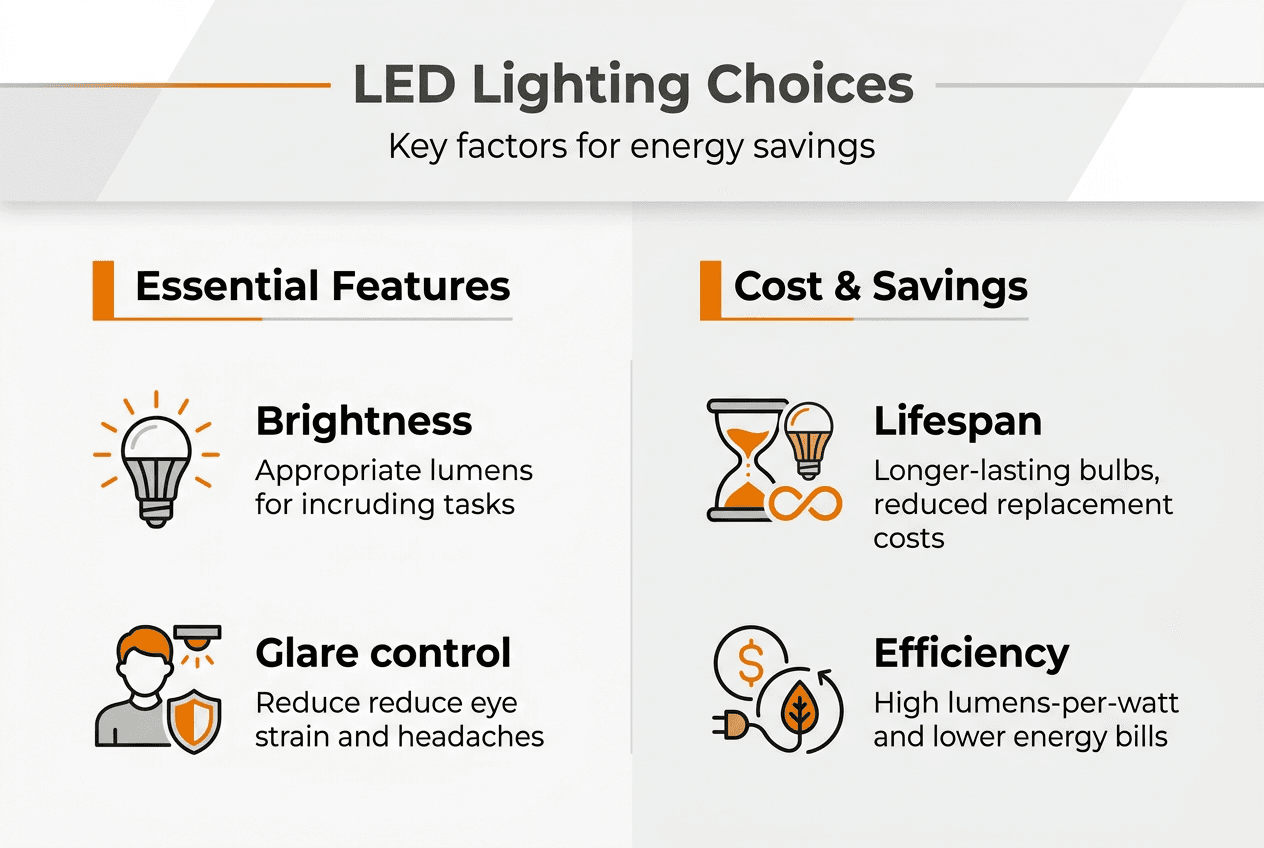
Brightness forms the foundation of effective office lighting. Measured in lumens, the light output determines how well employees can perform visual tasks without strain. Most office environments require illumination levels between 300 and 500 lux, depending on the specific tasks performed in each area. Reception areas might function adequately at 300 lux, whilst detailed work zones benefit from 500 lux or higher. Understanding these requirements helps you specify LED fixtures that provide sufficient light without over-illuminating spaces and wasting energy.
Colour temperature significantly influences workplace atmosphere and employee alertness. Measured in Kelvin, this characteristic determines whether light appears warm, neutral, or cool. For office environments, 4000K neutral white typically offers the best balance, promoting focus without creating harsh conditions. Warmer temperatures around 3000K suit breakrooms and informal spaces, whilst cooler 5000K lighting might benefit technical areas requiring high visual acuity. Selecting appropriate colour temperatures for different zones creates a more comfortable and productive workplace.
Glare control represents a critical yet frequently overlooked aspect of workplace lighting benefits. Direct glare from poorly positioned fixtures or reflected glare from computer screens causes eye strain, headaches, and reduced productivity. Quality LED panels incorporate diffusers and optical designs that distribute light evenly without creating bright spots. Meeting legal standards requires careful attention to glare indices and positioning fixtures to avoid reflection on screens and glossy surfaces.
Contrast and uniformity complete the picture of effective office lighting. Uniformity ratios measure the variation between brightest and darkest areas within a space. Poor uniformity creates visual discomfort as eyes constantly adjust between different light levels. Aim for uniformity ratios no greater than 1:3 across task areas. Proper contrast between task surfaces and backgrounds reduces eye strain whilst maintaining visual interest.
Pro Tip: Conduct a lighting audit during different times of day to identify areas where natural daylight supplements artificial lighting. This information helps you specify dimmable LED fixtures that adjust output based on available daylight, maximising energy savings without compromising illumination quality.
Planning your LED lighting upgrade
Successful LED implementation begins well before the first fixture arrives. Start with a comprehensive audit of your existing lighting systems and current energy consumption patterns. Document fixture types, quantities, operating hours, and any problem areas where lighting falls short of requirements. This baseline data enables accurate cost comparisons and helps quantify the return on investment your LED upgrade will deliver. Many commercial properties discover their existing lighting consumes far more energy than necessary, making the case for immediate action compelling.
Establishing clear budget parameters and sustainability targets guides fixture selection and project scope. Calculate your current annual lighting costs, then model potential savings based on LED efficiency gains. Consider available funding mechanisms such as Salix Finance schemes that support public sector energy efficiency projects, or commercial financing options that spread costs over time. Setting specific targets, such as reducing lighting energy use by 35% within the first year, provides measurable benchmarks for success.
Scheduling installation phases strategically minimises operational disruption whilst ensuring comprehensive coverage. Careful planning and scheduling minimise disruption during LED lighting installation in commercial properties. Breaking the project into manageable phases allows work to proceed during off-hours or in sections of your facility that can temporarily operate with reduced lighting. Consider these scheduling approaches:
- Zone-based implementation that upgrades one floor or department at a time
- Weekend or evening installations in high-traffic areas
- Coordinating LED upgrades with planned maintenance shutdowns
- Pilot programmes in smaller areas to validate fixture selections before full deployment
- Seasonal timing that avoids peak business periods
Consulting lighting design professionals early in the planning process pays dividends throughout your project. Specialists familiar with commercial lighting upgrade guide principles assess your specific office layout, ceiling heights, and task requirements to recommend optimal fixture types and positioning. They calculate precise lux levels for different zones, ensuring compliance with workplace standards whilst avoiding over-specification that wastes money. Professional input also identifies opportunities for lighting controls, sensors, and smart systems that compound your energy savings.
Pro Tip: Request detailed photometric reports showing predicted light levels throughout your space before finalising fixture selections. These computer-generated models reveal potential dark spots or over-lit areas, allowing adjustments before installation begins and ensuring your investment delivers intended results.
Choosing the right LED fixtures for your office
Office environments accommodate diverse fixture types, each offering distinct advantages for specific applications. LED panels provide uniform, glare-free illumination ideal for open-plan workspaces and meeting rooms. Recessed troffers fit standard ceiling grids, making them perfect for replacing fluorescent fixtures in suspended ceiling systems. Downlights offer focused task lighting for individual workstations, whilst spotlights accent architectural features or highlight specific areas. Understanding these options helps you match fixtures to functional requirements across your facility.
Energy efficiency ratings directly impact operating costs over your LED system’s lifespan. Measured in lumens per watt, this metric reveals how effectively a fixture converts electrical energy into visible light. Quality office LED fixtures typically deliver 100 to 140 lumens per watt, substantially outperforming the 60 to 80 lumens per watt common in fluorescent systems. LED upgrades yield substantial savings over time in commercial properties. Prioritising high-efficacy fixtures maximises energy reduction and accelerates payback periods.
Durability considerations extend beyond simple lifespan ratings. IK ratings indicate impact resistance, particularly relevant in areas where fixtures might encounter physical contact during maintenance or moving operations. Commercial-grade LED fixtures typically carry IK07 or IK08 ratings, providing adequate protection for most office environments. Thermal management features, including heat sinks and quality driver components, ensure consistent performance and prevent premature failure in spaces with limited ventilation.
Warranty coverage and manufacturer support separate premium products from budget alternatives. Look for fixtures backed by at least five-year warranties covering both LED modules and drivers. Comprehensive warranties demonstrate manufacturer confidence in product longevity whilst protecting your investment against defects. Equally important, verify that replacement parts remain available and that the supplier provides responsive technical support for troubleshooting and claims.
This comparison table helps evaluate popular LED fixture types for office applications:
| Fixture Type | Typical Output | Expected Lifespan | Cost Range | Best Applications |
|---|---|---|---|---|
| LED Panel (600x600mm) | 3000-4500 lumens | 50,000 hours | £25-£60 | Open offices, meeting rooms |
| LED Troffer (2x2ft) | 2800-4200 lumens | 50,000 hours | £30-£70 | Suspended ceiling grids |
| LED Downlight | 800-1200 lumens | 40,000 hours | £15-£35 | Task lighting, corridors |
| LED Spotlight | 600-1000 lumens | 40,000 hours | £20-£45 | Accent lighting, displays |
| Linear LED | 4000-6000 lumens | 60,000 hours | £40-£90 | Large open spaces, warehouses |
Key selection factors when comparing fixtures include:
- Compatibility with existing ceiling systems and mounting hardware
- Driver quality and whether replaceable drivers extend fixture lifespan
- Dimming capabilities and compatibility with control systems
- Colour rendering index (CRI) of 80 or higher for accurate colour perception
- Emergency lighting integration for compliance with fire safety regulations
Exploring selecting LED fixtures guidance helps refine choices based on your specific property characteristics and performance requirements.
Installation, maintenance and maximising benefits
Implementing LED lighting upgrades in stages reduces business disruption whilst allowing your team to adapt to new lighting conditions gradually. Begin with areas that operate longest hours or consume most energy, delivering immediate savings that help fund subsequent phases. Coordinate installation schedules with building occupants to minimise interference with critical business activities. Most office LED installations proceed efficiently, with experienced contractors replacing fixtures at rates of 20 to 40 units per day depending on complexity and access requirements.
Ongoing maintenance ensures your LED investment continues delivering optimal performance throughout its rated lifespan. Regular cleaning of fixture lenses and diffusers maintains light output, as accumulated dust can reduce effective illumination by 10% to 15% over time. Schedule inspections every six months to identify any failed drivers or degraded components before they affect larger areas. Unlike traditional lighting requiring frequent lamp replacements, LED systems need minimal intervention, freeing maintenance staff for other priorities.
Enrolling in a structured maintenance service plan provides scheduled checks, priority repairs, and performance guarantees. A service programme ensures hassle-free maintenance and performance guarantees for LED lighting systems. Professional service agreements typically include annual inspections, emergency callouts, and replacement of failed components under warranty terms. This proactive approach prevents small issues from escalating whilst maintaining documentation that demonstrates due diligence for insurance and compliance purposes.
Responsible disposal of replaced fluorescent tubes and fixtures supports your sustainability objectives. Fluorescent lamps contain mercury and require specialist recycling to prevent environmental contamination. Many LED suppliers offer take-back programmes or connect you with certified waste contractors who handle hazardous materials appropriately. Documenting proper disposal demonstrates environmental responsibility and ensures compliance with waste regulations.
Optimising lighting controls amplifies energy savings beyond fixture efficiency alone. Consider these enhancement opportunities:
- Daylight sensors that dim or switch off fixtures near windows when natural light suffices
- Occupancy sensors in meeting rooms, storage areas, and infrequently used spaces
- Time-based scheduling that reduces lighting levels during cleaning hours
- Zone controls allowing different areas to operate independently based on usage patterns
- Integration with building management systems for centralised monitoring and adjustment
Pro Tip: Commission a post-installation lighting survey three months after completion to verify that actual performance matches design predictions. This verification identifies any areas requiring adjustment whilst systems remain under warranty, ensuring you achieve the full energy savings and lighting quality your investment promised.
Exploring LED lighting maintenance programs options helps protect your investment and maintain peak performance throughout the system’s operational life.
How LED Supply & Fit can help you upgrade your office lighting
Transforming your commercial office lighting requires expertise that extends beyond simply installing new fixtures. LED Supply & Fit provides comprehensive assessments that evaluate your current lighting performance, identify improvement opportunities, and specify solutions tailored to your operational requirements and budget constraints.
Our professional installation services minimise disruption through careful scheduling and efficient execution, allowing your business to continue operating smoothly throughout the upgrade process. We supply quality LED products backed by extended warranties and provide ongoing support through structured LED lighting warranty and maintenance programmes. Our track record includes commercial LED projects delivering substantial energy reductions and cost savings across diverse commercial properties. Whether you manage a single office or multiple facilities, our team guides you through every stage from initial assessment through installation and ongoing optimisation, ensuring your LED investment delivers maximum value. Discover how our commercial lighting upgrade services can transform your workplace lighting whilst reducing operational costs.
Frequently asked questions
What are the benefits of LED lighting in offices?
LED office lighting delivers multiple advantages beyond simple energy reduction. Cost savings through lower electricity consumption typically reach 40% compared to fluorescent systems, with some properties achieving even greater reductions. Improved lighting quality enhances workplace comfort, reducing eye strain and supporting employee productivity. LED fixtures last substantially longer than traditional alternatives, with rated lifespans of 50,000 hours or more eliminating frequent replacement cycles. Careful installation planning ensures business operations continue uninterrupted during upgrades, whilst professional maintenance services extend performance and maximise savings throughout the system’s operational life.
How much can I save by switching to office LED lighting?
Savings potential varies based on your property size, current lighting technology, and operating hours. Mole Valley Farmers achieved over £1 million in net savings over six years after upgrading to LED across their facilities. Energy consumption typically drops by up to 40% with comprehensive LED retrofits, translating to substantial reductions in annual electricity costs. Smaller office properties might save thousands of pounds annually, whilst larger commercial estates can realise six-figure savings over multi-year periods. Conducting a detailed energy audit provides accurate projections specific to your circumstances.
How to ensure my LED lighting meets UK workplace standards?
Compliance with UK workplace lighting standards requires attention to several key factors. Follow HSE recommendations on brightness and glare control, ensuring illumination levels meet minimum requirements for different task types. Implement lighting designs that provide uniform illumination without excessive variation between areas, preventing eye strain and discomfort. Consult lighting professionals familiar with current UK regulations who can specify appropriate fixtures, positioning, and control systems. Professional design services include photometric analysis demonstrating compliance before installation begins, providing documentation for health and safety records.
What colour temperature works best for office LED lighting?
Neutral white light at 4000K provides optimal conditions for most office environments, promoting alertness and focus without creating harsh or clinical atmospheres. This colour temperature closely mimics natural daylight, supporting circadian rhythms and reducing eye strain during extended work periods. Warmer temperatures around 3000K suit breakrooms, lounges, and informal collaboration spaces where relaxed atmospheres benefit occupants. Cooler temperatures near 5000K might benefit technical areas requiring precise colour discrimination or detailed visual work. Consider specifying different colour temperatures for different zones rather than applying a single solution throughout your facility.
How long do office LED lights typically last?
Quality commercial LED fixtures typically deliver 50,000 to 60,000 hours of operational life before light output degrades to 70% of original levels. In practical terms, this translates to 10 to 15 years of service in offices operating lighting 10 to 12 hours daily. Actual lifespan depends on operating conditions, including ambient temperature, electrical quality, and fixture quality. Premium products with superior thermal management and quality drivers often exceed rated lifespans, whilst budget alternatives may fall short of specifications. Extended warranties of five years or more indicate manufacturer confidence in longevity and protect your investment against premature failure.
Can I install LED lights in existing fluorescent fittings?
Retrofit LED tubes designed for existing fluorescent fittings offer a cost-effective upgrade path in some situations. However, this approach often delivers suboptimal results compared to purpose-designed LED fixtures. Fluorescent fittings include ballasts and reflectors optimised for tube technology, compromising LED performance and efficiency. Complete fixture replacement provides better light distribution, eliminates ballast energy consumption, and ensures compatibility with modern control systems. The incremental cost difference between retrofit tubes and new fixtures often proves worthwhile given superior performance and longer-term reliability of complete LED systems designed specifically for LED technology.