Restaurant lighting ideas 2026: 70% energy saving with LEDs
Switching to LED lighting can slash your restaurant’s energy bills by up to 70% while transforming the dining experience for your customers. UK restaurant owners face mounting pressure from rising energy costs and the constant challenge of creating the perfect ambiance. LED technology offers a practical solution that addresses both concerns, delivering significant savings alongside superior lighting quality. This guide explores the most effective LED lighting options available in 2026, helping you make informed choices that enhance atmosphere and protect your bottom line.
Key takeaways
| Point | Details |
|---|---|
| Energy efficiency metrics | Lumen per watt ratings and CRI scores determine both running costs and food presentation quality. |
| Zone-specific LED types | Downlights suit dining areas, strip lights work for bars, and panels excel in kitchens. |
| Layered lighting strategy | Combining ambient, task, and accent lighting reduces costs while improving customer experience. |
| UK tax incentives | Government schemes provide faster tax relief on qualifying LED upgrades, lowering upfront investment. |
| Style-matched solutions | Fine dining venues need warm tones while casual spaces benefit from flexible, adjustable options. |
Key selection criteria for restaurant led lighting
Choosing the right LED lighting requires balancing multiple factors that affect both your operational costs and customer satisfaction. Energy efficiency metrics like lumen per watt ratios directly determine your monthly electricity bills, with modern LEDs delivering 80 to 120 lumens per watt compared to just 15 to 20 for traditional incandescent bulbs.
Color temperature and Color Rendering Index (CRI) shape how food appears on plates and influence the overall mood of your space. Warm white tones between 2700K and 3000K create inviting atmospheres in dining areas, while higher CRI values above 90 ensure dishes look appetizing and colors appear natural.
Layering different lighting types across zones optimizes both aesthetics and functionality. Your dining room needs ambient lighting for general illumination, task lighting for service areas, and accent lighting to highlight architectural features. Each layer contributes to energy savings by allowing you to illuminate only what’s needed at any moment.
Installation and maintenance costs impact your total ownership expenses beyond the initial purchase price. Factor in ceiling modifications, electrical work, and the expected lifespan of fixtures when calculating return on investment. The benefits of commercial LED lighting include dramatically reduced maintenance needs due to 50,000-hour lifespans.
UK-specific regulations and incentives can substantially reduce your upfront investment. The UK offers Enhanced Capital Allowance scheme, enabling faster tax relief for qualifying LED lighting upgrades, allowing businesses to write off the full cost against taxable profits in the year of purchase. Understanding lighting design and compliance ensures your installation meets current building regulations while maximizing available tax benefits.
Pro Tip: Create a lighting audit of your current fixtures before starting any upgrade. Document wattage, operating hours, and replacement frequency to calculate accurate savings projections and prioritize which areas deliver the fastest payback through the LED lighting selection process.
1. LED downlights for ambient lighting
LED downlights represent the most popular choice for restaurant ambient lighting, combining energy efficiency with the warm, inviting atmosphere diners expect. LED downlights use 5W to 12W, dramatically less than the 50 to 75 watts consumed by traditional halogen equivalents while producing comparable or superior light output.
Warm white color temperatures between 2700K and 3000K create the comfortable, welcoming environment that encourages guests to relax and linger over meals. These tones complement food presentation by enhancing warm colors in dishes while maintaining enough brightness for safe movement throughout the dining space.
Flexible ceiling installation makes downlights adaptable to nearly any restaurant layout. Recessed mounting creates clean, modern aesthetics without protruding fixtures, while adjustable models allow you to direct light precisely where needed. Spacing fixtures evenly across the ceiling provides consistent ambient illumination without dark spots or harsh shadows.
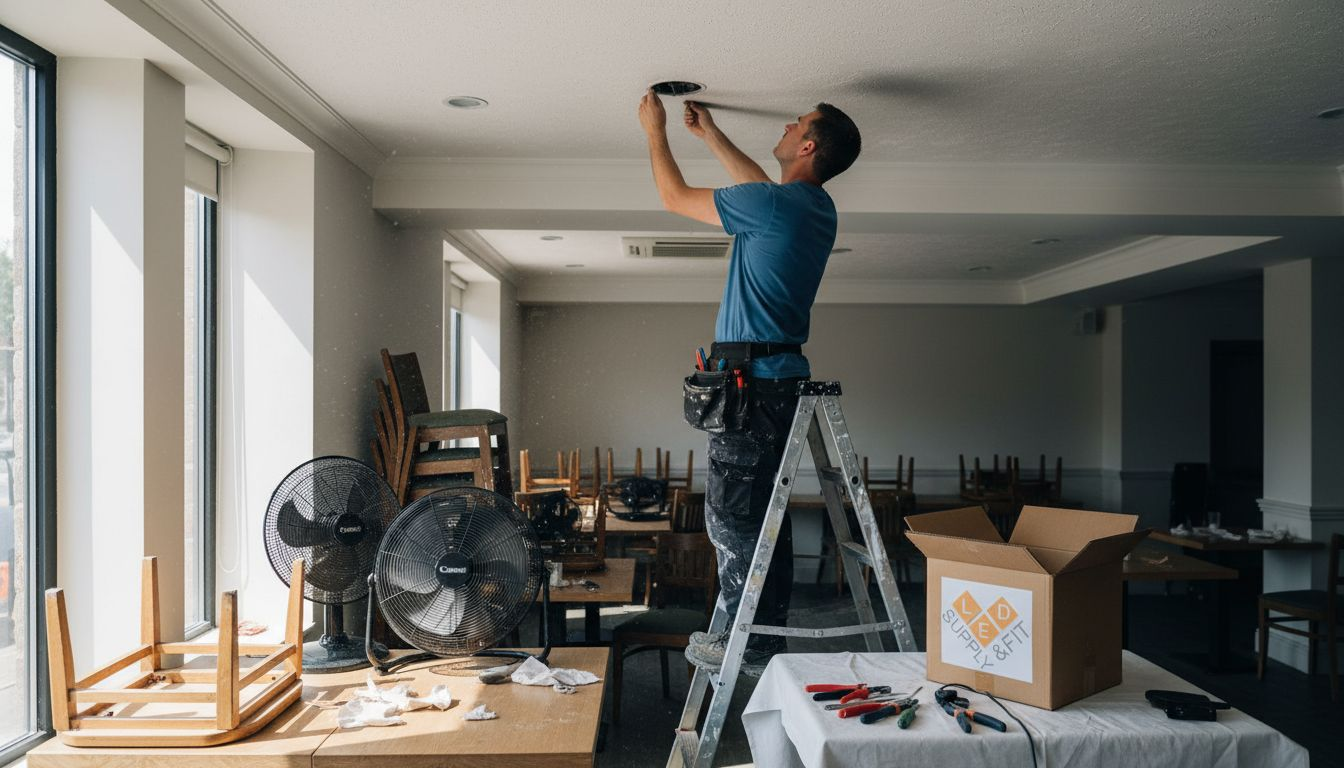
Full-service restaurants particularly benefit from downlights’ combination of mood setting and practical efficiency. You can achieve the sophisticated ambiance fine dining customers expect while operating at a fraction of the energy cost of traditional lighting systems.
Pro Tip: Invest in dimmable downlights to fine-tune atmosphere throughout service periods. Brighter settings during setup and cleanup save staff time, while dimmed lighting during peak dining hours enhances intimacy and saves additional energy during your highest-traffic periods.
2. Track lighting for adjustable accent and task lighting
Track lighting delivers versatile directional illumination that adapts to changing needs in dynamic restaurant environments. Track lighting modules average 8W to 15W and offer adjustable positioning to highlight specific features or provide focused task lighting exactly where required.
This flexibility makes track lighting ideal for accentuating artwork, architectural details, or special tables where you want to draw attention. Restaurant owners hosting private events or changing seasonal displays particularly value the ability to redirect light without rewiring or installing new fixtures.
UK restaurants with flexible layouts benefit most from track systems that support evolving space usage. You can reconfigure dining areas for different party sizes or event types while maintaining optimal lighting by simply repositioning individual track heads along the rail.
The adjustable nature supports sophisticated layered lighting strategies by combining ambient illumination from ceiling fixtures with precisely directed accent lighting. This approach creates visual interest and depth while maintaining energy efficiency by illuminating only focal points that enhance the dining experience.
Multi-use spaces requiring different lighting for lunch service, dinner ambiance, and late-night bar operations gain particular advantage from track systems’ adaptability. A single installation serves multiple functions throughout your operating hours without requiring separate fixture sets.
3. LED strip lighting for bars and shelving
LED strip lighting provides modern, continuous illumination in tight spaces where traditional fixtures won’t fit. LED strip lighting consumes 4W to 10W per meter while creating sleek accent lighting that enhances bar areas and showcases premium bottles or decorative elements.
The clean, contemporary aesthetic appeals to customers while serving practical purposes. Under-counter installation illuminates work surfaces for bartenders preparing drinks, improving both speed and accuracy during busy service periods. The consistent light output along the entire strip eliminates shadows and dark spots that plague spotlights or individual bulbs.
Perceived cleanliness improves dramatically when bars and shelving receive proper illumination. Customers notice dust, spills, and disorder less when lighting highlights products and glassware rather than work surfaces. This perception boost costs minimal energy while significantly enhancing your establishment’s professional image.
Installation simplicity makes strip lighting accessible even for venues on tight budgets. Adhesive backing allows mounting under counters, behind bars, or along shelving edges without extensive electrical work. Low voltage DC operation adds safety in areas where liquid spills pose risks.
Contemporary restaurant styles emphasizing clean design lines and modern materials particularly benefit from strip lighting’s minimal visual footprint. The fixtures disappear while their light effect creates ambiance and draws attention to featured elements.
Summary comparison of LED lighting options
Understanding how different LED types compare across key attributes helps you make informed decisions for your specific restaurant needs. The table below synthesizes power consumption, color characteristics, and best applications to support quick evaluation.
| LED Type | Power Usage | Color Temp/CRI | Best Use Scenario | Installation | Maintenance |
|---|---|---|---|---|---|
| Downlights | 5W to 12W per fixture | 2700K to 3000K, CRI 80 to 95 | Dining room ambient lighting | Moderate, requires ceiling access | Low, 50,000-hour lifespan |
| Track Lighting | 8W to 15W per module | 3000K to 4000K, CRI 85 to 95 | Accent lighting, flexible task lighting | Simple, mounts to ceiling track | Low, adjustable without rewiring |
| Strip Lights | 4W to 10W per meter | 2700K to 6000K, CRI 80 to 90 | Bar under-lighting, shelving accent | Very simple, adhesive mounting | Very low, solid state design |
| Panel Lights | 36W to 48W per panel | 4000K to 5000K, CRI 80 to 90 | Kitchen task lighting, prep areas | Moderate, replaces ceiling tiles | Low, 50,000-hour lifespan |
Energy savings compared to traditional lighting vary by fixture type but consistently deliver substantial reductions. LED panel lights consume 40% to 50% less energy than fluorescent alternatives while providing shadow-free illumination with extended lifespans that reduce replacement costs.
The data reveals clear patterns for optimization. Dining areas benefit most from warm downlights in the 2700K to 3000K range, bars maximize impact with strip lighting under 10W per meter, and kitchens require brighter panel lights in the 4000K to 5000K spectrum for food safety and preparation accuracy.
Installation complexity influences total project costs beyond fixture prices. Strip lights offer the simplest deployment for immediate impact, while downlights and panels require more extensive work but deliver superior long-term value through lighting efficiency improvements.
Maintenance costs drop dramatically across all LED types compared to traditional options. The 50,000-hour lifespan common to quality LEDs means fixtures operate for over 11 years at 12 hours daily use before requiring replacement. This longevity eliminates the recurring expense and service disruption of frequent bulb changes inherent to incandescent and fluorescent systems, as detailed in LED lighting trends comparison data.
Situational recommendations for choosing the right lighting
Matching LED lighting types to your specific restaurant style and operational needs optimizes both ambiance and cost savings. Fine dining establishments benefit most from warm downlights in the 2700K to 3000K range, creating intimate atmospheres that encourage guests to linger over multi-course meals. Casual dining spaces gain flexibility from track lighting systems that adapt to changing layouts and event requirements.
Kitchen and bar areas demand different solutions than dining rooms due to task lighting needs and safety considerations. Commercial kitchens require bright, shadow-free illumination in the 4000K to 5000K range from panel lights that meet food safety standards while consuming minimal energy. Bars maximize visual impact with strip lighting under counters and behind shelving, showcasing premium bottles while providing practical work surface illumination for staff.
Multi-use spaces hosting different functions throughout the day need adaptable lighting schemes. Restaurants serving lunch, dinner, and late-night drinks benefit from track systems offering adjustable direction and intensity. Dimmable controls allow you to shift from bright, energetic lunch service to intimate dinner ambiance without separate fixture installations.
Budget planning should account for total ownership costs including installation labor and ongoing maintenance, not just fixture prices. UK restaurants can save up to 65% on energy costs by upgrading to tailored LED solutions, with payback periods typically ranging from 18 to 36 months depending on current fixture types and operating hours.
Exploring UK tax incentives reduces upfront investment barriers for comprehensive upgrades. The Enhanced Capital Allowance scheme allows you to write off qualifying LED lighting against taxable profits in the purchase year rather than depreciating over multiple years. This accelerated relief improves cash flow and shortens effective payback periods, making comprehensive upgrades more financially accessible through energy saving lights benefits.
Pro Tip: Install occupancy sensors in low-traffic areas like restrooms and storage rooms to capture additional savings beyond LED efficiency gains. Pair sensors with dimming controls in dining areas to automatically adjust light levels based on natural daylight availability, maximizing efficiency while maintaining consistent ambiance. These smart controls typically add 15% to 25% additional savings beyond the base LED upgrade as outlined in LED lighting benefits for venues.
Discover energy-efficient LED solutions with LED Supply & Fit
Transforming your restaurant lighting requires expertise in both product selection and professional installation to achieve optimal results. LED Supply & Fit specializes in commercial LED solutions tailored for UK hospitality venues, combining energy efficiency with ambiance control that enhances customer experience.
Our team understands the unique challenges restaurant owners face balancing operational costs with atmosphere creation. We deliver custom lighting designs that optimize both factors, ensuring your investment pays dividends through reduced energy bills and improved dining environments.
Explore our portfolio of successful LED lighting installations for UK businesses to see real-world results in hospitality settings. Each project demonstrates our commitment to quality, compliance with UK energy regulations, and maximizing available tax incentives.
Ready to upgrade your restaurant lighting? Request a custom LED lighting quote today for a personalized assessment of your space. Visit LED Supply & Fit to discover comprehensive solutions backed by professional support throughout your lighting transformation journey.
Frequently asked questions about restaurant LED lighting
What is the ideal color temperature for restaurant LED lighting?
Dining areas perform best with warm white temperatures between 2700K and 3000K, creating inviting atmospheres that flatter food presentation. Kitchens require cooler 4000K to 5000K lighting for accurate food preparation and safety compliance.
How can LED lighting improve food presentation in dining areas?
High CRI values above 90 render food colors naturally and appetizingly, making dishes appear fresh and vibrant. Proper lighting angles eliminate harsh shadows on plates while warm tones enhance the appearance of proteins and warm-colored ingredients.
Are there tax benefits for UK restaurants switching to LED lighting?
The Enhanced Capital Allowance scheme allows businesses to claim 100% first-year capital allowances on qualifying energy-efficient equipment including LED lighting. This accelerated tax relief improves cash flow by reducing taxable profits in the purchase year rather than spreading deductions over multiple years.
What maintenance is required for LED lighting in commercial kitchens?
LED fixtures require minimal maintenance beyond periodic cleaning to remove cooking residue and grease buildup. The 50,000-hour lifespan eliminates frequent bulb changes, with most installations operating 10 to 15 years before requiring fixture replacement.
Can dimmable LED lights help reduce energy bills further?
Dimmable LEDs reduce power consumption proportionally to output levels, delivering 15% to 25% additional savings beyond standard LED efficiency. Pairing dimmers with occupancy sensors and daylight harvesting controls maximizes savings while maintaining consistent ambiance through LED lighting cost-saving tips strategies.