Sustainability in lighting explained: UK business guide
Many UK businesses believe that simply switching to any LED bulb makes their lighting sustainable. The reality is more nuanced. True sustainability in commercial lighting encompasses energy efficiency, product lifespan, material sourcing, and end-of-life recycling. Without understanding these factors, you may invest in solutions that fail to deliver the environmental and financial benefits your business needs. This guide clarifies what sustainability in lighting truly means, explains why LED technology leads the market, and provides practical steps to select, install, and maintain lighting systems that reduce costs whilst supporting your environmental goals.
Key Takeaways
| Point | Details |
|---|---|
| Lifecycle thinking | Sustainability in lighting requires considering material sourcing, production, operation, and end of life to maximise environmental and financial gains. |
| LED efficiency edge | LED lighting converts the vast majority of electricity into visible light, delivering substantial energy savings. |
| End of life recycling | Designs that enable recycling and responsible disposal reduce waste and support a circular economy. |
| Maintenance and controls | Proper maintenance and smart controls maximise efficiency and extend the service life of lighting installations. |
What sustainability in lighting really means for UK businesses
Sustainability in commercial lighting extends far beyond the watts consumed during operation. It encompasses the entire lifecycle of your lighting system, from raw material extraction and manufacturing processes through daily energy consumption, maintenance requirements, and eventual disposal or recycling. For UK businesses, this holistic view matters because energy efficient lighting practices directly impact your operational costs, regulatory compliance, and corporate responsibility credentials.
The environmental footprint of your lighting choices affects multiple areas of business operations. Manufacturing processes determine the initial carbon cost of production. Daily energy consumption drives your electricity bills and carbon emissions. Product lifespan influences how frequently you generate waste through replacements. Material composition affects recyclability at end of life. Understanding these interconnected factors helps you make informed decisions that benefit both your bottom line and environmental targets.
Key sustainability factors in commercial lighting include:
- Energy efficiency ratings that indicate how effectively electricity converts to usable light
- Product lifespan measured in operating hours, affecting replacement frequency and waste generation
- Material composition including recyclable components and absence of hazardous substances like mercury
- Manufacturing processes that minimise carbon emissions and environmental damage
- End-of-life recyclability ensuring responsible disposal rather than landfill contribution
UK businesses face increasing pressure to demonstrate environmental responsibility. Customers, investors, and regulatory bodies expect tangible sustainability commitments. Your lighting choices provide visible evidence of these commitments whilst delivering measurable cost reductions. Sustainable lighting supports your brand reputation, helps meet environmental certification requirements, and positions your business as a responsible corporate citizen. The financial benefits reinforce environmental gains, creating a compelling business case for upgrading to truly sustainable lighting solutions.
Why LED lighting is the cornerstone of sustainable commercial lighting
LED technology represents the most significant advancement in commercial lighting efficiency in decades. Unlike traditional incandescent bulbs that waste 90% of energy as heat, LEDs convert the vast majority of electrical energy directly into visible light. This fundamental efficiency advantage translates to immediate operational savings. Switching to LED lighting reduces energy costs by up to 65%, making it the most financially viable sustainable lighting choice for UK businesses.
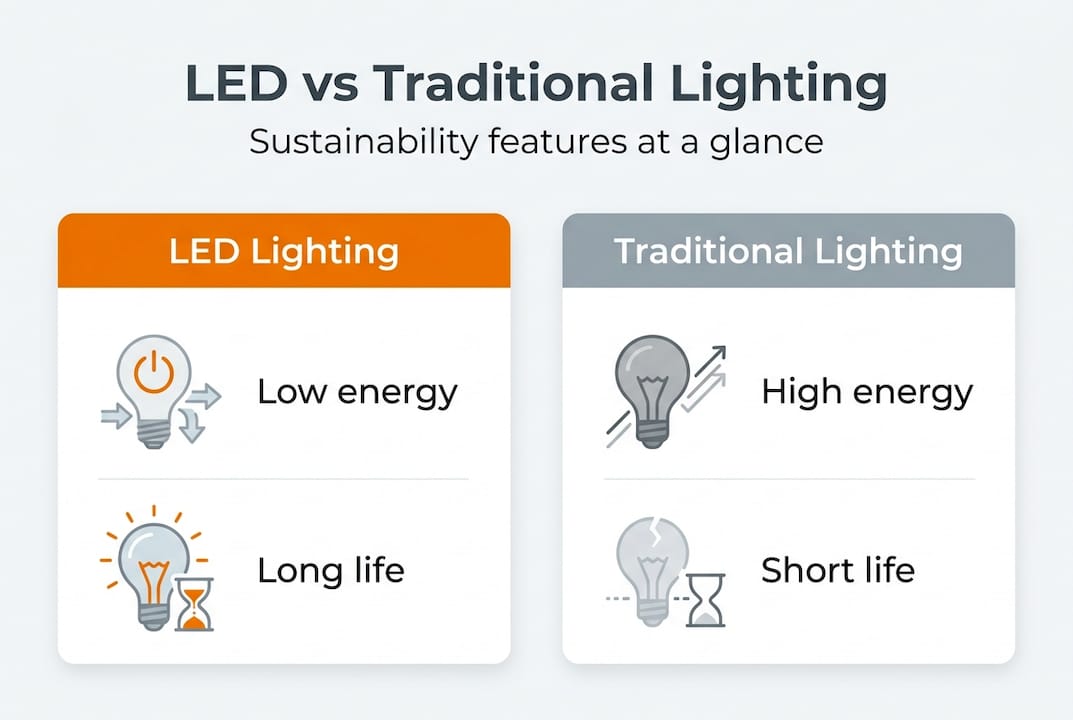
The longevity of LED systems amplifies their sustainability credentials. Whilst traditional fluorescent tubes require replacement every 10,000 to 15,000 hours, quality LED fixtures operate effectively for 50,000 hours or more. This extended lifespan reduces replacement frequency by up to 80%, cutting both material waste and labour costs associated with maintenance. Fewer replacements mean less packaging waste, reduced transportation emissions, and lower disposal requirements throughout your building’s operational life.
Maintenance demands decrease substantially with LED installations. Traditional lighting systems require scheduled bulb replacements, ballast repairs, and frequent attention to prevent failures that disrupt business operations. LED systems operate reliably with minimal intervention, freeing your facilities team to focus on higher-value activities. The reduced maintenance burden translates to lower labour costs and fewer service interruptions that could affect customer experience or employee productivity.
| Lighting type | Energy efficiency | Average lifespan | Maintenance frequency | Environmental impact |
|---|---|---|---|---|
| LED | 80-90 lumens per watt | 50,000+ hours | Minimal | Lowest carbon footprint, fully recyclable |
| Fluorescent | 60-70 lumens per watt | 10,000-15,000 hours | Moderate | Contains mercury, requires special disposal |
| Incandescent | 10-17 lumens per watt | 1,000-2,000 hours | High | High energy waste, frequent replacements |
Pro Tip: Select LED fixtures with colour temperatures between 4000K and 5000K for office environments. This range mimics natural daylight, enhancing employee alertness and productivity whilst maintaining excellent energy efficiency. Warmer temperatures around 3000K suit hospitality settings where ambiance matters more than task performance.
The environmental advantages extend beyond operational efficiency. LED fixtures contain no mercury or other hazardous materials, eliminating the specialised disposal requirements and environmental risks associated with fluorescent lighting. Modern LED components are largely recyclable, with aluminium housings, glass lenses, and electronic components all recoverable through proper recycling channels. This end-of-life consideration completes the sustainability cycle, ensuring your lighting choices remain environmentally responsible throughout their entire lifecycle.
Evaluating and selecting sustainable lighting solutions: key considerations
Selecting the right sustainable lighting requires a systematic approach tailored to your specific commercial environment. Generic solutions rarely deliver optimal results because lighting needs vary dramatically across different business types, building layouts, and operational patterns. A comprehensive evaluation ensures your investment delivers maximum environmental and financial returns whilst meeting practical illumination requirements.
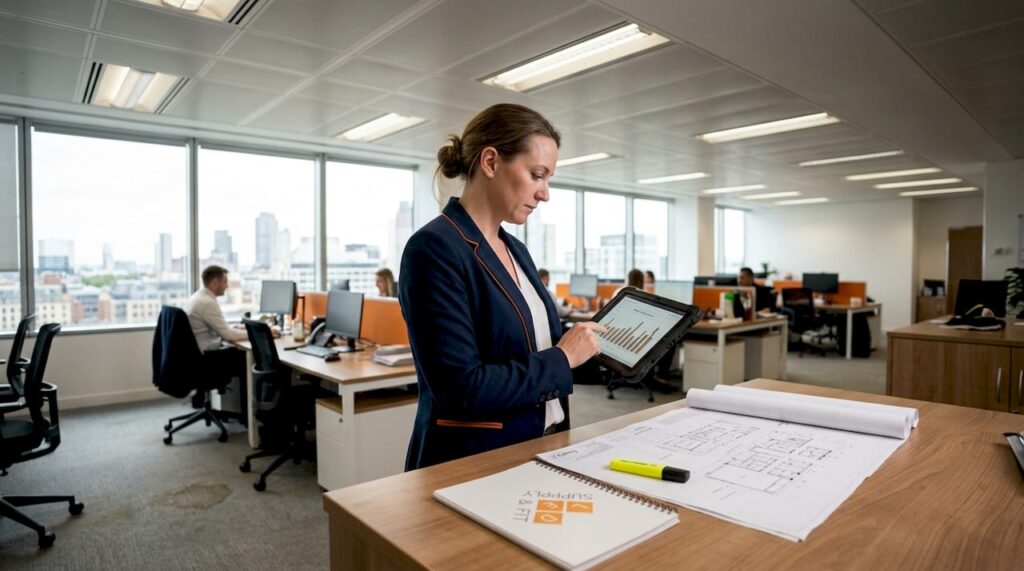
Begin by assessing your current lighting infrastructure and usage patterns. Document existing fixtures, energy consumption, maintenance costs, and performance issues. Identify areas where lighting quality affects business operations, whether that’s customer-facing retail spaces, task-intensive office environments, or safety-critical warehouse zones. This baseline assessment reveals opportunities for improvement and helps quantify potential savings from sustainable upgrades.
Energy efficiency ratings provide crucial comparison data when evaluating lighting products. Look for fixtures with high lumens-per-watt ratios, indicating superior light output relative to energy consumption. Certifications from recognised bodies like the Lighting Industry Association validate performance claims and ensure products meet UK standards. For businesses pursuing environmental certifications such as BREEAM or LEED, selecting appropriately certified lighting products simplifies the documentation process and supports your broader sustainability goals.
The total cost of ownership model provides the most accurate financial picture. Upfront purchase prices represent only a fraction of lifetime costs. Factor in installation expenses, ongoing energy consumption, maintenance requirements, and expected replacement schedules. Cost-saving strategies consider total ownership costs, not just initial investment, revealing the true financial impact of your lighting choices over five, ten, or fifteen-year periods.
Follow this structured selection process:
- Conduct a comprehensive audit of existing lighting including energy bills, maintenance logs, and performance complaints
- Define clear sustainability and financial goals with specific targets for energy reduction and cost savings
- Research available LED technologies suitable for your commercial environment and operational requirements
- Calculate projected savings using actual energy rates and realistic usage patterns for your business
- Choose certified products from reputable suppliers with proven commercial lighting expertise and warranty support
Supplier expertise matters significantly for commercial installations. Experienced lighting specialists understand the nuances of different business environments and can recommend solutions that balance sustainability, performance, and budget constraints. They provide technical support during selection, ensure proper installation, and offer ongoing maintenance services that protect your investment. Partnering with knowledgeable suppliers transforms a product purchase into a comprehensive lighting solution that delivers sustained benefits.
Maximising sustainability benefits through installation, controls, and maintenance
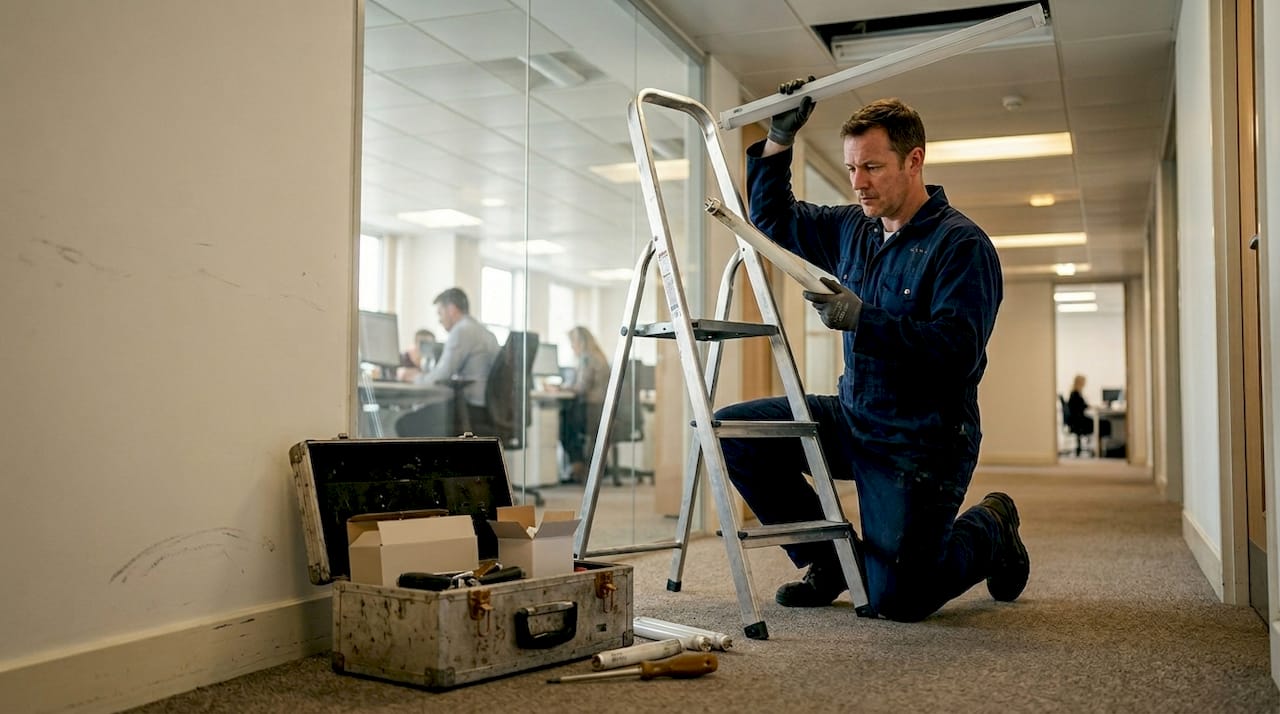
Even the most efficient LED fixtures underperform without proper installation. Professional installation ensures correct positioning for optimal light distribution, proper electrical connections that prevent energy losses, and compliance with UK building regulations and safety standards. Poorly installed lighting wastes energy through inefficient beam angles, creates dark spots requiring additional fixtures, and may pose safety risks that lead to costly remediation. Investing in expert installation protects your sustainability goals and ensures your lighting system performs as designed.
Lighting controls represent one of the most overlooked opportunities for enhancing sustainability. Basic LED installations deliver substantial energy savings, but intelligent controls amplify those benefits by eliminating unnecessary illumination. Motion sensors detect occupancy and switch lights off in unoccupied spaces, preventing energy waste in storage areas, meeting rooms, and corridors. Daylight sensors adjust artificial lighting based on available natural light, reducing consumption during bright daytime hours. Timers ensure lights operate only during business hours, preventing overnight energy waste.
Implementing lighting controls increases savings by up to 30% beyond the efficiency gains from LED technology alone. This additional reduction comes from behavioural optimisation rather than technical efficiency, addressing the reality that lights often remain on when unnecessary. For businesses operating across multiple locations or managing large facilities, centralised control systems provide visibility into energy consumption patterns and enable remote management that optimises performance across your entire property portfolio.
Regular maintenance sustains the performance advantages of your LED investment. Whilst LED systems require less maintenance than traditional lighting, they still benefit from periodic attention:
- Clean fixtures quarterly to remove dust and debris that reduce light output and efficiency
- Inspect electrical connections annually to identify loose wiring or corrosion that affects performance
- Test control systems monthly to ensure sensors and timers function correctly
- Replace failed components promptly to maintain consistent illumination and prevent strain on remaining fixtures
- Document maintenance activities to track system performance and identify recurring issues
Pro Tip: Integrate your lighting system with your building management system for comprehensive energy oversight. Modern LED controls communicate via standard protocols, enabling centralised monitoring of lighting performance alongside HVAC, security, and other building systems. This integration reveals energy consumption patterns, identifies optimisation opportunities, and simplifies reporting for environmental certifications.
Preventive maintenance programmes extend system lifespan and sustain efficiency levels. Scheduled inspections catch minor issues before they escalate into costly failures. Regular cleaning maintains optimal light output, reducing the temptation to over-illuminate spaces to compensate for dirty fixtures. Documentation creates a performance history that helps predict replacement needs and budget for future upgrades. These proactive approaches maximise the return on your sustainable lighting investment whilst minimising operational disruptions.
Explore tailored sustainable lighting solutions for your business
Transforming your commercial lighting from concept to reality requires expert guidance and quality products designed for business environments. LED Supply & Fit specialises in helping UK businesses reduce energy consumption whilst enhancing lighting quality across shops, offices, hotels, restaurants, gyms, and warehouses. Their curated selection of commercial LED lighting products combines proven efficiency with durability suited to demanding commercial applications.
Their experienced team provides personalised consultations to identify the most effective lighting solutions for your specific business needs. Whether you’re upgrading a single location or managing a multi-site rollout, they offer technical expertise in reducing energy consumption through strategic lighting design and intelligent controls. Case studies like the Wilson Veterinary Group project demonstrate their capability to deliver sustainable lighting upgrades that meet both environmental and operational objectives. Contact their team to discuss bulk order benefits and tailored support for your commercial property.
Frequently asked questions
Is LED lighting more sustainable than traditional options?
Yes, LED lighting significantly outperforms traditional incandescent and fluorescent options across all sustainability metrics. LEDs reduce energy use by up to 65% compared to conventional lighting whilst lasting five to ten times longer. This extended lifespan dramatically reduces replacement frequency, cutting material waste and disposal requirements. Unlike fluorescent tubes, LEDs contain no mercury or hazardous materials, eliminating environmental risks during disposal. The combination of superior energy efficiency, extended lifespan, and safe materials makes LED technology the most sustainable commercial lighting choice available to UK businesses.
How can lighting controls improve sustainability in commercial buildings?
Lighting controls optimise energy consumption by ensuring lights operate only when and where needed. Motion sensors detect occupancy and automatically switch off lights in unoccupied spaces like storage rooms, meeting rooms, and corridors. Daylight sensors adjust artificial lighting intensity based on available natural light, reducing consumption during bright conditions. Controls like timers and sensors boost energy savings by 30% beyond the efficiency gains from LED fixtures alone. These automated systems eliminate energy waste from human forgetfulness whilst maintaining optimal lighting conditions for business operations. The environmental benefits compound over time as controls continuously optimise energy use without requiring ongoing management attention.
What should UK businesses consider when choosing sustainable lighting products?
Prioritise energy efficiency ratings measured in lumens per watt, indicating how effectively products convert electricity to light. Verify environmental certifications like BREEAM that validate sustainability claims and support your broader environmental goals. Evaluate total cost of ownership including purchase price, installation costs, energy consumption, and maintenance requirements over the expected lifespan. Check warranty terms and supplier reputation, as commercial lighting represents a long-term investment requiring reliable support. Consider how products integrate with existing or planned control systems to maximise efficiency gains. Choose suppliers with proven commercial lighting expertise who can provide technical guidance tailored to your specific business environment and operational requirements.
How quickly do sustainable lighting upgrades pay for themselves?
Payback periods vary based on current lighting infrastructure, energy rates, and operating hours, but most commercial LED upgrades deliver positive returns within two to four years. Businesses operating long hours or with high energy costs see faster payback, sometimes recovering investments within 18 to 24 months. The calculation should include energy savings, reduced maintenance costs, and any available grants or tax incentives for energy efficiency improvements. Beyond financial payback, sustainable lighting delivers immediate benefits including improved light quality, enhanced employee productivity, and reduced carbon footprint. These broader advantages provide value from day one, even before the investment fully pays for itself through direct cost savings.
Can existing lighting fixtures be retrofitted with sustainable LED technology?
Many traditional fixtures accept LED retrofit kits or replacement bulbs, offering a cost-effective upgrade path without complete fixture replacement. However, retrofitting has limitations compared to purpose-built LED fixtures. Retrofit solutions may not deliver the full efficiency potential of integrated LED systems, and they retain older fixture housings that may not optimise LED performance. For comprehensive sustainability benefits, replacing entire fixtures with modern LED systems typically provides superior results. This approach eliminates compatibility issues, maximises energy efficiency, and ensures optimal light distribution designed specifically for LED technology. Consult with lighting specialists to determine whether retrofitting or full replacement better suits your specific situation, budget constraints, and sustainability goals.