
Types of energy saving bulbs: a practical guide
TL;DR:
- Choosing the correct energy-saving bulb is essential for reducing long-term costs and environmental impact. LED bulbs are the most efficient, long-lasting, and versatile option across commercial and residential settings. Combining the right bulb type with smart controls maximizes energy savings and operational efficiency.
Choosing the wrong bulb for your space is one of the most common and costly mistakes in commercial and residential lighting. With several types of energy saving bulbs on the market, each with different efficiency levels, lifespans, and applications, making an informed choice genuinely matters. Whether you are fitting out a warehouse, upgrading a hotel lobby, or replacing bulbs in a small office, understanding what you are buying determines how much you save and how soon you recoup the cost. This guide covers every major type, compares them directly, and tells you which suits each scenario.
1. Key criteria for choosing energy saving bulbs
Before comparing any specific bulb type, you need a clear framework for evaluation. Without one, you risk optimising for the wrong thing, such as the lowest price on the shelf rather than the lowest cost over five years.
The most reliable measure of efficiency is lumens per watt, not wattage alone. A bulb that produces 1,000 lumens from 10 watts is dramatically better than one requiring 20 watts for the same output. Here are the core criteria worth applying to any bulb you consider:
- Luminous efficacy: Measured in lumens per watt (lm/W). Higher is better.
- Lifespan: How many hours the bulb will last under typical use. Longer life means fewer replacements and lower maintenance costs.
- Upfront versus lifecycle cost: A cheaper bulb that lasts two years often costs more over time than a pricier one lasting 20.
- Environmental impact: Some bulb types contain hazardous materials requiring specialist disposal.
- Dimming and fixture compatibility: Not all bulbs work with existing dimmers or enclosed fittings.
- Application suitability: Industrial, commercial, and residential settings have distinct light output, colour temperature, and durability requirements.
Pro Tip: When assessing how to choose energy bulbs for a commercial property, calculate the total cost of ownership across three to five years rather than comparing purchase prices. Replacement labour and energy draw matter far more than the sticker price.
2. LED bulbs: the leading option for energy efficient lighting
LED (light-emitting diode) bulbs are the clear frontrunner across nearly every application. The numbers back this up: LEDs use at least 75% less energy and last up to 25 times longer than traditional incandescent bulbs. For businesses running lights across extended hours, that translates into significant savings on both energy bills and maintenance schedules.
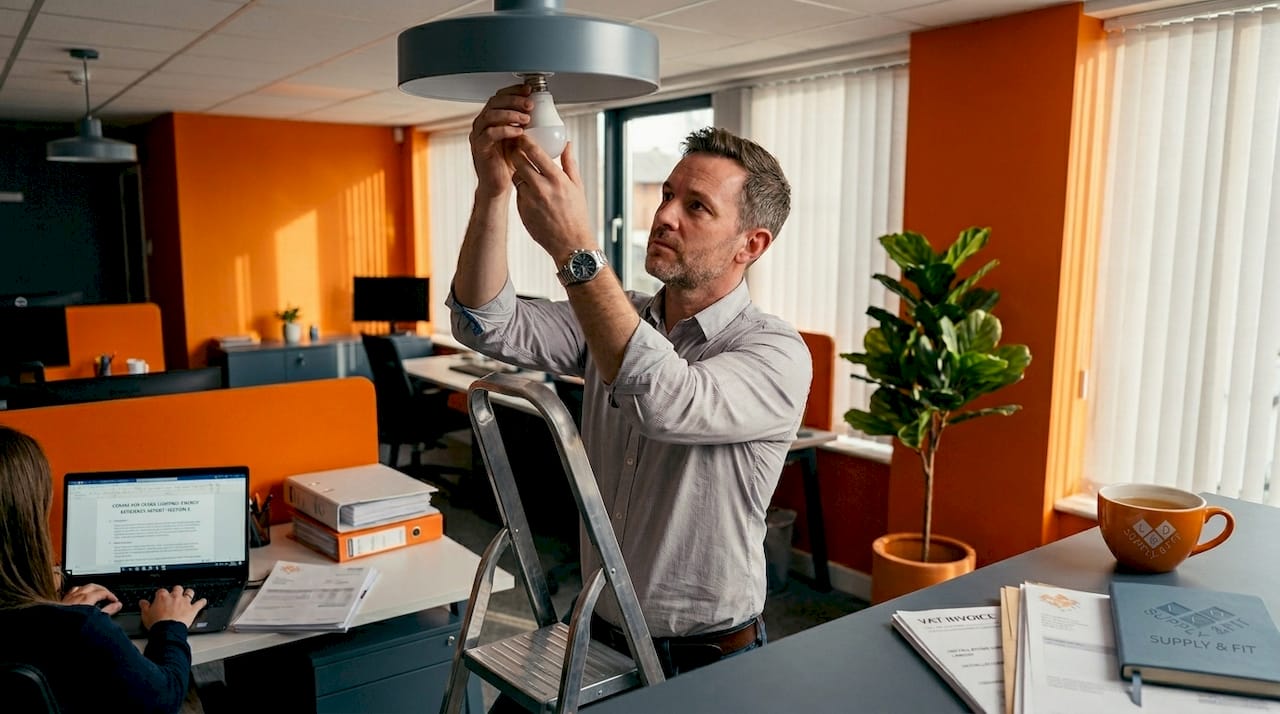
Modern commercial and industrial LEDs typically achieve luminous efficacy of 120 to 175 lm/W, making them the most efficient option available at scale. A key advantage beyond raw efficiency is that LEDs are directional. Incandescents lose around 90% of energy as heat, while LEDs emit very little heat, making them safer in confined spaces and reducing cooling loads in climate-controlled premises.
The range of LED bulb types available today is wide:
- GLS (general light source) LEDs for standard screw and bayonet fittings
- LED spotlights and downlighters for retail and hospitality display lighting
- LED tubes replacing fluorescent strips in offices and warehouses
- LED panels for suspended ceiling grids in commercial interiors
- High-bay LEDs for warehouses and manufacturing facilities
- Filament LEDs for decorative settings where the look of a traditional bulb is desired
Lifecycle cost analysis confirms the case for LEDs at commercial scale. Efficient LED luminaires can save over £100 compared to less efficient alternatives across their working life, accounting for both energy and reduced replacement frequency. For businesses with hundreds of fittings, those savings compound substantially. You can explore the energy savings potential in commercial settings across the Ledsupplyandfit resource library.
3. Compact fluorescent lamps (CFLs): a secondary energy saving option
Compact fluorescent lamps were the first mass-market response to the inefficiency of incandescent bulbs. They use roughly 50 to 75% less energy than a standard incandescent and produce around 50 lm/W, making them a clear improvement over older technology but well behind modern LEDs.
The main drawback is mercury. Each CFL contains approximately 3 to 5 mg of mercury per bulb, which requires careful disposal through designated recycling schemes. If a CFL breaks, the correct response is to ventilate the room, avoid vacuuming the debris, and follow local authority disposal guidance. That is a meaningful operational burden in a commercial setting.
Other CFL considerations worth noting:
- Warm-up time: CFLs take between 30 seconds and three minutes to reach full brightness, which is unsuitable for motion-activated or frequently switched lighting circuits.
- Dimming: Most CFLs are not dimmable. Fitting them to a dimmer switch will damage the bulb and may create a fire risk.
- Lifespan: Typically 6,000 to 15,000 hours, shorter than quality LEDs but still far ahead of halogens.
- Cost: Generally cheaper to buy than LEDs upfront, though lifecycle savings are lower.
Pro Tip: For high-traffic commercial environments such as warehouses, hotel corridors, or open-plan offices, CFL mercury risks and their slower warm-up times make them a poor fit. LEDs handle frequent switching and heavy use far better.
4. Halogen bulbs: familiar but falling behind
Halogen bulbs are an improved version of the traditional incandescent, using a tungsten filament enclosed in a small quartz capsule filled with halogen gas. They produce excellent colour rendering, often rated at CRI 100, which is why they were long favoured in retail and art gallery settings where accurate colour representation matters.
The efficiency figures, however, tell a different story. Halogens achieve only around 20 lm/W, compared to 100 lm/W or more for LEDs. Their lifespan typically runs to 2,000 hours, a fraction of either LEDs or CFLs.
Key halogen characteristics at a glance:
- Heat output: Halogens run very hot, creating a burn risk in accessible fittings and increasing air conditioning loads.
- Colour rendering: Excellent, though modern high-CRI LEDs now match this in most conditions.
- Dimmability: Most halogens are fully dimmable, which was a historical advantage over CFLs.
- Phase-out status: The UK has phased out most halogen lamp sales for general use, reflecting their poor efficiency profile.
Halogens are still found in specialised applications, particularly in older heritage buildings or certain food service environments, but replacing them with high-CRI LEDs typically delivers the same visual quality at a fraction of the running cost.
5. Side-by-side comparison of energy saving bulb types
The table below summarises the key differences across LED, CFL, and halogen bulbs for quick reference.
| Feature | LED | CFL | Halogen |
|---|---|---|---|
| Luminous efficacy | 100 to 175 lm/W | ~50 lm/W | ~20 lm/W |
| Typical lifespan | 15,000 to 50,000 hrs | 6,000 to 15,000 hrs | 1,000 to 2,000 hrs |
| Upfront cost | Higher | Medium | Low |
| Lifecycle cost | Lowest | Medium | Highest |
| Contains mercury | No | Yes (3 to 5 mg) | No |
| Dimmable | Most types | Rarely | Usually |
| Warm-up time | Instant | Slow | Instant |
| Best application | All commercial, industrial | Low-use residential | Heritage or specialist |
6. Practical recommendations for your specific use case
Matching the right bulb type to your setting avoids overspend and underperformance. Here is how to approach the decision by context:
- Offices and retail: LED panels and LED tubes in T8 or T5 format deliver even, high-quality light across working hours. Prioritise colour temperatures between 4,000 K and 5,000 K for task lighting.
- Hospitality and restaurants: Warm white LEDs (2,700 K to 3,000 K) in downlighter or filament formats create the right atmosphere without sacrificing efficiency.
- Warehouses and industrial premises: High-bay LED fittings with efficacy ratings above 130 lm/W are the standard choice. Look at commercial LED lighting options built for high-ceiling environments.
- Residential: LED GLS bulbs in bayonet or screw fittings remain the preferred residential choice due to the combination of efficiency, lifespan, and improved light quality.
- Smart lighting integration: Smart systems with sensors and scheduling can cut energy consumption by an additional 20 to 60% on top of switching to efficient bulbs. Bulb choice matters, but controls multiply the result.
My view on where businesses are still getting this wrong
I have spoken to enough commercial clients to notice a recurring mistake: they treat the bulb decision as a one-off purchase rather than a system decision. Someone orders a batch of LEDs, swaps the bulbs, and considers the job done. The energy bills improve, but only partially.
What I have learned is that the real savings live in the combination of the right bulb type and the right controls. Smart lighting controls such as occupancy sensors and daylight harvesting can deliver a further 20 to 60% reduction. Most businesses leave that on the table.
I also see a tendency to undervalue lifecycle cost. A client once chose a cheaper LED alternative because it saved £2 per fitting upfront. Two years later, they were replacing them across a 200-fitting warehouse and the maths had reversed completely. The best energy saving bulbs are not always the cheapest ones. They are the ones with the right efficacy, the right lifespan, and the right compatibility for your specific environment. Look at environmental and longevity benefits before you commit to a bulk order.
— John
Upgrade your lighting with Ledsupplyandfit
If you are ready to move beyond theory and find the right bulbs for your premises, Ledsupplyandfit has the range and the expertise to match.
From high-bay LEDs for warehouses to warm white panels for offices and hospitality spaces, Ledsupplyandfit supplies and installs professional-grade LED lighting across the UK. Whether you need a single product recommendation or a full commercial fit-out with bulk pricing, the team can guide you through it. Start with the best commercial LED options for 2026 or explore bulk order savings if you are fitting out a larger site.
FAQ
What are the main types of energy saving bulbs?
The three main types are LED, compact fluorescent lamps (CFLs), and halogen bulbs. LEDs are the most efficient and longest-lasting, making them the preferred choice for most commercial and residential applications.
Which energy saving bulb is most efficient?
LEDs are the most efficient option, achieving 100 to 175 lm/W in commercial settings compared to around 50 lm/W for CFLs and just 20 lm/W for halogens. They also last significantly longer, reducing replacement costs.
Are CFLs still worth using?
CFLs offer a moderate improvement over incandescent bulbs but come with mercury content, slow warm-up times, and limited dimming compatibility. For most commercial settings, LEDs are a better long-term fit.
Do energy saving bulbs work with dimmer switches?
Most LEDs are dimmable, but you should confirm compatibility with your specific dimmer circuit before purchasing. CFLs are rarely dimmable and should not be used on dimmer circuits without manufacturer confirmation.
How do I choose the right energy saving bulb for my business?
Focus on lumens per watt rather than wattage, match colour temperature to the application, and factor in lifespan and maintenance costs. Pairing efficient bulbs with smart controls delivers the greatest overall savings.