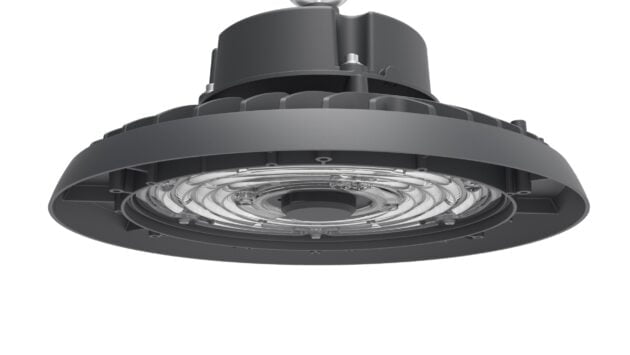

How lighting shapes ambiance in UK commercial spaces
TL;DR:
- Proper layering and human-centric design enhance ambiance and increase productivity by up to 15 percent.
- Different zones require tailored lighting in terms of color temperature, CRI, and controls for optimal effect.
- Businesses should focus on how lighting feels to create memorable spaces and improve energy efficiency.
Lighting is the silent influencer that shapes every experience inside your building, yet most businesses treat it as an afterthought. Get it wrong and you end up with a space that feels sterile, uncomfortable, or simply uninviting, regardless of how much you’ve spent on furniture or branding. Optimal lighting ratios and human-centric design can increase productivity by 6 to 15%, which tells you this is about far more than flicking a switch. This article will show you how to use lighting strategically to create the atmosphere your business needs while keeping energy costs firmly under control.
Key Takeaways
| Point | Details |
|---|---|
| Balance direct and diffuse | Ideal ambiance uses 15–45% direct lighting mixed with diffuse sources to boost comfort. |
| Lighting shapes behaviour | Lighting directly impacts customer mood, retention, and worker productivity in commercial settings. |
| LEDs deliver dual benefits | Modern LED solutions can enhance ambiance and sharply reduce operational costs. |
| Layer for flexibility | Layered lighting gives control to adjust for both energy efficiency and different activity zones. |
Understanding ambient lighting: Beyond brightness
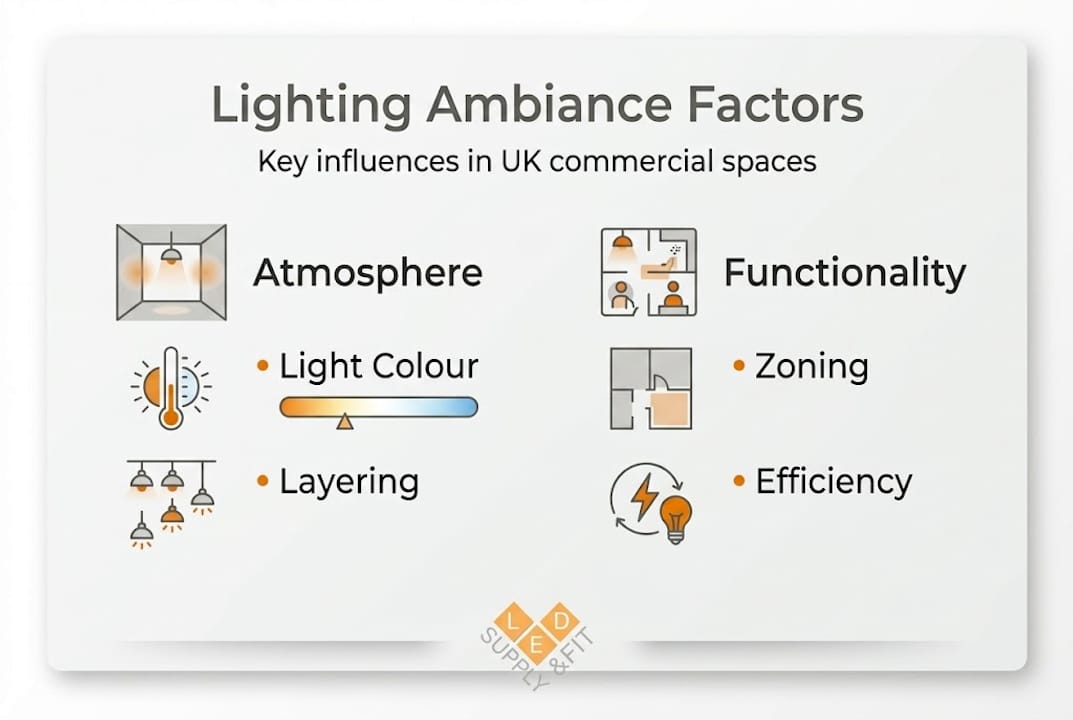
Most people use the word “ambiance” to mean a vague sense of atmosphere, but in lighting terms it has a precise meaning. Ambient lighting is the foundational layer of illumination in a space. It fills the room evenly, reduces harsh shadows, and creates the base upon which task and accent lighting are built. Task lighting targets specific work surfaces or functional zones, while accent lighting draws attention to features like shelving, artwork, or architectural details. Confuse these layers, or rely on ambient light alone, and your space will feel flat regardless of how many lumens you throw at it.
The relationship between direct and diffuse light is where ambiance is really won or lost. Direct light comes straight from the source to the surface, creating contrast and definition. Diffuse light is scattered, bouncing off walls and ceilings to create a softer, more even illumination. A direct to diffuse ratio of 15 to 45% direct light is considered optimal for commercial spaces because it produces a sense of depth and warmth without generating disabling glare. Understanding lighting quality for wellbeing is increasingly important as workplace and customer experience standards rise across UK sectors.
“The best lit spaces feel comfortable before anyone consciously notices the lighting. That invisibility is the goal.”
Here is a quick overview of what the right ambient lighting actually delivers:
| Benefit | Effect on space |
|---|---|
| Reduced glare | Staff and customers stay comfortable longer |
| Even light distribution | Eliminates dark corners and visual fatigue |
| Layered warmth | Creates depth and a sense of welcome |
| Better colour rendering | Products and surfaces look as intended |
- Lower eye strain for staff working long shifts
- Improved customer comfort and dwell time
- A professional, polished visual impression
- Greater flexibility when zones are used for different purposes
The takeaway here is that brightness alone is not ambiance. A 1,000 lux space with no layering can feel harsher than a 300 lux space designed with the right ratio of direct and diffuse light. Businesses that understand this distinction spend their lighting budget far more effectively.
Lighting’s impact on mood, productivity and behaviour
Once you understand what creates ambiance, the next step is recognising how powerfully it shapes human behaviour in commercial environments. Research consistently shows that lighting affects alertness, emotional state, and even purchasing decisions. Human-centric lighting boosts productivity by 6 to 15%, which for a typical UK office or retail team represents a genuinely significant operational gain.
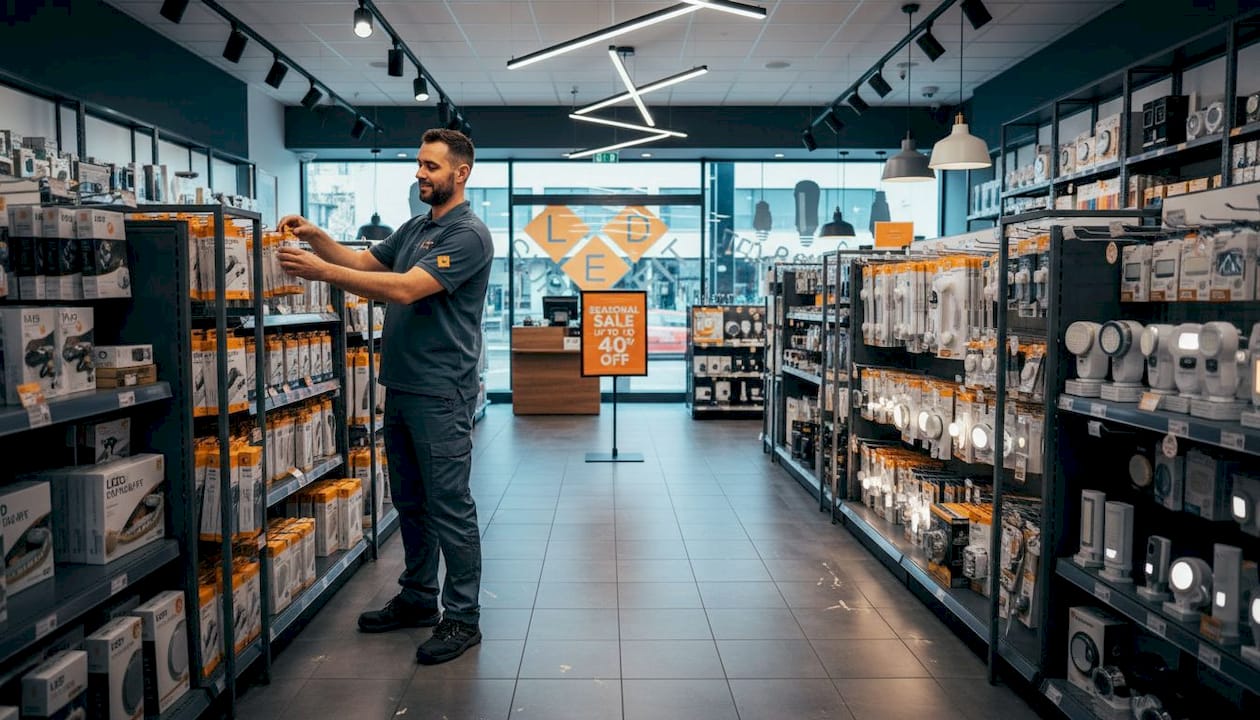
The contrast between different lighting setups is striking in practice. Bright, cool-white light with a colour temperature around 5,000K promotes alertness and is well suited to warehouses, kitchens, and task-heavy environments. Warmer light in the 2,700 to 3,000K range encourages relaxation and feels welcoming, making it ideal for reception areas, hotel lobbies, and restaurants. Generic overhead lighting with a single colour temperature applied uniformly across a space satisfies neither goal particularly well. It is the commercial equivalent of wearing the same outfit to a board meeting and a client dinner.
Consider the contrast in real outcomes:
| Lighting setup | Observed effect |
|---|---|
| Layered warm and cool zones | Higher customer satisfaction and staff wellbeing |
| Single-temperature overhead only | Reported fatigue, lower morale, reduced dwell time |
| Dimmer controls integrated | Flexible ambiance matched to time of day and activity |
| Human-centric tunable LEDs | Measurable productivity and alertness improvements |
LED lighting energy savings are a frequently discussed benefit, but the psychological gains are just as significant for your bottom line. Businesses that match lighting to activity see measurable differences in both staff retention and customer satisfaction scores. A bar that switches to warmer, dimmer lighting in the evening encourages customers to stay longer. An office that uses bright, tunable white LEDs in meeting rooms sees fewer afternoon energy slumps.
The key factors that determine whether your lighting achieves its psychological goals:
- Colour temperature: Cool for focus and energy; warm for comfort and welcome
- Dimming capability: Allows the same space to serve different purposes at different times
- Colour rendering index (CRI): A CRI above 80 is the commercial minimum; above 90 makes products, food, and skin tones look genuinely appealing
- Uniformity: Avoid extreme contrasts between bright and dark patches, which create visual stress
Choosing the right LED solutions for ambiance and efficiency
With the theory clear, here is how to translate it into practical product selection for your property. Lighting design can simultaneously set a desired atmosphere and significantly reduce energy costs, but only if you approach the process systematically rather than simply replacing like for like.
- Audit your current setup. Walk the space at different times of day. Note where shadows fall uncomfortably, where glare is a problem, and where the lighting feels mismatched to the activity. Talk to staff and customers if you can.
- Define the zones. A restaurant has very different needs across the kitchen, dining area, bar, and entrance. A hotel has distinct requirements for the lobby, corridors, and bedrooms. Map these out before specifying any products.
- Select LEDs by colour temperature and CRI for each zone. Warm white (2,700 to 3,000K) for hospitality and reception areas; neutral white (3,500 to 4,000K) for retail and general offices; cool white (4,000 to 5,000K) for warehouses, gyms, and functional workspaces.
- Layer your light sources. Combine ceiling-mounted ambient LED panels, directional spotlights for accent and task lighting, and wall-mounted or floor-level feature lighting where appropriate.
- Incorporate dimming and controls. Smart controls and dimmable LED drivers allow a single space to shift its atmosphere throughout the day without requiring additional fittings.
Pro Tip: Avoid specifying the highest wattage LED available for ambient light. A well-placed 20W LED with a good diffuser will often outperform a 50W fitting in terms of comfort and ambiance.
For practical guidance on making the most of your upgrade, LED lighting tips for businesses cover the specific decisions that drive the best return. When you are ready to commit to a broader change, understanding the full case for upgrading business lighting will help you build internal support for the investment.
Design principles: Balancing atmosphere with function
Selecting the right products is only part of the challenge. How you apply them determines whether the result feels deliberate or accidental. Current UK commercial lighting trends lean strongly towards layered, zone-specific design that respects both style and compliance requirements, particularly around minimum maintained illuminance levels set out in CIBSE guidelines.
“Dim lighting encourages lingering but risks functionality; balance with task layers to retain both atmosphere and practicality.” Source: The Marshall Rooms
Practical dos and don’ts for achieving the balance:
- Do use warmer ambient light in reception and waiting areas to reduce perceived wait time and create welcome
- Do install brighter, higher CRI lighting wherever products are displayed or detail work is performed
- Do consider circadian-supportive tunable white LEDs in staff areas to maintain alertness and reduce fatigue across long shifts
- Don’t assume one fitting type can serve every zone in your building
- Don’t ignore maintenance access when specifying recessed or integrated fittings
- Don’t sacrifice compliance standards for style; a beautifully atmospheric dining room still needs adequate light levels at table height
Pro Tip: Use occupancy sensors in low-traffic areas like corridors, storage rooms, and toilets. You maintain the lighting experience where it matters whilst cutting energy use where it does not.
Zone-specific customisation is where the real gains emerge. A reception area benefits from a warm welcome at 300 lux. A retail floor needs at least 500 lux with strong CRI to make products look their best. Meeting rooms benefit from tunable controls. Choosing sustainable commercial lighting for every zone is increasingly expected by clients, tenants, and regulators alike.
Our perspective: What most guides miss about lighting and ambiance
The honest truth, after working on commercial lighting projects across offices, restaurants, hotels, and retail spaces throughout the UK, is that most businesses focus almost entirely on fixture specifications and almost never on the psychological journey their lighting creates. They ask “how many lumens” and forget to ask “how does this feel to walk through at 7pm?”
We have seen expensive refurbishments fall flat because the lighting design ignored the transition from entrance to main space. We have seen modest budgets create genuinely memorable environments because someone paid attention to shadow, warmth, and contrast. LED upgrades in commercial properties can save up to 65% on energy costs, but the businesses that get the most from those upgrades are the ones that also ask what they want people to feel when they walk in. One size genuinely never fits all.
Transform your commercial space with expert LED solutions
If this article has prompted you to think differently about your current lighting setup, the next step is straightforward.
At LED Supply & Fit, we work with commercial clients across the UK to design and install lighting that delivers genuine ambiance alongside measurable energy savings. Whether you need guidance on best LED lighting for business or want to explore smarter LED lighting solutions tailored to your specific premises, our team offers bespoke consultation and full installation support. Get in touch to discuss your project and see how the right lighting transforms both the experience and the energy bill.
Frequently asked questions
What lighting ratio creates the best ambiance for commercial spaces?
A direct to diffuse ratio of 15 to 45% direct light with the remainder diffuse is optimal for commercial comfort, creating depth and warmth without harsh glare.
How does lighting influence workplace productivity?
Human-centric lighting designed to support natural rhythms and visual comfort can raise productivity levels by 6 to 15%, making it one of the most cost-effective operational improvements available.
Should I choose brighter lights or dimmer setups for my business?
Match brightness to your intent: brighter cool-white light suits activity-focused environments, whilst warmer dimmer setups encourage lingering and comfort, and layered lighting gives you both in the same space.
Can LED upgrades improve both ambiance and energy costs?
Absolutely. Modern LED systems are specifically designed to create inviting, flexible atmospheres whilst typically cutting energy consumption by 50 to 70% compared with traditional lighting technologies.