
LED lighting: sustainability and savings for UK businesses
TL;DR:
- LED lighting reduces energy use, carbon emissions, and replacement costs for UK businesses.
- The ROI for LED upgrades is typically 2 to 5 years, shortened by government incentives.
- Proper planning and design are essential to maximize sustainability benefits and staff comfort.
LED lighting is frequently praised for cutting energy bills, but its role in sustainability for UK businesses runs far deeper than most realise. Many facility managers and business owners still focus narrowly on wattage savings, overlooking the broader financial, environmental, and operational picture. The ROI for UK commercial LED upgrades typically spans 2 to 5 years, with government incentives accelerating that return considerably. This article breaks down what LED sustainability truly means, where the real gains lie, and how to implement a strategy that delivers lasting results.
Key Takeaways
| Point | Details |
|---|---|
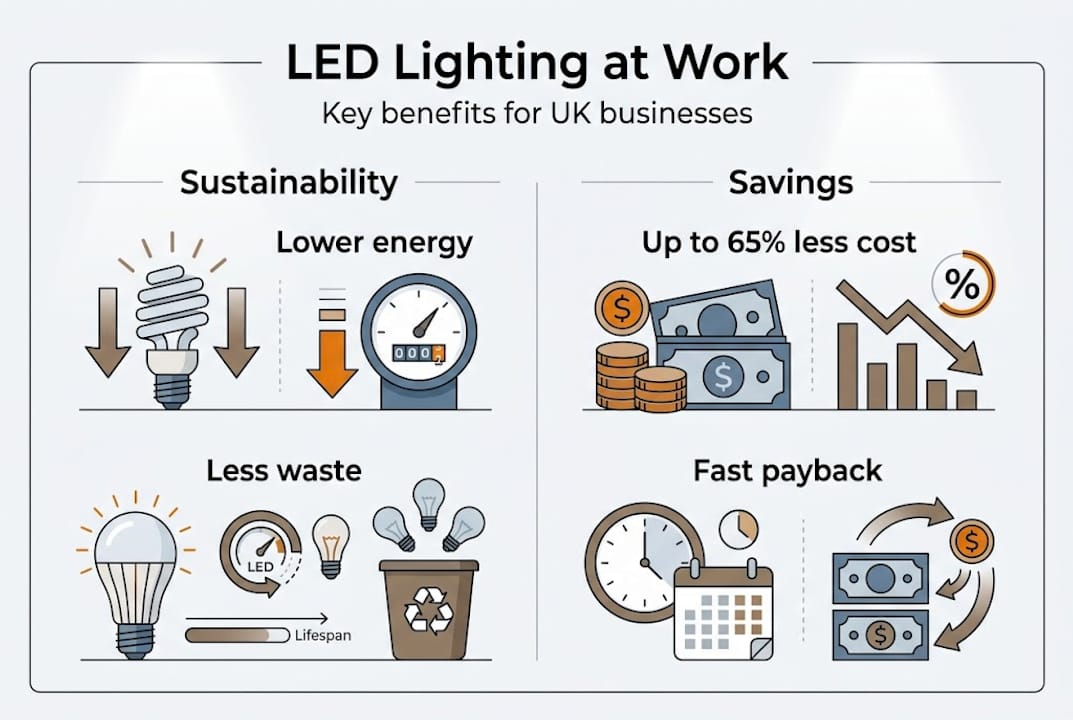
| LEDs drive deep savings | LED upgrades cut UK business energy costs by up to 65% and offer rapid payback with government incentives. |
| True sustainability is holistic | LEDs impact not just energy bills, but also emissions, maintenance, and long-term viability. |
| Initial costs offset | High upfront costs for LEDs are often offset by tax allowances and lower operating expenses. |
| Consider the whole lifecycle | The most sustainable LED choices involve good design, responsible sourcing, and recycling at end-of-life. |
What sustainability means in lighting
Sustainability in commercial lighting is not simply about using less electricity. It covers energy consumption, carbon emissions, operational costs, product lifespan, and the safe disposal of materials at end of life. When you look at it through that wider lens, the case for LED technology becomes significantly more compelling.
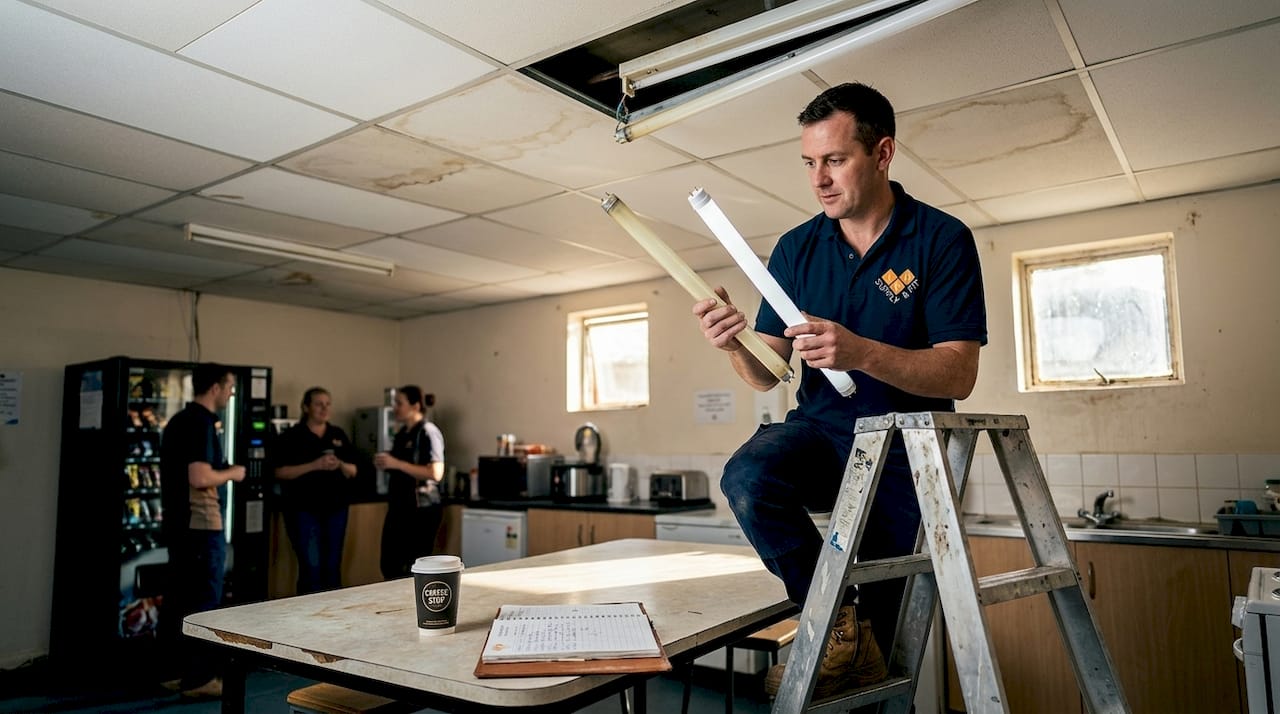
Legacy technologies such as fluorescent tubes and halogen lamps fall short on nearly every measure. Fluorescent lamps contain mercury, a hazardous material requiring specialist disposal. Halogen fittings run hot, waste energy as heat, and burn out far more frequently. LEDs sidestep most of these problems by design.
Key sustainability factors in commercial LED lighting include:
- Energy reduction: LEDs use up to 75% less electricity than halogen equivalents
- Lower carbon emissions: reduced energy draw directly cuts your operational carbon footprint
- Extended lifespan: quality commercial LEDs last 50,000 hours or more, reducing replacement frequency
- Reduced hazardous materials: no mercury, unlike fluorescent sources
- Recyclability: LED components can be processed through specialist recycling channels
LED adoption dramatically cuts operational energy and carbon impact across UK businesses of all sizes, making it one of the most accessible sustainability upgrades available.
For businesses exploring choosing sustainable lighting for their commercial properties, understanding these factors is the essential starting point.
How LEDs outperform traditional lighting for sustainability
The numbers tell a clear story. Here is how LED technology compares directly against fluorescent and halogen alternatives across the metrics that matter most to facility managers:
| Factor | LED | Fluorescent | Halogen |
|---|---|---|---|
| Lifespan | 50,000+ hours | 8,000 to 15,000 hours | 2,000 hours |
| Energy use | Very low | Moderate | High |
| Maintenance frequency | Rare | Occasional | Frequent |
| Hazardous materials | None | Mercury present | None |
| Disposal complexity | Low | High (specialist) | Low |
Beyond the table, LED upgrade savings in real UK commercial settings typically reach 60 to 65% on lighting energy costs. Reduced lamp replacements also lower labour costs and minimise disruption to operations, which matters enormously in environments like warehouses, hotels, and retail spaces.
Pro Tip: The UK government’s Enhanced Capital Allowances scheme allows businesses to claim 100% of qualifying LED upgrade costs against taxable profit in the first year. This can dramatically shorten your payback period and improve cash flow from the outset.
For most UK businesses, the commercial LED benefits extend well beyond the electricity meter. The ROI for UK commercial LED upgrades of 2 to 5 years becomes even shorter when tax incentives are factored in, often bringing payback closer to 2 years for larger installations.
Nuances and challenges: the full life cycle of LEDs
No technology is without trade-offs, and LEDs are no exception. The upfront purchase and installation cost is higher than simply replacing a fluorescent tube with another fluorescent tube. However, government incentives and capital allowances exist precisely to bridge this gap for UK businesses.
Main challenges worth understanding before you commit:
- Manufacturing resource use: LEDs require rare earth elements and semiconductor materials in production
- Blue light and glare: poorly specified LEDs can cause visual discomfort, particularly in office environments
- End-of-life recycling: LED drivers and components need proper recycling channels, not general waste
- Visual comfort: colour temperature and diffuser selection matter for staff wellbeing and productivity
Initial costs are high but offset by incentives; blue light and glare risks are mitigated by diffusers and uniform design; manufacturing uses rare earths, but operational savings dominate any lifecycle assessment.
The good news is that mitigation is straightforward. Specifying the correct colour temperature (typically 3,000 to 4,000 Kelvin for most commercial spaces), using quality diffusers, and working with a knowledgeable supplier resolves most comfort concerns. For recycling, the UK’s WEEE regulations provide a framework, and reputable suppliers can advise on compliant disposal routes. Reviewing LED cost saving tips alongside lifecycle considerations helps businesses make fully informed decisions.
How facility managers and business owners can leverage LED for maximum benefit
Knowing the theory is one thing. Turning it into a practical plan for your premises is another. Here is what the numbers look like for typical UK commercial scenarios:
| Premises type | Estimated annual saving | Typical payback period | Tax allowance benefit |
|---|---|---|---|
| Office (500 sq m) | £2,000 to £4,000 | 2 to 3 years | 100% first-year claim |
| Warehouse (2,000 sq m) | £8,000 to £15,000 | 2 to 4 years | 100% first-year claim |
| Retail unit (200 sq m) | £1,200 to £2,500 | 2 to 3 years | 100% first-year claim |
The payback of 2 to 4 years with a 100% first-year tax claim makes LED upgrades one of the most financially sound capital investments available to UK businesses right now.
Steps to maximise your return:
- Commission an energy audit to establish your current lighting consumption baseline and identify the highest-impact areas
- Plan a phased retrofit starting with the spaces that run lights longest, such as warehouses or 24-hour operations
- Apply for Enhanced Capital Allowances and consult your accountant to ensure the full tax benefit is captured in year one
- Establish a recycling plan for old fittings and future LED end-of-life disposal before the project begins
Pro Tip: Engage a supplier who offers proper lighting design as part of the service, not just product supply. Correct lumen levels, spacing, and mounting heights make a measurable difference to energy efficiency and staff comfort. Explore practical LED tips and top LED solutions to strengthen your strategy.
LED upgrades also support your corporate social responsibility commitments. Measurable reductions in carbon emissions and energy use translate directly into sustainability reporting metrics, which matter increasingly to clients, investors, and staff alike.
A smarter approach to sustainable lighting: going beyond the obvious
Here is something most articles will not tell you: chasing the lowest upfront cost on an LED project often undermines the very sustainability goals you set out to achieve. We see it regularly. A business installs budget fittings without proper design input, staff complain about glare, lamps are replaced within three years instead of ten, and the recycling question is never addressed.
The uncomfortable truth is that many organisations fail to budget for lighting design, staff awareness, or end-of-life recycling. These are not optional extras; they are the difference between a project that genuinely delivers and one that simply looks good on paper. Looking ahead, LED future trends point towards smart controls, human-centric lighting, and even greater energy efficiency. The businesses that build a proper strategy now will be best placed to adopt those advances without starting from scratch.
See how LED can transform your business sustainability
At Ledsupplyandfit.co.uk, we work with facility managers and business owners across the UK to design and deliver LED lighting solutions that genuinely perform. Whether you manage a single retail unit or a multi-site operation, we can help you identify the right products, access available incentives, and achieve measurable sustainability outcomes.
Explore our range of LED solutions for UK businesses, find out how to upgrade commercial lighting cost-effectively, or browse our selection of best commercial LED lighting to find the right fit for your premises. Our team is ready to support you from initial consultation through to installation and beyond.
Frequently asked questions
How much can switching to LED reduce energy costs for UK businesses?
Switching to LED can reduce lighting energy costs by up to 65% for most UK businesses, with a typical payback within 2 to 5 years depending on usage and incentives applied.
What are the main environmental impacts of LED lighting?
The primary benefits are lower energy consumption and reduced carbon emissions during operation. Manufacturing uses rare earths but these impacts are outweighed by operational savings across the full lifecycle.
Do LEDs contain hazardous materials?
LEDs do not contain mercury, unlike fluorescent lamps, but they do include rare earth elements and semiconductors that should be recycled at end of life through proper channels.
What payback period can UK businesses expect from an LED upgrade?
Most UK businesses recover their LED investment within 2 to 4 years, with the 100% first-year Enhanced Capital Allowance claim often accelerating that timeline significantly.